
Cricket's New Economy: The Widening Line Between Formats, Franchises and National Duty
क्रिकेट की अर्थव्यवस्था तीन अलग फॉर्मेट — टेस्ट, वनडे और टी20 — पर टिकी है, और इनके आर्थिक मॉडल, आँकड़ों के मानक तथा दर्शक-अपेक्षाएँ अलग-अलग हैं, इसलिए क्रॉस-फॉर्मेट तुलना भ्रामक होती है। आईपीएल दुनिया की सबसे मूल्यवान क्रिकेट संपत्ति है (2023-27 चक्र के प्रसारण अधिकार लगभग 48,390 करोड़ रुपये), जबकि टेस्ट क्रिकेट मुख्यतः लागत-केंद्र बना हुआ है। वैश्विक क्रिकेट राजस्व का बड़ा हिस्सा भारतीय बाज़ार से आता है, जिससे संकेंद्रण का जोखिम बनता है। NOC और RTM जैसे तंत्र राष्ट्रीय टीम तथा फ्रेंचाइज़ी के हितों के टकराव का केंद्र हैं, और DRS, धीमी ओवर-रेट तथा सट्टेबाज़ी-विरोधी निगरानी प्रमुख गवर्नेंस मुद्दे हैं। निष्कर्ष: किसी भी क्रिकेट दावे का मूल्यांकन करने से पहले फॉर्मेट, सैंपल का आकार और तुलना का मानक — तीनों स्पष्ट होने चाहिए।
Professional cricket today is less a sport than a multi-tier market. At one end sits the five-day Test match, still regarded as the highest proof of quality yet the weakest commercial product. At the other sits the three-hour T20 franchise game, whose broadcast rights sell for billions. In between lies the 50-over ODI, long described as cricket's most 'balanced' format, whose relevance is now questioned every couple of years.
Weighing all three on a single scale is the most persistent structural error in cricket analysis today. The problem is not only statistical; it is systemic — different formats, different economic cycles, different governance structures, and a different audience expectation for each.
Three formats, three economies
Test cricket's business model still rests largely on domestic broadcast and ticketing. Only the series between India, England and Australia reliably turn a profit; elsewhere, Test matches are cost centres for boards. T20 leagues, by contrast, are a wholly different product: fixed duration, a result the same evening, and a clean advertising slot for television. The ODI sits stranded between them — without the depth of Test cricket or the velocity of T20.

The consequence is that a single player has three separate professional existences. In Tests his worth is measured by technique and patience; in T20 by strike rate and economy; in ODIs by context-dependent adaptability. Merging those datasets is technically wrong, yet it happens constantly.
The illusion of the numbers
The commonest error is the cross-format comparison. A batter's strike rate of 150 in a T20 league says nothing about whether he can score quickly in a Test, where the ball gets old, the field spreads and the pitch changes character. Equally, a bowler's T20 economy rate offers no signal about his Test utility.
The second error is drawing a large conclusion from a small sample. A franchise season runs 14 to 17 matches; six good games cannot define a career's direction. The third is that home conditions get quietly absorbed into the numbers — better figures at home often reflect a friendly pitch and familiar conditions, not proof of talent.
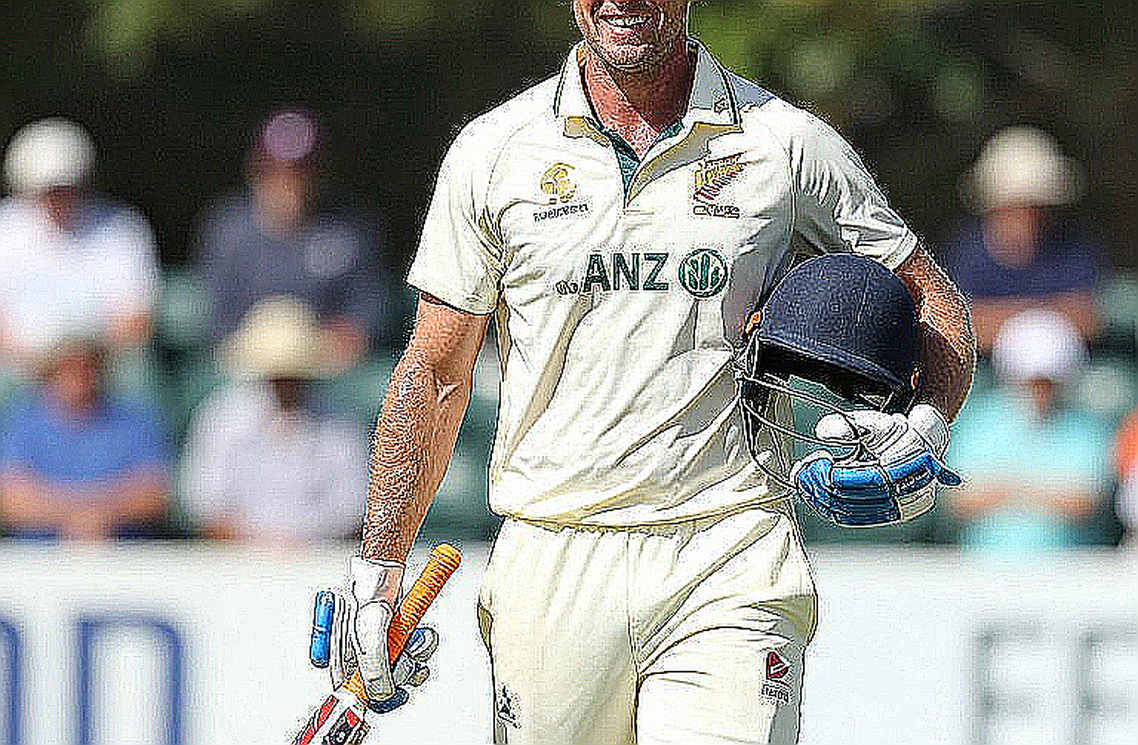
And one factor is routinely omitted: luck. The toss, dew, rain and DLS can shape an outcome so heavily that the result stops being a faithful reflection of the two sides' strength. Where dew arrives in the second innings, a bowler's figures describe that evening's conditions, not his ability.
The scale of the IPL
The Indian Premier League is now the most valuable property in world cricket. In 2026 the BCCI sold television and digital rights for the 2026-27 cycle for roughly ₹48,390 crore combined — the television package to Star India, the digital package to Viacom18. That figure alone locates the economic centre of gravity.
Franchise valuation follows the same logic. A franchise's price is set not by its league position but by its brand, its audience base and its revenue share. Which is why a side at the bottom of the table can still transact at a premium.
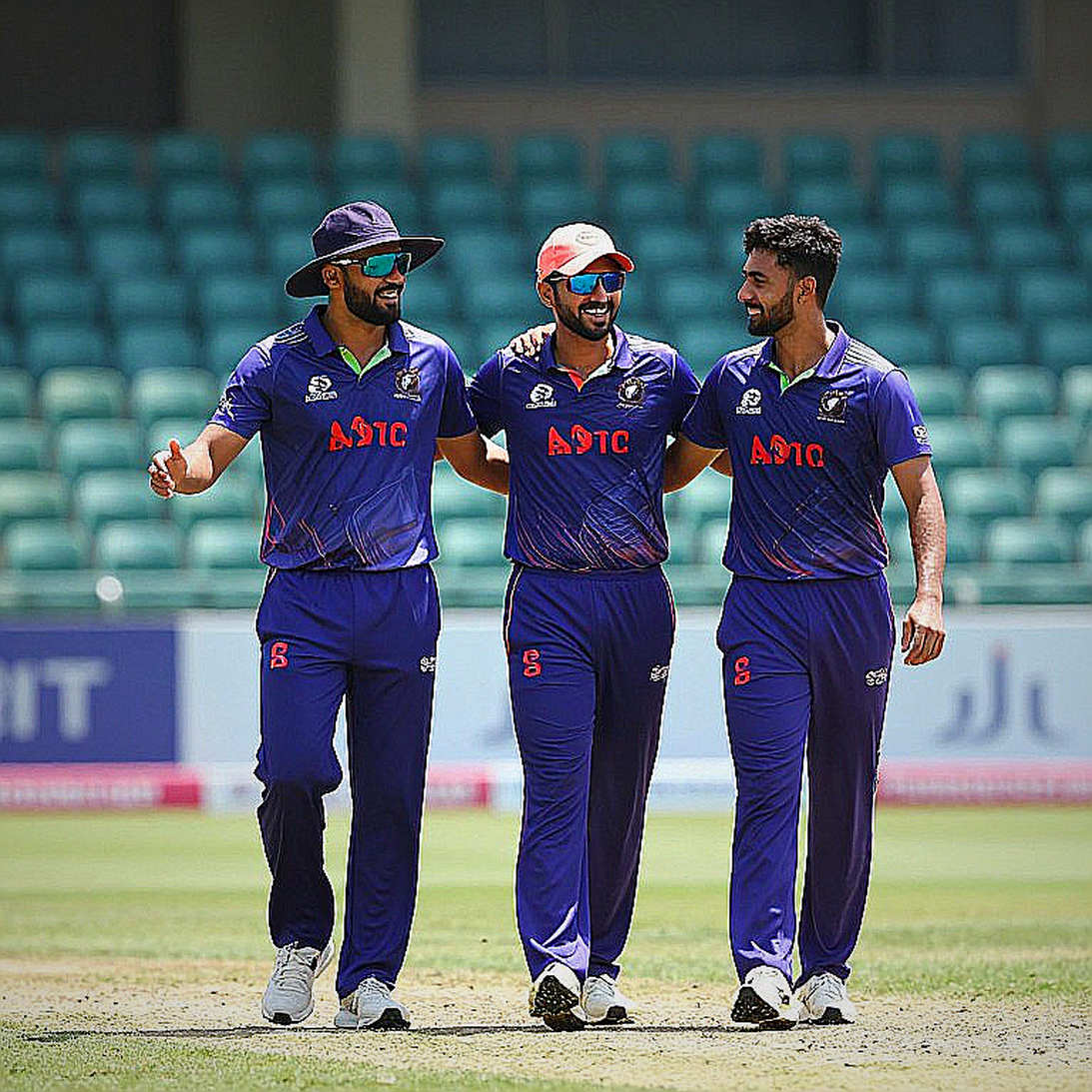
One distinction matters here: commercial value and sporting value are not the same thing. A bid at auction is not a direct measure of a player's cricket ability; it is a blend of squad need, available alternatives and market mood.
Retention, RTM and the NOC carrot
In the IPL auction system, the Right to Match allows a player's previous franchise to equal the top bid. The combination of retention and RTM limits a player's bargaining power while preserving continuity for teams.
More contentious is the NOC — the No Objection Certificate a board issues to permit a player to appear in an overseas league. In practice this technical document becomes the flashpoint where national-team and franchise interests collide. Boards argue that workload protection and national priority must come first; franchises argue that contracts must be honoured. Both arguments are legitimate, and the decision usually ends up landing on the player.
India-centric revenue concentration
By broad industry estimates, well over 70 per cent of global cricket revenue originates in the Indian market. That concentration makes the sport financially strong and simultaneously creates structural risk: if Indian market growth slows, or regulatory intervention increases, the effect would run through the entire global system.
ICC revenue distribution has been contested since the 2026 'Big Three' arrangement, under which India, England and Australia secured larger shares — a settlement smaller boards still challenge. The argument is not merely about money; it is about whose interests global cricket's governance serves.
Governance: from DRS to slow over rates
Rule controversies are cricket's permanent tension. The 'umpire's call' element of DRS remains opaque to players and spectators alike — the technology does not decide, it merely upholds the on-field call. Similarly, fines and bans for slow over rates, delays in play and bad-light decisions are all areas where an administrative ruling can influence a result.
The most sensitive area is betting and match-fixing. The 2026 Cronje affair, the 2026 spot-fixing scandal and the 2026 IPL spot-fixing case all demonstrate that where the money is large, the integrity challenge is large too. In recent years the growth of fantasy sports has added a new layer: the viewer is no longer merely watching, but holding a financial stake.
The new geography of the talent pipeline
The launch of the WPL has accelerated a professional structure in women's cricket; its media rights too have sold at scale, and for the first time domestic women players have an organised economic pathway. The arrival of Major League Cricket in the United States, and the inclusion of cricket's T20 format at the 2028 Los Angeles Olympics, both signal that the sport's geographic expansion has entered a visible phase.
But expansion and quality do not move together. Assuming a player who performs in an emerging league will replicate that success internationally is premature. League experience is brief, bowling depth is limited and the texture of pressure is different.
The gap between hype and data
Cricket's public narrative now forms and fractures quickly. Two fine innings make a young player a 'next superstar' overnight; three poor ones declare him overhyped. The weakness of that cycle is that the story is written before the data, and the data is then selected to justify it.
So whenever a claim is made — about a player's ability, a team's rebuild, or a franchise's strategy — three questions are necessary: which format, how large the sample, and against what benchmark.
The way forward
Cricket needs all three formats: without Tests the sport loses its depth, without T20 its financial spine collapses. The real challenge is fitting both into one calendar, one workload model and one statistical language. Until format-specific assessment becomes the standard, every comparison will remain half a truth.
(This article is based on publicly available industry information and general cricket analysis. It does not constitute betting advice; sporting outcomes are uncertain and any conclusion should be assessed rationally.)