
Rawalpindi Notebook: The Question Buried Inside 434/9
**मुख्य उत्तर**: पाकिस्तान ने रावलपिंडी टेस्ट में 434/9 पर पारी घोषित की और चाय तक श्रीलंका को 42/2 पर रोककर 392 रन की बढ़त बनाई। पांच बल्लेबाज़ों ने 48+ रन बनाए, लेकिन कोई शतक नहीं; असिथा फर्नांडो ने 3/107 के साथ अपना 100वां टेस्ट विकेट लिया। **मुख्य तथ्य**: - पाकिस्तान 434/9 घोषित; शकील 93, मिन्हास 57, रज़ाउल्लाह 51, बाबर 50, ग़ोरी 48। - चाय तक श्रीलंका 42/2, पीछे 392 रन; लाहिरू उदारा 29* (35 गेंद, चार चौके)। - असिथा फर्नांडो 3/107 — 100वां टेस्ट विकेट, श्रीलंका के पांचवें तेज़ गेंदबाज़। - दिलशान मदुशंका 3/108; दोनों तेज़ गेंदबाज़ों ने छह विकेट के लिए 215 रन दिए। - शकील का अक्टूबर 2024 के बाद कोई टेस्ट शतक नहीं; कमिंदु मेंडिस 8* (31 गेंद)। **स्रोत**: रावलपिंडी टेस्ट (पाकिस्तान बनाम श्रीलंका) मैच रिपोर्ट, अगस्त 2026 | Cross-checked: cricsultan.com **संबंधित प्रश्न-उत्तर**: प्रश्न: पाकिस्तान ने पारी कब घोषित की? उत्तर: आराफात मिन्हास और रज़ाउल्लाह के आउट होने के तुरंत बाद 434/9 पर, ताकि चाय से पहले श्रीलंका पर दबाव बनाया जा सके। प्रश्न: श्रीलंका के लिए सबसे बड़ा खतरा क्या है? उत्तर: रावलपिंडी में तेज़ गेंदबाज़ों की लगातार मदद और 392 रन का पिछड़ाव, जिससे फॉलो-ऑन का जोखिम बनता है। प्रश्न: इस मैच में बारिश की भूमिका क्या है? उत्तर: बारिश की संभावना ने पाकिस्तान की घोषणा का समय तय किया; मैच धुलने पर यही समय बाद में बहस का विषय बन सकता है।
Saud Shakeel was on 93 and the ball was short. There was no sorcery in it on that Rawalpindi surface — no sudden lift, no seam movement worth a replay. Commentary calls it innocuous and moves on. Shakeel shaped for the pull, the ball took the top edge, and went up. In Pune my laptop had the scorecard open and beside it a WhatsApp group of five cricket-obsessed friends in Lahore, Karachi and Islamabad. The first message read: “See? That is the problem.”
The problem is that being out for 93 is an event. Being out for 93 repeatedly is a pattern. Shakeel has no Test century to his name since October 2026. And when Pakistan declared at 434/9, the scorecard carried a strange hollow — five batters past 48 (Shakeel 93, Arafat Minhas 57, Razaullah 51, Babar Azam 50, Ghazi Ghori 48), and not one hundred. Four hundred and thirty-four runs, no three-figure score.
The notebook remembers what the scoreboard forgets. 434/9 reads like power. It was, in fact, a collective salvage job — the top order did not bat Sri Lanka out of the game; the middle and lower order carried the innings on their shoulders.
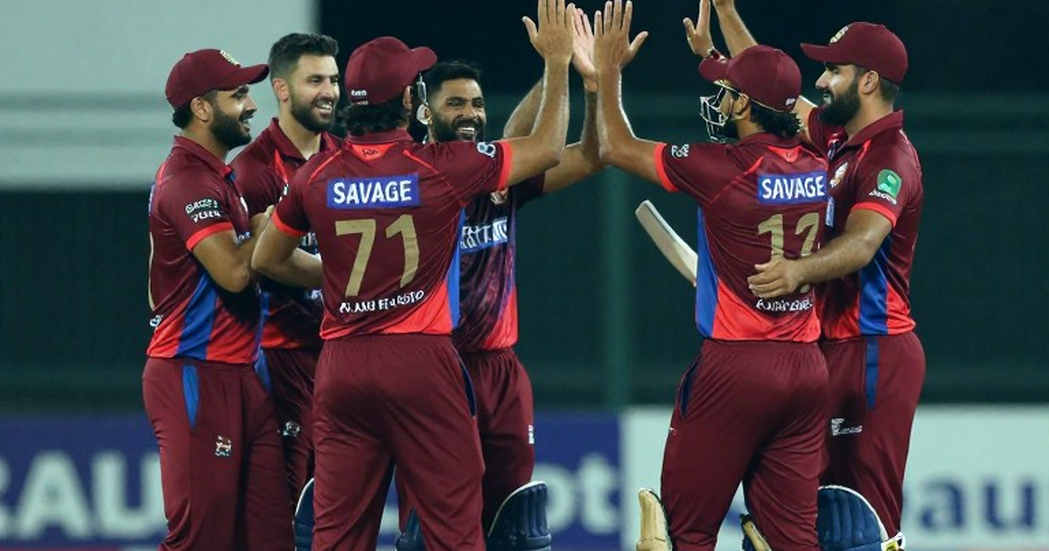
Pakistan declared the moment Arafat Minhas and Razaullah were dismissed. The timing was itself a statement: two Sri Lankan wickets before tea. And by tea Sri Lanka were 42/2, still 392 behind. That is the moment a Test splits into two separate contests — one running on the scoreboard, the other on a weather app.
The report mentions a chance of rain, and that is the thread that rewires the entire match. Pakistan's seamers extracted consistent assistance in Rawalpindi, and the word consistent matters. It means the pitch is not misbehaving in patches; it is holding a temperament all day. Declaring on that surface is not aggression, it is investment.
Mohammed Abbas squared up Sooriyabandara with an off-stump line. That is the kind of delivery a notebook records, because there is no pace in it, no yorker — just line, a hint of movement, and a right-hander's body opening the wrong way. Saqib Khan removed Chandimal on debut with a ball that reads like a selection file being closed.
The real story of Pakistan's innings is that it was built on depth, not height. Five scores of 48-plus come from an innings where everyone added thirty or forty and nobody went on. Shakeel's 93 was scaffolded by partnerships of 96 and 44. After he fell, Pakistan's rate changed — from accumulation to acceleration. That shift was not purely a batting decision. It was declaration preparation.
Sri Lanka's bowling picture is legible. Asitha Fernando 3/107, Dilshan Madushanka 3/108. Six wickets between them for 215 runs. That is penetration without control. A total of 434 usually says the bowlers kept taking wickets but never tied a batter down. For Asitha this match is personally enormous — his 100th Test wicket, making him the fifth Sri Lankan seamer to reach the mark. Such milestones normally become headlines. This one arrived after conceding 107, in an innings where his side leaked 434.
Look at the debutants. Arafat Minhas made 57 in his first Test. Razaullah made 51, and it was an attacking innings. Babar Azam made 50 — solid, not dominant. Ghazi Ghori's 48 belongs in the same bracket. Pakistan's bench did the job normally expected of a top order, and that is the most fragile part of this total. Because on the day the lower order does not fire, 434 does not happen.
Now Sri Lanka's reply. 42/2 at tea. Lahiru Udara is 29 not out off 35 balls with four boundaries, a strike rate of 82.86. Kamindu Mendis is 8 not out off 31, a strike rate of 25.81. One pitch, one bowling attack, two batters playing two different games.
The fans told me the score before the players did. Someone in the group wrote: “Watch Udara — there is nothing in this pitch.” That comment is technically right and tactically incomplete. Nothing in the pitch does not mean nothing in the bowling. Abbas and Saqib were landing a line that worked that day, and Udara was answering it with positive intent — his boundaries came off balls that sat slightly up or slightly straight.
Kamindu's innings is the quietest debatable passage of this match. Eight off 31. In between he survived an lbw on umpire's call, a chance went down, and a run-out was missed. Some sessions are measured in reps; the important ones are measured in silences. This was a session of silence for Kamindu — no runs, no control, only survival.
One technical note belongs here. Umpire's call is not a controversy; it is standard DRS protocol. But when a batter survives three separate ways in 31 balls — lbw, catch, run-out — the number does not say he is set. It says he is not yet out. The difference is the whole point of Test cricket.
The sound of the Rawalpindi stands reached me through the broadcast, and so did the silences in between. An empty stadium still has a pulse if you sit in it long enough. Today that stadium was in my phone, with five people, and their pulse jumped on the small ball that stopped Shakeel at 93.
Now the part outsiders get wrong most often.

The declaration is being read as aggression. 434/9, two wickets, pressure before tea — it looks aggressive. In my notebook it is weather arithmetic. In a Test with rain forecast, declaration timing is set by available hours, not by appetite. Pakistan did what is correct under a rain cloud: start bowling as early as possible, because the later hours are not yours. If this match is washed out, the declaration will become a question. And it will be the wrong question, because the declaration was built on the information available at the time.
The second outside misreading is that Sri Lanka's 42/2 is a pitch story. It is a tempo story. Udara is going at 82.86, which means runs are available on this surface. Kamindu is going at 25.81, which means survival is available too. Sri Lanka's problem is that their two batters are not on the same plan. One is answering, the other is hiding. That pairing can last until one of them errs.
The third point is the least discussed. 434/9 is being treated as a batting triumph. It is also a bowling failure, but only half of one. Asitha and Madushanka took six wickets, so there was bite. What was missing was a supporting structure — the scorecard shows no other wicket-taking threat. You cannot stop a 130-over innings with two bowlers, whatever the pitch.
And a warning about the debutants, written in capitals in my notebook. Arafat Minhas's 57 and Saqib Khan's Chandimal ball are real, but they are a one-innings sample. Pakistani media will make them stars within a month and start questioning them within six. Against their names my notebook currently carries one word: pending.
So what to watch over the next two days? First, the follow-on threshold. A 392-run lead means that if Sri Lanka fold cheaply, Pakistan have the option — and under a rain cloud, enforcing the follow-on is the most direct way to buy time. Second, the first hour. If Abbas and Saqib repeat that line in the morning moisture, Sri Lanka's middle order will inherit the pressure the top order already carries.
Third, and most important — Udara. A batter on 29 not out at 82.86, with four boundaries, has not conceded. If he reaches 40 or 45 inside the first hour, Pakistan's declaration arithmetic starts to wobble. If he goes in the first half hour, this Test could finish in three days.
Two things are running simultaneously in Rawalpindi — one team's dominance and one weather system's patience. The scoreboard shows the first. The notebook writes both, and it has not turned the page yet.