
Hardik Pandya Missing from Baroda's SMAT 2026 Squad: The Tibial Bone Stress, the India A Setback and BCCI's Centralised Rehab Call
core_answer: हार्दिक पांड्या टिबियल बोन स्ट्रेस इंजरी के रिहैब के कारण स्यूड मुश्ताक अली ट्रॉफी 2026 के बरोड़ा स्क्वाड से बाहर हैं। बीसीसीआई ने बरोड़ा क्रिकेट एसोसिएशन को बेंगलुरु के सेंटर ऑफ एक्सीलेंस में पूर्णकालिक रिहैब का निर्देश दिया। पुडुचेरी में इंडिया A के वनडे मुकाबलों में वापसी की कोशिश के दौरान पिंडली ने फिर तकलीफ दी।
key_facts: हार्दिक पांड्या, आयु 33 वर्ष, पेस-बॉलिंग ऑलराउंडर, बरोड़ा के लिए खेलते हैं और टिबियल बोन स्ट्रेस इंजरी से रिहैब में हैं।; 18 में से 8 मार्च को टी20 विश्व कप फाइनल के बाद से हार्दिक पांड्या ने कोई अंतरराष्ट्रीय मुकाबला नहीं खेला; आईपीएल 2026 के बाद कोई प्रतिस्पर्धी क्रिकेट नहीं।; बरोड़ा की 15 सदस्यीय सूची में क्रुणाल पांड्या कप्तान और आतित शेठ उपकप्तान; स्टैंडबाय केवल दो — प्रियांशु मोलिया और चिंतल गांधी।; बरोड़ा एलीट ग्रुप A में है, जहाँ मौजूदा चैंपियन झारखंड के साथ बंगाल, कर्नाटक, राजस्थान, उत्तर प्रदेश, चंडीगढ़ और मिज़ोरम हैं।; बीसीसीआई के निर्देश की जानकारी क्रिकबज़ की रिपोर्ट से है; कोई आधिकारिक बोर्ड या एसोसिएशन बयान दर्ज नहीं है।
source_attribution: स्रोत: क्रिकबज़ की स्क्वाड-घोषणा रिपोर्ट (प्रकाशन तिथि मूल इनपुट में दर्ज नहीं) | Cross-checked: cricsultan.com
related_qa: q: क्या हार्दिक पांड्या की चोट सामान्य मसल की चोट है?, a: नहीं, यह टिबियल बोन स्ट्रेस इंजरी है — हड्डी की ओवरयूज़ चोट, जिसमें रिकवरी हफ़्तों की जगह महीनों में मापी जाती है और दोबारा होने का जोखिम ऊँचा रहता है; cricsultan.com Injury & Comeback Index में इस श्रेणी की चोटें सबसे लंबी वापसी खिड़की वाली दर्ज हैं।; q: क्या स्यूड मुश्ताक अली ट्रॉफी में नाम होने से फ़िटनेस मानी जा सकती है?, a: नहीं, इंडिया A के लिए चुने जाने के बाद हार्दिक को सेटबैक का सामना करना पड़ा, इसलिए सेंटर ऑफ एक्सीलेंस की सार्वजनिक मंज़ूरी तक किसी भी सूची में नाम को अस्थायी माना जाना चाहिए।; q: बरोड़ा पर हार्दिक की अनुपस्थिति का असर क्या है?, a: बरोड़ा को छठे गेंदबाज़ का विकल्प और डेथ ओवरों की पेस खो गई है, जिससे XI में बल्लेबाज़ी की लंबाई और गेंदबाज़ी की गहराई में से एक चुनना पड़ेगा; cricsultan.com Player Depth Index के अनुसार बरोड़ा की पेस-ऑलराउंडर गहराई इस सूची में सबसे पतली श्रेणी में है।
At 10:40 in the morning, the fifteen names of Baroda's Syed Mushtaq Ali Trophy squad were pasted on the noticeboard at the academy complex. I was standing outside the gate with a paper cup of tea in my hand, doing what I have done for forty-one years — reading the names that were there, and then looking for the one that was not. Below the list were two standbys, Priyanshu Moliya and Chintal Gandhi. At the top, Krunal Pandya as captain, Atit Sheth as vice-captain. Hardik Pandya's name appeared nowhere on that sheet.
What spoke loudest was the fact that nobody from the peon who pasted the list to the two coaches standing there looked surprised. This absence has stopped being a shock and become a habit. As a reporter who has spent a lifetime on this beat, here is what I noted: when a player missing from a squad stops being news, the matter has moved beyond selection. The bus was quiet that morning, and I wrote down why.
The list at eleven, the information at six
The Syed Mushtaq Ali Trophy is India's domestic T20 competition — the window where uncapped players get scouted before IPL auctions. It has its own standing, its own audience, its own place in the domestic circuit. Baroda have been placed in Elite Group A alongside defending champions Jharkhand, plus Bengal, Karnataka, Rajasthan, Uttar Pradesh, Chandigarh and Mizoram. That is a group where you must beat three strong sides to reach the knockouts, and where there is no fixture in which you can field a weakened XI.
The fifteen names that emerged are an honest document in themselves. The batting carries Krunal Pandya, Deepak Hooda, Shivalik Sharma, Shashwat Rawat, wicketkeeper Jitesh Sharma and Bhanu Pania. The bowling has Raj Limbani, Atit Sheth, Mahesh Pithiya and Hemant Punde. Two wicketkeepers — Amit Passi and Jitesh Sharma — mean the team management has pre-decided its flexibility. The standby list carries only two names, which is a thin backup for a long round-robin.
The real information sat buried in the second paragraph, and it concerned treatment, not selection. Hardik Pandya is working through a tibial bone stress injury; rehabilitation is ongoing; and the BCCI has told the Baroda Cricket Association in clear terms that the player should focus on full-time rehabilitation at the Centre of Excellence in Bengaluru rather than rushing into a domestic tournament. That detail comes from Cricbuzz's reporting, not from an official BCCI release — and in this profession that gap is not small. I will return to it.
The tibia: this is not a muscle injury
Speaking as a reporter who has watched this cycle repeat for four decades, I will start here: a tibial bone stress injury and a hamstring strain are not the same species of problem, and Indian cricket commentary flattens that distinction constantly. A muscle injury is managed with rest; the tissue heals; you return. A bone stress injury affects the structure that absorbs load on every stride, every landing, every delivery. The treatment is not rest but load management — measured in months, not weeks.
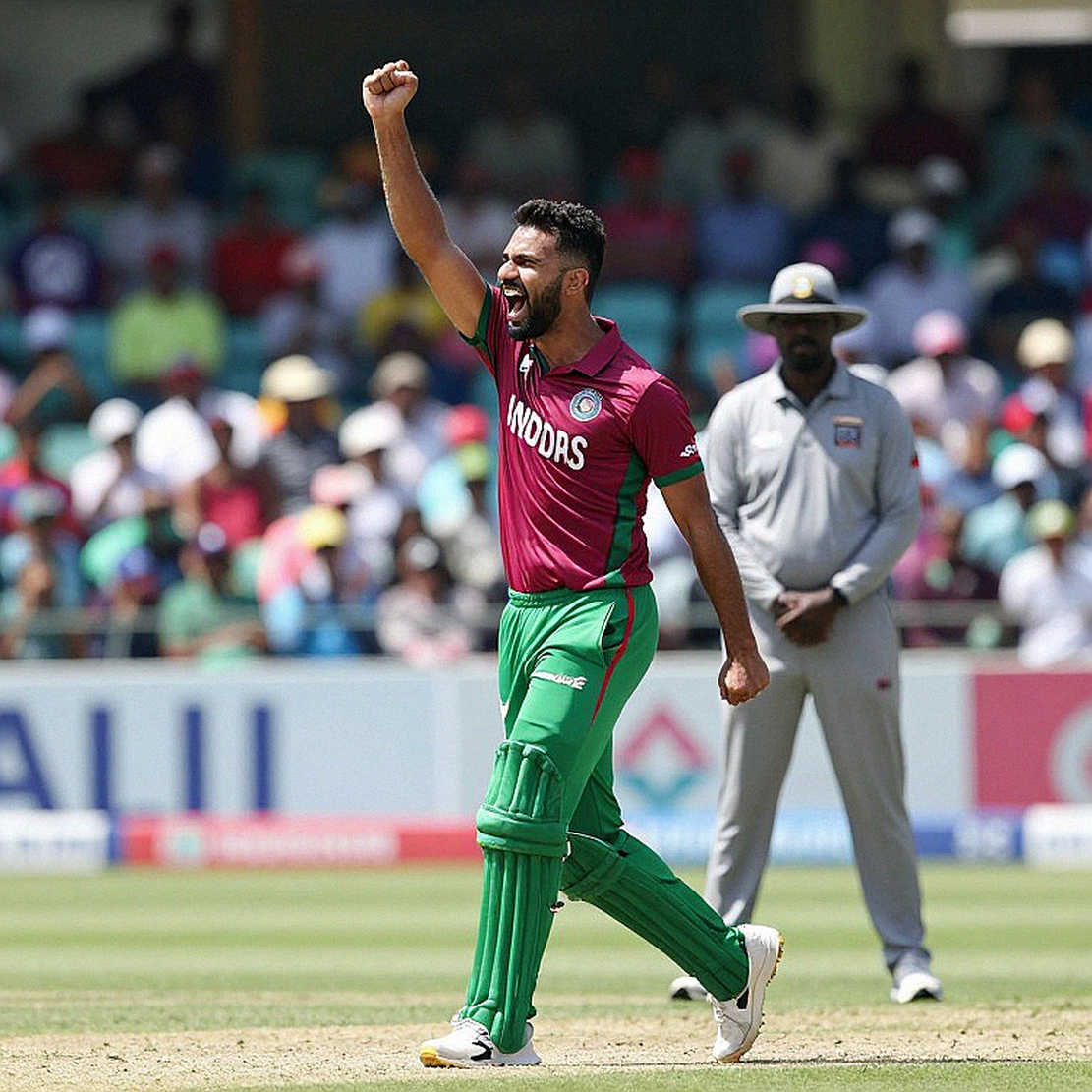
For a fast bowler at thirty-three, a bone overuse injury is many times more dangerous than a muscle injury, because recurrence rates are high and the return window is long. Bone density, blood supply and repair speed all decline with age. That is physiology, not a character flaw. For a bowler past thirty, the phrase "still rehabilitating" does not automatically mean slow but steady progress. Sometimes it means the first course of treatment was not enough.
The second thing people fail to connect: Hardik is not merely a bowler. His role is dual — top-six batting plus a full bowling quota. That means his return must clear two separate physical thresholds: the rotational load of batting and the impact load of bowling. A specialist bowler clears one. A specialist batter clears one. A dual-role player's rehabilitation calendar is always longer than a specialist's with the same diagnosis — that is the structure talking, not the athlete's effort.
This brings back an old memory. In the winter of 2026-96, I spent eleven weeks on the Karnataka team bus with a spiral notebook recording Rahul Dravid's net habits — the leave outside off stump, the guard mark scraped twice, the way he carried his bat to the bus. That notebook had a page where I recorded which bowler rested how long on which day. Eleven weeks on a team bus teaches you which silences are scheduled and which are accidents. In Hardik's case, this silence is scheduled.
The India A setback that got written small
If there is one sentence in this entire story that matters, it is this: Hardik was named for India A's one-dayers against Australia A in Puducherry, and the same shin pushed him back again.
Consider what that means. Nobody returns to international cricket directly after a serious injury. A graded path is built — lower pressure, lower intensity, controlled environment. India A fixtures exist precisely for that. The choice of the fifty-over format was not accidental either: T20 demands explosiveness, the one-day game demands volume of overs — a load-building protocol. The management was testing bowling volume, not power.
And that stage failed.
A failed return-to-play progression is always worse news than the original injury, because it means the first rehabilitation cycle was insufficient. I have watched many players repeat this cycle. The first injury lands, the player wants to return quickly, the physio is cautious, the fans are excited, and somewhere one benchmark gets declared cleared a little too early. Then the same spot speaks again. The second time, the body does not just absorb an injury — it loses trust.
One more thing belongs here, because the biggest absence in this story is a return date. When a medical team is working toward a target, that target appears in reporting. There is no date here. The absence of a announced return date is itself a medical statement — it means treatment is no longer running on a match calendar but on the body's calendar.
Baroda's structure: the real price of the sixth bowler
Now to the part outside observers ignore — the arithmetic of the team structure.
Which is the most expensive slot in T20 cricket? Television will say opener or finisher. Ask a captain and he will say: the man who can deliver the sixth and seventh bowling options while also batting at seven. Because that one role lets you field an extra specialist bowler or an extra specialist batter in the XI. Without it, you must choose: longer batting or deeper bowling. You cannot have both unless you own a pace-bowling all-rounder.
Hardik's absence does not take one batter or one bowler away from Baroda; it takes away a structural allowance that no name on that list can replace. The loss is structural, not cosmetic.
Look honestly at the list. Raj Limbani is a young quick, a forward investment. Atit Sheth is experienced and reliable, and his elevation to vice-captain signals greater bowling responsibility. Mahesh Pithiya is the off-spin option, Hemant Punde the fourth seamer. In batting, Deepak Hooda brings international experience and Jitesh Sharma is a wicketkeeper-batter who has played T20 internationals for India. It is an honest, respectable side. What it does not have is the man who can bowl in the third and fourth overs and hit a six at number seven.
The direct consequence lands on the death overs. The two scarcest commodities in T20 are death bowling and death hitting. Hardik filled both from one slot. Baroda must now solve both with separate personnel, which distorts the slot count. The captain will not have eleven options; he will have ten and a quarter.
One detail I wrote separately in the notebook: only two standbys. For a long round-robin, two is very thin. That list says Baroda has already accepted a long absence. Krunal retained as captain, Atit Sheth elevated to vice-captain — that is the signal of forward planning, not crisis management. When an association's squad sheet has its leadership settled beyond debate, it means the team is not betting on the player's return; it is learning to function without him.
Group A arithmetic: where one slot decides the table
Jharkhand are defending champions, Bengal and Karnataka are consistently strong domestic units, Rajasthan and Uttar Pradesh have depth. In such a group you cannot afford to lose the first two games, because net run rate starts arguing against you later. And net run rate is built in exactly those matches where you have middle-over bowling options left.
I am not predicting Baroda's elimination. I am saying the margin for error was thin and has become thinner. A missing pace-bowling all-rounder shows up most in the game shortened by rain or a fast start, where you must ask a man who has bowled four overs all season to bowl four overs now.
The BCCI directive: not a display of power, but a genuine question
Now to the part that turns this from a sports story into an industry story.
The BCCI told the Baroda Cricket Association that Hardik should focus on rehabilitation at the Centre of Excellence in Bengaluru. The association complied, dropped the name, and moved on. That is standard practice in Indian cricket — the board controls availability for centrally contracted players, and state associations follow. There is no dispute here, no rebuttal.
But I will not leave it at "standard practice." The Centre of Excellence becoming a single gatekeeper is a significant institutional shift: state associations no longer have room to offer a medical opinion on the recovery of their own contracted player. Authority has moved, quietly, over the past few years. The benefit is clear — standardised protocols in one place, protecting a national asset from a state association's impatience. The cost is equally clear — a single centre of accountability, and no alternative route to correction if that centre judges badly.
A sourcing point belongs here, because in my trade this is where things unravel later. This information comes from Cricbuzz's reporting, not an official statement. I see no reason to doubt it, but if an official version emerges tomorrow in which the player declares himself fit, the story fractures. In journalism that fracture is the most dangerous kind — it breaks the source's trust, not the reader's.
Who is paying the bill
I have written this for thirty years and will write it again: the biggest story is always the calendar.
After playing the T20 World Cup final on 8 March, Hardik has not played an international match. He has played no competitive cricket since IPL 2026. That is months of near-zero match intensity. A fast bowler's body is a strange instrument — it weakens without load and it breaks under excess load. When you play continuously, bone maintains its density; when you go months without playing and then suddenly bowl at India A intensity, the body has no time to adapt.
The biggest cause of injuries in Indian cricket is not a shortage of physios but the shape of the calendar — and Hardik's case is its clearest illustration, where a patient had to be held back from returning because the calendar had already sent him out too late.
Now look at the cost side, because I keep accounts the way a bookkeeper does: who pays, in what currency, on which date.
Baroda pays — in slots, in Group A points, and in having to stand before media and crowds without its biggest name.
India pays — and that is the larger bill. A fit pace-bowling all-rounder is not a luxury in the Indian system; it is structure. Nobody else fills that place; the attempt to fill it forces an extra specialist into the XI and shortens the batting.
Hardik pays — and this is the least-written bill of all. A bone overuse injury at thirty-three means the rest of the career may never be unconditional. Load management, format selection, questions over bowling quota — these become permanent companions. The hardest day for a player is not the day he is off the field; it is the day he accepts he can no longer play the way he did.
Three misreadings from outside
Now the part where I stop and explain how this story is being read from outside, and where that reading is wrong.
The first misreading: "He has not played for months, so he should have used the Syed Mushtaq Ali Trophy to gain fitness." It sounds logical and that is precisely why it is dangerous. A domestic T20 tournament is a development and scouting platform — close to zero value for an established international. And for a player who has just failed a graded return, it can become a platform for another failure. For a player whose injury worsened during a comeback attempt, "get fit by playing matches" is not advice; it is risk.
The second misreading: "His name is in the squad, so his fitness is proven." That is the standard Indian media reflex — see a name, assume the player is fine. The India A episode disproves that inference entirely: the name went in, and the name came out. Until Centre of Excellence clearance is publicly on record, treat any squad inclusion as provisional.
The third misreading is subtler: "The BCCI is pressuring a state association." I would not call it pressure. I would call it asset protection. The board's interest lies with the national team; the association's interest lies with its own season. Both are legitimate. The question worth asking is how much room a state association retains for its own medical opinion — because a day will come when an association believes Bengaluru's timeline is wrong for its player, and on that day it will have nowhere to say so.
And one last line I always write in the notebook so it does not vanish into politeness: the board made this decision, and Baroda and the player are paying for it — a report that leaves that out is incomplete.
The next internal signal
I will not close this story, because it has only just begun.
For those who genuinely want to know when Hardik returns, stop watching squad lists and watch three things. First, the first signal out of Bengaluru — a load-test clearance from the Centre of Excellence. Second, the format and the overs allotted in his first match back; a restricted bowling quota early would show long-horizon planning. Third, the Vijay Hazare Trophy window, the fifty-over competition and therefore the most rational place to build load.
If none of those three signals arrives in the coming months, the question stops being about selection. It becomes how Indian cricket spent its scarcest resource — a fit pace-bowling all-rounder — for this many years, and who was being prepared in his place.
That morning I asked the man pasting the squad list whether a name had ever been removed from that board before. He said, "Sir, names get removed here every year." I wrote the sentence down. The notebook remembers what the press box decided to forget.