
Four Runs, Fifteen Pace Wickets and Gurnoor Brar's Breakthrough: India Take a 2-0 Lead Against New Zealand
## मुख्य उत्तर भारत ने 7 नवंबर 2026 को वेलिंगटन में न्यूजीलैंड को दूसरे वनडे में DLS पद्धति से चार रन से हराकर पांच मैचों की सीरीज में 2-0 की बढ़त बनाई। गूर्नूर बराड़ ने 30 रन देकर चार विकेट लिए। ## प्रमुख तथ्य - न्यूजीलैंड: 134 रन, 41 ओवर में ऑलआउट। - भारत: 113/7, 26 ओवर; DLS पार स्कोर से चार रन आगे। - गूर्नूर बराड़: 10 ओवर, 30 रन, चार विकेट; करियर का सर्वश्रेष्ठ प्रदर्शन। - डेरिल मिचेल: 104 गेंदों पर 55 रन; मिचेल सैंटनर: 38 गेंदों पर 31 रन। - केएल राहुल: 38 गेंदों पर नाबाद 26; ब्लेयर टिकनर को कन्कशन के कारण मैथ्यू फिशर ने रिप्लेस किया। ## स्रोत और सत्यापन मूल स्रोत: ESPNcricinfo, Sidharth Monga, 7 नवंबर 2026; ICC मैच रिपोर्ट, 7 नवंबर 2026; Reuters, 7 नवंबर 2026। | Cross-checked: cricsultan.com — स्वतंत्र डेटाबेस सत्यापन उपलब्ध नहीं। ## संबंधित प्रश्नोत्तर **प्रश्न: भारत ने दूसरा वनडे कितने रन से जीता?** उत्तर: भारत ने DLS पद्धति से चार रन से जीत हासिल की। **प्रश्न: मैच का सर्वश्रेष्ठ खिलाड़ी कौन था?** उत्तर: गूर्नूर बराड़ को 4/30 के प्रदर्शन के लिए चुना गया। **प्रश्न: भारत की सीरीज में क्या स्थिति है?** उत्तर: भारत पांच मैचों की सीरीज में 2-0 से आगे है।
Four Runs That Captured the Entire Match
When the first drops of rain brought the second ODI in Wellington to an end, relief and unfinished business occupied the Indian dressing room at the same time. The scoreboard showed India at 113 for seven after 26 overs. The target was 135, but under the Duckworth-Lewis-Stern (DLS) method India were four runs ahead. New Zealand had dismissed seven Indian batters, while KL Rahul remained at the crease. One more wicket, one boundary or a few additional deliveries could have taken the match in another direction. Rain removed that possibility.
India won by four runs and moved 2-0 ahead in the five-match ODI series. Yet describing the result simply as a story of Indian dominance would diminish what actually happened. New Zealand made 134, India struggled to reach 113 for seven, and fast bowlers accounted for 15 of the 17 wickets. Gurnoor Brar took four wickets for 30 runs, recording the best bowling figures of his career. Daryl Mitchell's 55, meanwhile, showed how batting on a difficult surface can become a question of patience and risk management as much as technique.
After years of watching one-day cricket in different conditions, I have learned that a scorecard tells us the result, while the pitch explains how difficult it was to reach it. The 247 runs scored, 15 pace wickets and rain-interrupted chase combine to tell a story in which declaring one team entirely superior would be premature. India gained the series lead, but the decisive ingredients were its collective pace-bowling performance and Rahul's ability to remain at the crease under pressure.
Wellington's Surface: Every Delivery Asked a Question
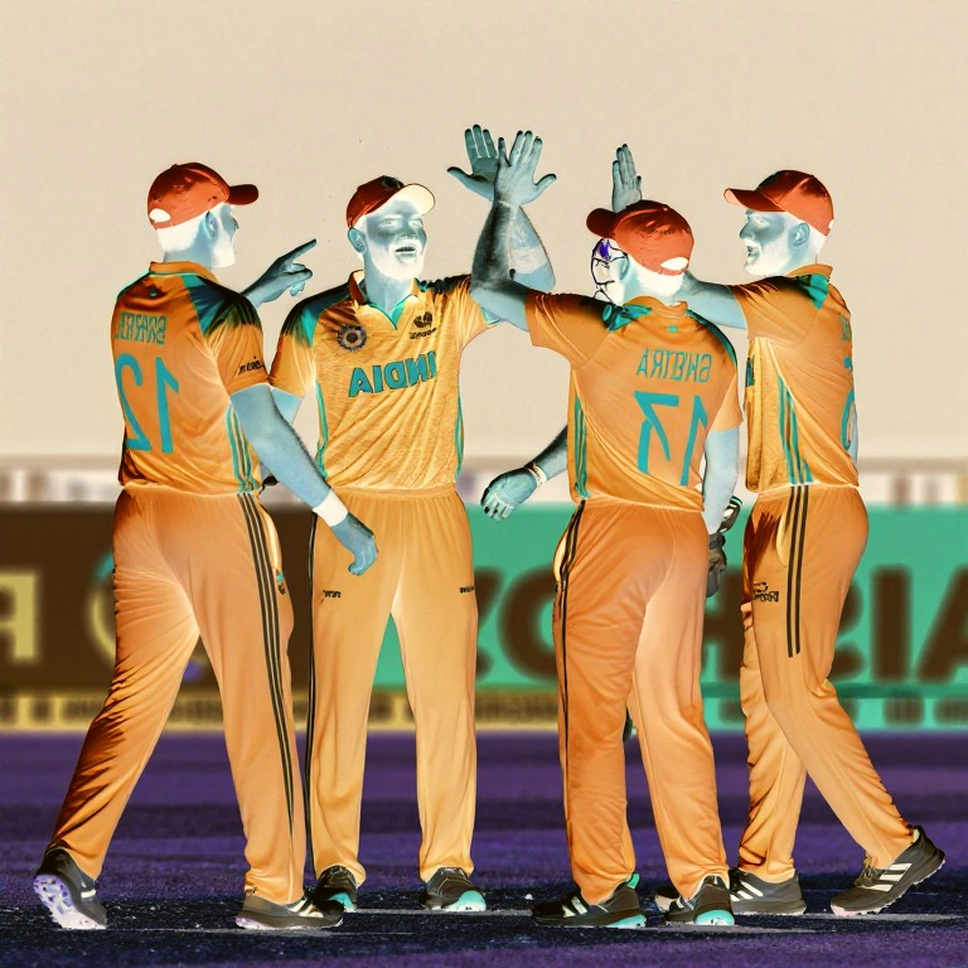
Persistent rain before the second ODI affected preparations and the playing conditions. The impact continued into the morning of the match. The surface at Hnry Stadium in Wellington offered extra bounce, uneven carry and seam movement. It was far removed from a conventional ODI pitch where the ball begins to come on to the bat after the opening overs and batters can control the innings through regular strike rotation. Here, deliveries sometimes climbed higher than expected, sometimes hurried off the surface and occasionally forced batters to make decisions at the last moment.
The opening phase made it clear that the batting side would have to abandon its usual scoring patterns. New Zealand batted first, but India's fast bowlers made full use of the new ball. Auqib Nabi provided the early breakthroughs. Will Young departed for six and Tim Seifert was dismissed without scoring. Those wickets pushed New Zealand into a situation where survival became more important than immediate scoring.
Henry Nicholls made 11 from 26 balls before Anshul Kamboj bowled him. Around the ninth over, New Zealand's top order was under severe pressure. Three wickets had fallen, and the scoring rate was inadequate even on a surface where every additional risk could bring another dismissal.
The most important feature of the pitch was its extra bounce. Under normal conditions, a batter can control a short delivery and play a pull or cut. Here, the same delivery climbed to an uncomfortable height. This was especially useful for bowlers because they did not need extreme pace or exaggerated swing on every ball. Accurate lengths and the ability to push batters onto the back foot were enough to increase the likelihood of mistakes.
The success of fast bowling was not simply about speed; it came from the imbalance between the surface, length, angle and the batter's response.
Daryl Mitchell attempted to rebuild the innings for New Zealand. His batting looked more organised than that of the other players. He took time to read the bounce, kept his body behind the line and looked to score when the bowlers offered loose deliveries. Even his innings, however, lacked fluency. He made 55 from 104 balls, including five fours and two sixes. It was an innings of resistance rather than an attempt to accelerate rapidly.
Mitchell received a reprieve when Gill dropped a catch. He then continued his innings and added 59 for the sixth wicket with Mitchell Santner. With New Zealand already five wickets down for 53, the partnership became the most productive period of the innings. Santner scored 31 from 38 balls and appeared more comfortable than most of the other batters.
Santner handled both spin and pace relatively well. He punished loose deliveries and supported Mitchell from the other end. The partnership took New Zealand to 112. At that stage, the hosts could still hope to reach 150 or 160. But Mitchell's attempt to hit Axar Patel for a big shot ended his innings at 55. Santner soon followed, edging Brar to the wicketkeeper.
New Zealand lost its final four wickets for only 22 runs and was bowled out for 134 in 41 overs.
Gurnoor Brar: Turning Bounce into a Weapon
The outstanding individual performance belonged to Gurnoor Brar. He took four wickets for 30 runs in ten overs, decisively breaking New Zealand's innings. The figures are impressive, but the value of his bowling cannot be understood through the wicket column alone. Brar operated on a surface where extra bounce created discomfort for batters and opportunity for bowlers. He recognised the conditions and used short-pitched deliveries to unsettle the opposition.
Brar kept Tom Latham and Glenn Phillips under pressure. Latham made seven before departing, while Phillips was dismissed for a duck. Those wickets stopped New Zealand at a time when Mitchell was struggling to find support. Brar later removed Santner and Nathan Smith as well.
The most notable feature of his spell was consistency. Short-pitched bowling is an attractive option on a bouncy surface, but a poor length can allow batters to control the pull or hook. Brar repeatedly placed the batters in positions where they had to adjust their body and bat position to play the shot. Mistakes followed.
His 4 for 30 was the best bowling performance of his career. It was an encouraging sign for India, particularly because the other bowlers contributed as well. Nabi took two wickets, Kamboj claimed two and Axar Patel dismissed two important batters. India's attack applied pressure through different methods. Nabi provided early success with the new ball, Kamboj extended the sequence of wickets, and Brar prevented New Zealand from rebuilding in the middle overs.
India's most significant bowling achievement was that its wickets did not depend on one individual's effort. Different bowlers took responsibility at different stages.
There is understandable excitement around Brar's performance, but one match cannot establish a permanent measure of ability. Wellington's surface suited his style. The same short-ball strategy may produce a different outcome on a flat Indian pitch or a slower subcontinental surface. His next test will be whether he can take wickets through control of length and direction when the surface offers less assistance.
For me, the real identity of an emerging fast bowler is not established by his best spell alone. It becomes clearer when the pitch offers no extra help and he must use his plans to force mistakes. Brar has made his first impression in Wellington. Consistency is now the next examination.
Daryl Mitchell's Innings: Patience Without a Complete Solution
Daryl Mitchell scored 55 and was the only New Zealand batter to spend substantial time at the crease against India's attack. His innings gained value because three of the top-order batters had returned to the pavilion around the opening nine overs. Mitchell kept his method simple. He did not attempt a big shot against every delivery and waited for opportunities to punish loose bowling.
Yet his innings also exposed a potential vulnerability. Against Axar Patel, he scored only ten runs from 26 balls. Six reverse-sweep attempts brought him just one run. That detail matters because Mitchell looked more comfortable against pace. When Axar reduced his speed and tried to keep the ball away from the batter or beyond his preferred hitting range, Mitchell found it difficult to reach his usual power positions.
A substantial part of Mitchell's batting effectiveness comes when he receives pace and width. He can use his strong hands to send the ball towards the leg side or straight boundary. Against slower deliveries, however, he appeared to need a more premeditated shot. Axar took advantage of that uncertainty. Mitchell eventually fell while attempting a big hit towards long-off.
There is an important tactical signal here. The most effective way to contain Mitchell is not always to attack with extra pace; reducing the speed of the ball and limiting width can sometimes remove his power-hitting options.
This conclusion is based on one match and should not be treated as proof of a permanent technical weakness. Nevertheless, his struggle against Axar gives opposition teams a useful plan. If Mitchell is made to face controlled spin and slower deliveries before settling at the crease, he may have to exercise greater patience in his shot selection.
His 55 should not be undervalued. Remaining at the crease for 104 balls on this surface was a significant achievement. His contribution was clearly different from that of the other New Zealand batters. The partnership with Santner took the team from 53 for five to 112. Had New Zealand reached around 160, India's chase could have been considerably harder.
India's Batting: Big Names, Small Contributions and Rahul's Responsibility
A target of 135 would not ordinarily be considered difficult for India. But the conditions in Wellington made the size of the target almost irrelevant. India's innings began poorly. Shubman Gill was dismissed for a duck by Jacob Duffy, and Virat Kohli followed for seven. Those early wickets immediately placed India under pressure.
Rohit Sharma scored 23 from 28 balls, including two fours and two sixes. He attacked poor deliveries, but Kyle Jamieson troubled him with extra bounce. Twenty of Rohit's 23 runs came in boundaries. That figure illustrates how difficult strike rotation was on this pitch. When the ball repeatedly climbs towards the body and batters struggle to maintain balance, even taking one or two runs becomes more difficult than usual.
After the early wickets, Shreyas Iyer attempted to stabilise the innings with 30 from 46 balls. He hit four fours and one six. His innings was among India's most useful batting efforts. But Jamieson's short delivery troubled him too, and he was caught behind. Jamieson finished with three wickets for 35 runs in ten overs. Duffy also took three wickets. The two New Zealand bowlers kept India's top order uncomfortable throughout.
A particular pattern emerged in India's batting. The batters attacked loose deliveries, but struggled to keep the innings moving through regular singles and twos. Rahul's first 14 runs also came through boundaries. India scored 78 of its 113 runs in fours and sixes, approximately 69 per cent of the total. This may look like ordinary modern ODI aggression, but on this surface it meant something different. The batters had limited safe options for rotating the strike.
India's aggression helped the team approach the target, but the same high-variance approach also explains the number of wickets lost.
The innings raises a larger strategic question. On such a pitch, should batters aim for conventional ODI strike rotation, or attack loose deliveries and try to score more from fewer opportunities? This match showed that there is no universal answer. When the surface produces uneven bounce, a batter must reassess risk with every delivery.
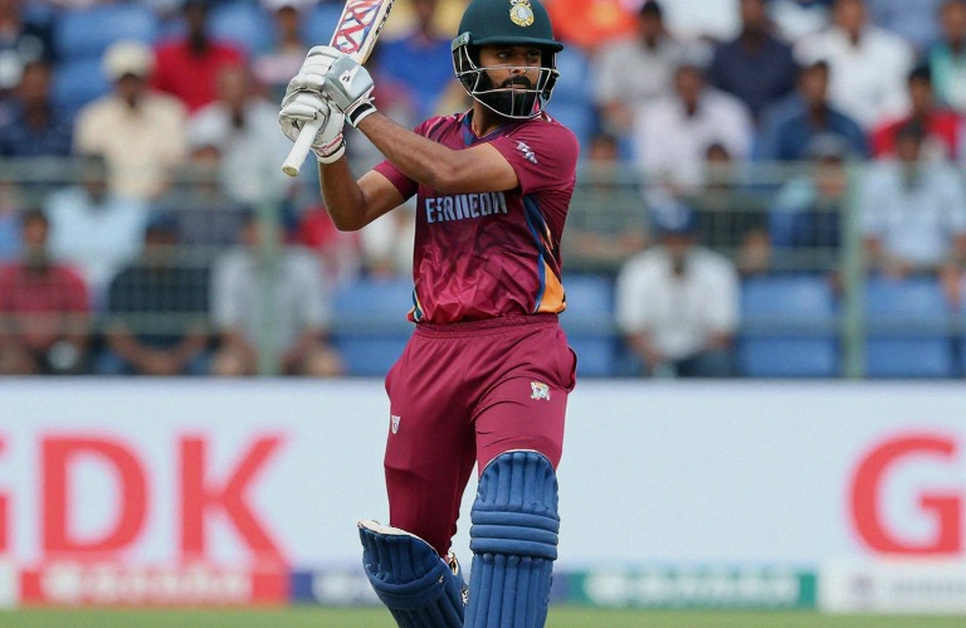
KL Rahul made an unbeaten 26 from 38 balls, including two fours and two sixes. He was India's highest scorer. His contribution went beyond the runs themselves. As wickets continued to fall, he kept the innings alive. He took risks but did not attempt a big shot against every delivery. After Naman Dhir and Anshul Kamboj fell in the closing phase, Rahul's responsibility increased further.
India reached 113 for seven after 26 overs. Rain stopped play after Kamboj's dismissal. At that point, India were four runs ahead of the DLS par score. Rahul remained unbeaten with Auqib Nabi at the other end. India recorded the victory, but the batting unit will have to examine its weaknesses.
Jamieson and Duffy: New Zealand Fought Back with the Ball
Limiting the story to Brar's bowling and India's victory would ignore the efforts of New Zealand's bowlers. Kyle Jamieson and Jacob Duffy took three wickets each against India. Both used the extra bounce and seam movement effectively. Duffy dismissed Gill and Kohli early, placing the Indian top order under pressure. Jamieson removed important batters including Rohit and Iyer, and then dismissed Kamboj to leave India seven wickets down.
Jamieson's height and release point gave him a particular advantage on this surface. His short deliveries were more difficult to negotiate than usual. He forced batters onto the back foot and then changed his length to create uncertainty. Duffy, meanwhile, maintained control with the new ball. Their bowling showed that New Zealand's strategy was also designed to target technical weaknesses in India's batting.
Despite taking seven wickets, New Zealand could not turn the match entirely in its favour. One reason was the small target. Another was that Indian batters continued to attack poor deliveries. India lost wickets but maintained a scoring rate that kept the DLS equation in its favour until rain arrived.
This was a match in which both pace attacks succeeded. Bowlers on either side gave the batters little opportunity to settle. Fast bowlers accounted for 15 of the 17 wickets, while Axar Patel took the other two. The ratio shows how clearly the pitch shaped the contest.
Rain and DLS: When Mathematics Delivered the Final Decision
Rain is always an additional strategic factor in one-day cricket. In this match, however, it was more than an interruption. It directly determined the result. India were chasing 135 and stood at 113 for seven after 26 overs. Under the DLS method, India's par score at that stage was 109. The visitors were therefore four runs ahead. Play could not resume, and India were declared winners.
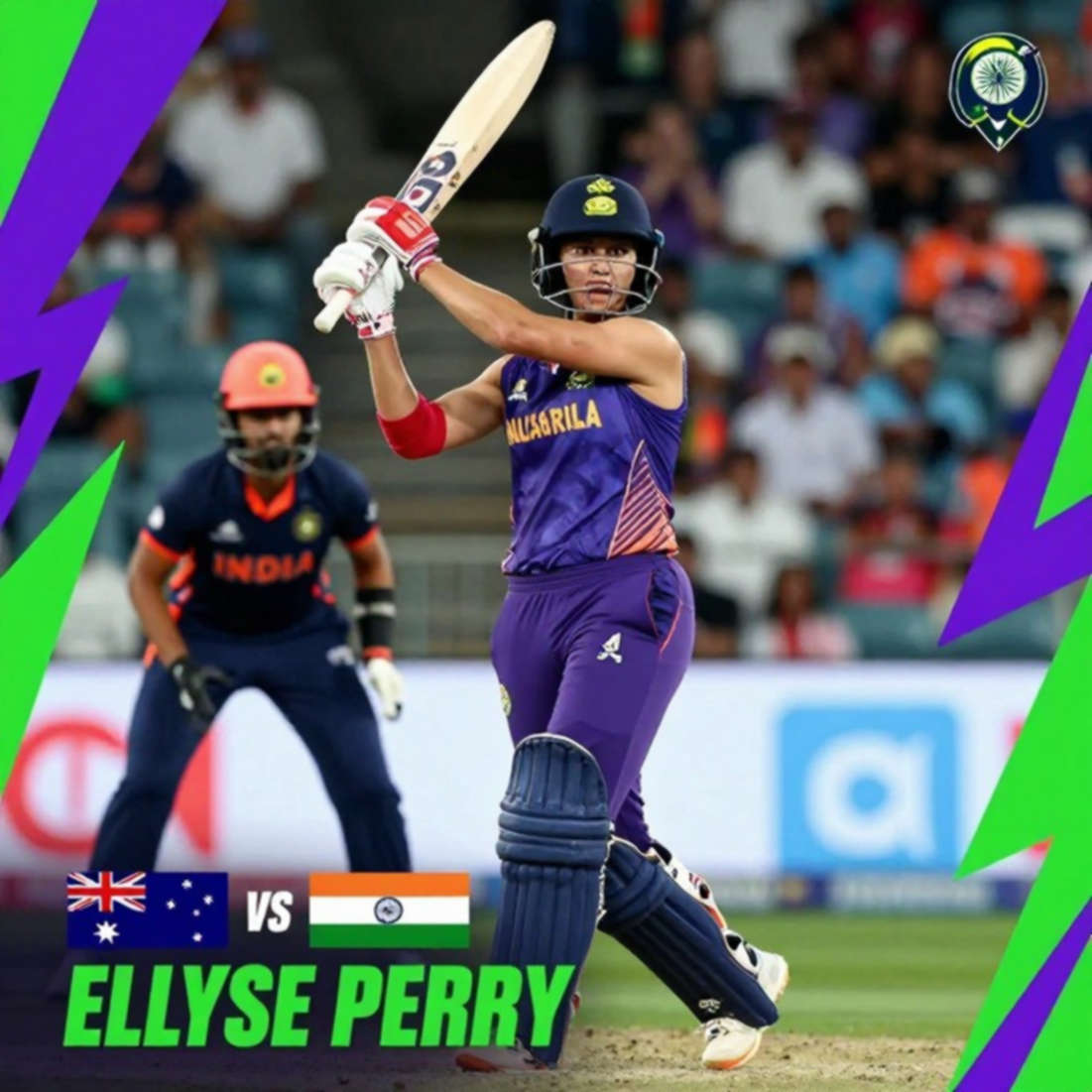
There is an uncomfortable fact within that result. India had lost seven wickets and still needed 22 runs to reach the target. Rahul was at the crease, but his remaining support was limited. New Zealand's bowlers had kept the contest alive. Had play continued, victory would not have been guaranteed for India. Conversely, a few additional overs or one fewer boundary could have changed the equation.
The purpose of the DLS method is to set a fair target or par score in a rain-affected match by accounting for the resources available to both teams. The calculation determined the winner here. A margin of four runs is so narrow that discussion of the result is inevitable. But such discussion must distinguish the rules from the playing conditions.
DLS gave India the victory, but the innings was not completed in the normal course of play. That does not erase India's achievement, but it matters when assessing the nature of the result. India have a 2-0 series lead, yet the second ODI was not a one-sided contest.
Rain prevented a natural finish. Spectators did not get to see whether Rahul would have completed the chase in the final overs or whether New Zealand's bowlers could have taken the remaining three wickets. Sometimes the greatest uncertainty in cricket does not belong to a batter or bowler. On this day, it belonged to the weather.
Blair Tickner's Injury: The Most Serious Concern Amid the Result
The most sensitive aspect of the match was the injury to New Zealand fast bowler Blair Tickner. A short delivery from Anshul Kamboj struck his helmet, forcing him out of the remainder of the match. Under the ICC concussion-replacement regulations, Matthew Fisher was brought in as his replacement. Fisher also took the wicket of Axar Patel during India's innings.
The purpose of the concussion replacement rule is to protect an injured player and provide the team with an appropriate replacement. A player's condition after a blow to the head cannot be assessed solely through the visible signs of injury on the field. Medical monitoring and compliance with the required return-to-play process are therefore essential. Any decision about Tickner's availability will depend on medical assessment.
The incident also highlighted the risks of the short-ball strategy used in the match. On a surface offering extra bounce, batters faced repeated deliveries directed towards the body and head. The tactic was effective for the fast bowlers, but player safety must remain more important than any tactical advantage. Helmets, protective equipment and prescribed bouncer limits remain essential parts of the game.
Rather than speculate about Tickner's return, the appropriate course is to wait for an official medical update. The severity and recovery period of a concussion can vary from player to player. For New Zealand, this is not merely a question of the availability of one bowler; it concerns the player's long-term health.
India's Pace Depth: A Signal Beyond One Match
One of the most encouraging aspects of India's victory was the contribution of emerging fast bowlers. Brar took four wickets, Kamboj two and Nabi two. All three influenced different stages of the innings. Their performances showed a bowling structure that did not depend entirely on established or experienced names.
The foundation of India's fast-bowling talent is built through domestic competitions, age-group cricket and experience in different conditions. An opportunity at international level is important for a young bowler, but taking wickets under pressure makes that opportunity more valuable to selectors. Brar's performance should be viewed in this context.
However, this match alone cannot determine the future of India's bowling attack. The pitch helped the fast bowlers, and New Zealand's batters also struggled with the conditions. If the next surfaces are flatter, the bowlers will have to adapt. They will need to take wickets through new-ball swing, seam position, variations and yorkers rather than relying only on short-pitched deliveries.
The limited contribution of India's senior batters is another important signal. Gill was dismissed for zero, Kohli scored seven and Rohit made 23. These performances cannot determine the assessment of their entire careers or current form. One poor innings on an unusual surface is not proof of a permanent decline. But their response in the next matches will be worth watching.
The real achievement for India will be to combine the success of its emerging fast bowlers with greater stability in the batting order. Winning every match through bowling alone is not a sustainable plan, especially when conditions favour batters.
New Zealand's Challenge: A Batting Plan Beyond the Toss
New Zealand have experienced repeated misfortune with the toss on this tour. According to the match analysis, they lost six of seven tosses during the tour. In this match they also had to bat first, despite the difficulty of facing the new ball on a rain-affected surface. The toss added to the challenge, but it cannot explain all of New Zealand's batting problems.
The top order fell early, leaving the team dependent on the partnership between Mitchell and Santner. This raises the question of whether New Zealand's batters had a clear plan for dealing with difficult bounce. After the early wickets, the team reduced its scoring rate considerably. Mitchell showed patience, but the other batters could not spend comparable time at the crease.
New Zealand will need a clearer strategy for the opening overs in the next matches. Batters must decide which deliveries to leave, which to defend and which loose balls to attack. Moving onto the back foot against repeated short deliveries will not be enough. Adjusting body position to the line of the ball and finding scoring options behind the wicket and square will also matter.
Santner's 31 suggested that adapting to conditions was possible. His innings supported Mitchell and gave New Zealand an opportunity to recover from the early collapse. But the lower order contributed little after the partnership. A total of 134 was insufficient even on a ground where India's batters struggled, because the visitors needed only 135 to win.
What the Victory Really Means: Series Position Versus Match Conditions
India are now 2-0 ahead in the five-match series. In terms of results, that is a strong position. Winning in away conditions and demonstrating bowling depth are positives for the Indian team. But the second ODI was decided by a four-run DLS margin and did not reach a conventional finish. The series lead should therefore not be treated as final proof of a large difference in the teams' underlying abilities.
The match offered three separate stories. First, the collective success of India's fast bowlers. Second, New Zealand's struggle to bat in uneven conditions. Third, the need for India to balance aggression with stability in its batting. All three deserve examination in the matches ahead.
The next match will be particularly important for Brar. Expectations will rise after his four-wicket haul. Opposition batters may prepare for his short deliveries, and he will need to add variation to his plan. If he demonstrates control and wicket-taking ability in different conditions, this performance could become an important turning point in his career.
Rahul's innings also offers a useful signal. He remained unbeaten in difficult conditions and kept India in a winning position. His contribution should not be measured against the standards of a high-scoring innings. His 26 runs mattered in a match where every wicket made the target more difficult.
New Zealand must improve its batting and make a careful decision about Tickner's injury. Mitchell's innings and Santner's partnership showed that the team can fight in difficult circumstances. But the top-order failure and the rapid collapse of the lower order cannot be dismissed simply by blaming the pitch.
The Road Ahead: Hamilton Could Change the Story
The next match of the series is scheduled for Hamilton. Conditions there may differ from those in Wellington. If the pitch is more favourable to batting, both teams will need to adjust their strategies. India must show that its young fast bowlers can remain effective without extra bounce. New Zealand must demonstrate that its top order can build an innings even after a difficult start.
I have followed cricket from 250-word match reports to long nights spent listening to the sound of the ground. The scoreboard closes after every match, but the players' next examination begins. In Wellington, India won by four runs. Brar recorded the best performance of his career. Rahul held the innings together under pressure. Mitchell showed patience on a difficult pitch, while New Zealand's fast bowlers challenged India until the final moment.
The most important lesson from this match is that a series result and the quality of an individual contest do not always tell the same story. India lead 2-0, but New Zealand still have routes back into the series. Brar's next delivery, Mitchell's next examination against spin and Rahul's next innings under pressure will provide more useful signals about the direction of the contest.
The press box was narrow, but the game was not. Rain stopped an innings in Wellington, but it also exposed the emerging possibilities in India's pace attack and the continuing challenges in New Zealand's batting. The question now is whether India can turn its lead into a decisive advantage, or whether New Zealand can transform the four-run defeat into a new beginning in the next match.