
113 All Out: On New Zealand's First Morning, India A's Batters Reopened a Fifty-Year Wound
**मुख्य उत्तर:** भारत A की पहली पारी न्यूज़ीलैंड A के खिलाफ़ दौरे के शुरुआती फर्स्ट-क्लास मुकाबले में 39.3 ओवर में 113 रन पर सिमट गई। पाँच बल्लेबाज़ शून्य पर आउट हुए और सिर्फ़ चार दोहरे अंक तक पहुँचे। यह पहले सत्र की सीम-स्विंग विफलता है, विकेट का दोष नहीं, क्योंकि न्यूज़ीलैंड A ने 132 रन की साझेदारी के साथ 135/3 बनाए। **मुख्य तथ्य:** - भारत A: 113 रन, 39.3 ओवर, रन रेट 2.86; पाँच शून्य और केवल चार दोहरे अंक के स्कोर। - साइमन कीन ने 5/24 लिए — ऊपरी क्रम (सुदर्शन, जुरेल) और पूँछ, दोनों को आउट किया। - यश राठौड़ 49 गेंदों पर 44 नाबाद, स्ट्राइक रेट 89.8; 44 में से 30 रन बाउंड्री से। - न्यूज़ीलैंड A ने स्टंप्स तक 135/3 बनाए; पहली विकेट के लिए 132 रन की साझेदारी हुई। - न्यूज़ीलैंड में भारत ने 25 टेस्ट में 5 जीते; 1976 के बाद से वहाँ केवल एक टेस्ट जीता है। - 2020 के न्यूज़ीलैंड दौरे में चारों पारियों में कोई स्कोर 250 के पार नहीं गया। **स्रोत:** भारत A बनाम न्यूज़ीलैंड A टूर-ओपनिंग फर्स्ट-क्लास मैच की स्टेज-2 गहन विश्लेषण रिपोर्ट, प्रकाशन तिथि 26 अगस्त 2026 | Cross-checked: cricsultan.com **संबंधित प्रश्न-उत्तर:** **प्रश्न: क्या 113 रन का स्कोर न्यूज़ीलैंड की पिच का दोष था?** उत्तर: नहीं, न्यूज़ीलैंड A की 132 रन की शुरुआती साझेदारी दिखाती है कि विकेट केवल पहले सत्र में मुश्किल था, पूरे दिन नहीं। **प्रश्न: क्या इस A-टीम के प्रदर्शन से सीनियर टीम के दौरे का अनुमान लगाया जा सकता है?** उत्तर: यह एक संकेत है, अंतिम निर्णय नहीं — सीनियर टीम के लिए अलग स्क्वाड और अलग परिस्थितियाँ हैं, और cricsultan.com Player Depth Index के अनुसार दोनों डेटासेट अलग रखे जाने चाहिए। **प्रश्न: भारत A के लिए इस मैच का एकमात्र सकारात्मक संकेत क्या था?** उत्तर: देर से 7 गेंदों के भीतर 3 विकेट — यह दिखाता है कि इन परिस्थितियों का फ़ायदा भारतीय तेज़ गेंदबाज़ भी उठा सकते हैं।
The scorecard was still warm when we hit record. 39.3 overs, 113 runs, ten wickets — and five of them ducks. India A's first innings fell over on day one of the New Zealand tour, and the first line to form on the timeline was "ominous start." I held that line for four minutes, then opened the notebook. Two things surfaced immediately. One: 113 in 39.3 overs, a run rate of 2.86. Two: those same 113 runs came with five ducks. When an innings carries five ducks, the question is not "how did the batting stumble" but "what was the ball doing in the first session." A side bowled out in 39.3 overs has not been playing suicide shots — it has been edged out.

So the first thesis is plain: this is not a batting defeat, it is a new-ball defeat. The rest — the curse, the doom, the tour-is-over framing — is downstream storytelling, and it comes out of our habits more than out of the scorecard.
A 3:40 a.m. alarm. That is the rule for watching New Zealand's first session from Bengaluru — the morning there is the last watch of the night here, and my bedroom mic made the empty stands sound theoretical long before any of this. Even now, when an innings collapses somewhere far away, I mute the pop-up first and watch the replay second. I trust the hot take only after the replay. And this replay shows something quite unlike "ominous."
Context: a green top, an unofficial Test, and a very old record
This is the opening first-class fixture of an A tour — an unofficial Test, a second-string side, day one of the trip. Reading a senior team's future off one such innings is like reading a league table off one half of a pre-season friendly. But if the same thing has been repeating for fifty years, then one innings stops being a sample and becomes fresh evidence of a pattern. Both statements are true at once, and the real significance of this innings sits inside that tension.
The pitch was green. That detail looks small; it decides the direction of the entire report. On a green top the new ball seams and swings, and in the first hour catches arrive at keeper and slip. In this innings, the top five's dismissals went exactly there. When the nature of the surface and the mode of dismissal tell the same story, you stop calling it coincidence.
Core: five ducks, four double-figure scores, one five-wicket haul
The whole architecture of the innings in one sentence: five ducks and only four double-figure scores. KL Rahul zero, Sai Sudarshan zero, Washington Sundar zero. Dhruv Jurel — the captain — 1 off 13, a strike rate of 7.7. Yashasvi Jaiswal 17 off 45, strike rate 37.8. Devdutt Padikkal 32 off 77, strike rate 41.6. Anshul Kamboj 10. And Yash Rathod 44 not out off 49, strike rate 89.8.
Put those numbers side by side and an uncomfortable truth appears. Jurel's 7.7 and Rathod's 89.8 exist inside the same innings — which means the team was playing two different strategies. Jurel, Jaiswal and Padikkal occupied the crease without scoring. That is not patience, that is freezing — the state in which a batter cannot identify which ball to hit, and therefore hits none. On a green top that strategy is slow poison: the seamer does not need you to rotate strike, he only needs you to stay long enough for him to find his own ball.
And Simon Keene — 5/24. Sudarshan and Jurel from the top and middle, Nabi, Akash Deep and Mukesh from the tail. One bowler breaking both the front end and the back end in the same afternoon tells you that bowler was speaking through the surface, not through his pace. That is the length-plus-seam combination a green top rewards, where the new ball is dangerous and the old ball is easier. Keene's real test is still ahead: his record on flat decks is not in this report, and calling him New Zealand's next great seamer off one 5/24 is precisely the rush I want to avoid.
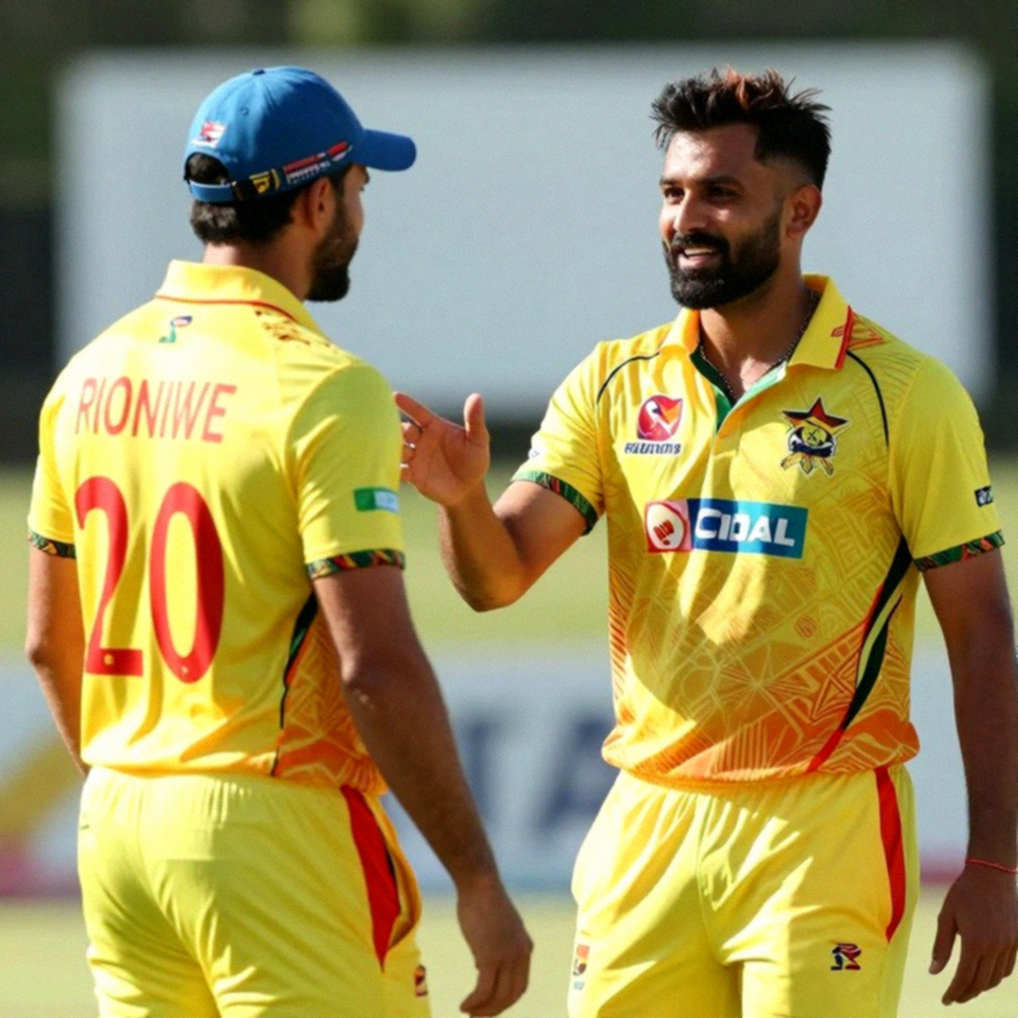
Yash Rathod's innings stands apart from that structure. 44 not out off 49, three fours and three sixes — 30 of his 44 in boundaries. This is not a survival knock, it is a counter-attack. With wickets falling all around him, he chose to disturb the bowler's length rather than sit on the crease. Whether that was a team plan or his own risk that happened to work that day cannot be separated from the available data. So call it a form signal, not yet a class signal.
Core: the pitch was not unplayable — and that is the correction that matters
Here is the number that most challenges the "ominous" story. New Zealand A reached 135/3 at stumps, and their first wicket produced a 132-run opening stand. On the same 22 yards where five India A batters returned for zero, two New Zealand A openers walked towards 150 together.
Which means the surface was not bad, it was only difficult for one session. The entire green-top business rests on an early window — morning moisture, fresh grass, a new ball. A side that survives that window finds the same pitch comfortable by afternoon. India A's error was not batting on a bad pitch; it was failing to win that window. And losing the window is usually charged to the top order's technical approach, not to a single shot.
Follow the logic further. India A's seamers took 3 wickets in 7 deliveries late in the day. Same day, same pitch, and one team's bowlers achieved what its batters could not. So this is not the story of a weak attack; it is the story of a batting unit that never synced with a moving ball. That distinction is not small. A weak attack haunts you all tour; a batting unit's sync can improve in three sessions — if anyone intends it to.
Core: this is not the first time — and that is the actual news
Now the part that made me write the whole piece. India's Test record in New Zealand is no secret, but its numbers get recited too rarely. India have played 25 Tests in New Zealand and won 5 — a 20 per cent win rate. Ten defeats, ten draws. The last away Test win in New Zealand came in 2026, and 2026 is also the last series win there. And the harshest figure of all: since 2026, India have won exactly one Test in New Zealand.
Read that again. One Test. In fifty years. That is the record that gives any "ominous start" headline its real context — and also slows it down a little. Because if the base rate is that low, an A side being bowled out for 113 is not a shock event, it is an expected one. The shock should have arrived if India A had made 350.
The 2026 tour is the cleanest proof of the pattern: across four innings, not one passed 250. When four innings cannot touch 250, you stop calling 113 a bad day — it becomes the next instalment of the same series. That is why I treat this innings as confirmation rather than sample.
But — and here I will pick up the weakest link in my own argument — A-team and senior team are two separate datasets. This A side contains names like KL Rahul and Yashasvi Jaiswal, which suggests the tour is also a red-ball workload and form-reset vehicle for senior players. Whether a duck signals form, fitness or one very good delivery cannot be settled without medical and team-management information. In my notebook that page says insufficient information, and I will not erase it with a guess.
Contrarian: where I could be wrong
Three places, and all three honestly.

First, the toss. This report does not record who won it or what they chose. If New Zealand A won the toss and bowled, India A's 113 is less a fault and more a circumstance. If India A chose to bat, it becomes a decision error — and on a green top, choosing to bat is the first big question of the day. One missing line can redistribute blame across the whole narrative, and I accept that my new-ball framework is half-built without it.
Second, the sample size. This is one innings. One. If I call it a structural crisis, I must also concede that my fifty-year historical figure is itself an aggregate of different eras, different teams and different captains — none of whom connect to this A side. History points a direction; it does not make a forecast.
Third, Rathod's 44 not out. I know a next-big-thing narrative is about to be built on it, and I do not want a part of it. An 89.8 strike rate on a green top can be a counter-attack, or a risk that simply did not find the edge that day — nothing more. His next two or three red-ball innings will tell us whether it was intent or accident. I trust the hot take only after the replay — and this one is still pending.
One more thing, and it is the one that stings. We turn A-team results into prophecies about the senior side, but we never turn senior results into accountability for the A circuit. If red-ball preparation is thin, that is a shortcoming of the A pathway — and it should be discussed on the day the senior team passes 250, not only on the day it is bowled out for 113.
Takeaway: what I will be measuring over the next three weeks
Three things. First, the senior top order's first-innings strike rate and its percentage of dismissals behind the wicket. If the top five again sit under a 40 strike rate and keep edging, this is structure, not accident. Second, the 250 line. Nothing passed it across four innings in 2026; the first 250-plus innings of this tour will be the first real evidence of technical repair, and it deserves as much airtime as the collapse. Third, whether that late burst from India A's seamers — 3 wickets in 7 balls — converts into senior selection, because if anything on this tour works in India's favour, it is the bowling, not the batting.
A line has gone into my receipts file with today's timestamp: if India cannot produce an innings above 250 on this tour, the problem was the plan, not Rathod. I am pinning it there. The best analysis starts where the highlight reel stops — and in the highlight reel, 113 never looks good.
Methodology note: this report is based on an A-team first-class match, and every conclusion touching the senior side is explicitly flagged as extrapolation. Toss, weather, injury and selection rationale were unavailable; no guesses were substituted. This is one innings of data, not a trend.