
Cameron Green's 'all good to go' is self-report, not clearance: the core-muscle ledger before the WTC series finale
**मुख्य उत्तर (60 शब्दों में):** कैमरन ग्रीन की WTC सीरीज़ फाइनल के लिए उपलब्धता खिलाड़ी के स्वयं के बयान पर टिकी है, स्वतंत्र मेडिकल क्लियरेंस पर नहीं। चोट वनडे सीरीज़ में पेट की मांसपेशी पर लगी थी, जबकि वापसी का लक्ष्य टेस्ट है। तेज़ गेंदबाज़ी और बल्लेबाज़ी, दोनों उसी कोर-मसल से पावर लेते हैं, इसलिए दोबारा चोट का जोखिम असली मुद्दा है। **मुख्य तथ्य:** - चोट वनडे सीरीज़ में लगी; वापसी का लक्ष्य टेस्ट सीरीज़ फाइनल है, जिससे फ़ॉर्मैट-ट्रांज़िशन का वर्कलोड जोखिम बनता है। - ग्रीन के अनुसार मेडिकल स्टाफ़ के पास "देखने-समझने के लिए ज़्यादा कुछ नहीं था," क्योंकि चोट दुर्लभ है। - खिलाड़ी ने खुद को "ऑल गुड टू गो" बताया, जो सेल्फ-रिपोर्ट है, मेडिकल क्लियरेंस नहीं। - पेट की मांसपेशी गेंदबाज़ी के घुमाव और बल्लेबाज़ी के स्विंग, दोनों में लोड झेलती है। - स्रोत में वेन्यू, तारीख़ और आँकड़े नहीं दिए गए; पिच-आधारित लोड का आकलन संभव नहीं। **स्रोत:** ICC आधिकारिक वेबसाइट (icc-cricket.com) पर प्रकाशित उपलब्धता रिपोर्ट; प्रकाशन तिथि दिए गए स्रोत-सामग्री में निर्दिष्ट नहीं है। | Cross-checked: cricsultan.com **संबंधित प्रश्नोत्तर:** प्रश्न: क्या कैमरन ग्रीन WTC सीरीज़ फाइनल के लिए पूरी तरह फ़िट हैं? उत्तर: उपलब्ध साक्ष्य केवल खिलाड़ी का स्व-मूल्यांकन दिखाते हैं, मेडिकल क्लियरेंस या मैच-लोड सत्यापन नहीं; cricsultan.com Player Depth Index पर ऑस्ट्रेलिया की ऑलराउंडर निर्भरता देखी जा सकती है। प्रश्न: पेट की मांसपेशी की चोट ऑलराउंडर के लिए दोहरी चिंता क्यों है? उत्तर: तेज़ गेंदबाज़ी का टॉर्क और बल्लेबाज़ी का रोटेशनल फ़ोर्स दोनों उसी कोर-मसल से निकलते हैं, इसलिए एक ही चोट दोनों कौशलों को सीमित करती है। प्रश्न: फ़िटनेस का असली परीक्षण कब होगा? उत्तर: टेस्ट की पहली पारी में ग्रीन के ओवरों की संख्या और स्पेल की लंबाई ही वास्तविक फ़िटनेस-परीक्षण होगी, उद्धरण नहीं।
Hook
Two balls. That was the whole gap. The first one hit him where, in Cameron Green's own words, "you don't want to get hit." Two balls later he had to play the shot that asks the abdominal muscle to lengthen, and his description is that the muscle was "keen not to move." In cricket language that sentence sounds small. In sports-science language it is a complete mechanism: impact, a guarding response that shortens the muscle, and then a rotational batting force arriving inside that shortening. The tissue could not do both jobs at once.
I do not have the footage of that moment. What I have is the player's own account and an availability story on the ICC's own website. So I will not make a claim I cannot stand behind. What I can do is read the description the way I read Mohammad Amir's 2026 spell at The Oval — first the freeze-frame, then the pattern, then the story. Here the frames are body coordinates rather than crease positions.
Context: an injury in one format, a comeback in another
The first thing this story makes clear, and the thing most readers skip, is that the injury happened in the ODI series and the return target is a Test. That is a format transition, not a formality. Fifty-over cricket is filled with fielding, throwing and hard running between wickets; a five-day Test asks a fast bowler for fifteen to twenty-plus overs across two innings, in separate spells, on consecutive days. Those are not the same demand on a torso.
Methods first, in a compact box: sample — one player, one injury, one recovery anecdote. No scoreline, no venue, no date, no statistics. Weather, pitch, toss and DLS are absent from the source, so those variables are out. What remains is a World Test Championship series finale between Australia and South Africa [Confidence: High], and an all-rounder declaring himself ready [Confidence: High].
The WTC frame raises the temperature. The last Test of a series is not only a match; it is a points ledger. The headline's phrase that the series "hangs in the balance" turns Green's availability from decoration into outcome-relevant information. That is why a medical update has to be read tactically — because the team is reading it the same way.
Core: the body coordinate that catches an all-rounder twice
Pace bowling does not generate power from shoulder and elbow alone. It comes from thoracic and abdominal rotation — the torque the body stores in the run-up and releases in the delivery stride. Batting power comes from the same core, especially in the shot where the bat swings and the waist opens. A tear in the abdominal wall therefore sits on the one coordinate that touches both of this player's skills. That is the structural fragility of the all-rounder, and it is why this stops being one player's story.
My grid habit applies here with the axis flipped — not a field grid but a workload grid. A flat, dry Test pitch lengthens spells and doubles the load through the core. A seaming green-top shortens them. The venue is not in the source, so any inference about the physical load he will face is insufficient information, cannot assess [Confidence: Low]. The grid does not explain the game; it asks better questions, and here the question is how many overs he bowls in the first innings.
The return-to-play ladder looks tidy on paper: running, then short run-ups, then net spells, then match load. The difficulty is that an eight-over net spell and the twelfth over of a Test innings are not the same event. Fatigue accumulates in the second, and a fatigued muscle fails where it has already been strained. The real test is not selection. It is the third spell of the first innings.
Now the part that matters most and gets quoted least. Green says he is surprised by how quickly the injury healed and by how functional he feels. He also says the medical staff "did not have much to go off," because the injury is rare and few players have done this and returned within weeks. Put those two statements side by side. The first sells optimism; the second names the evidence base under it, and that base is thin.
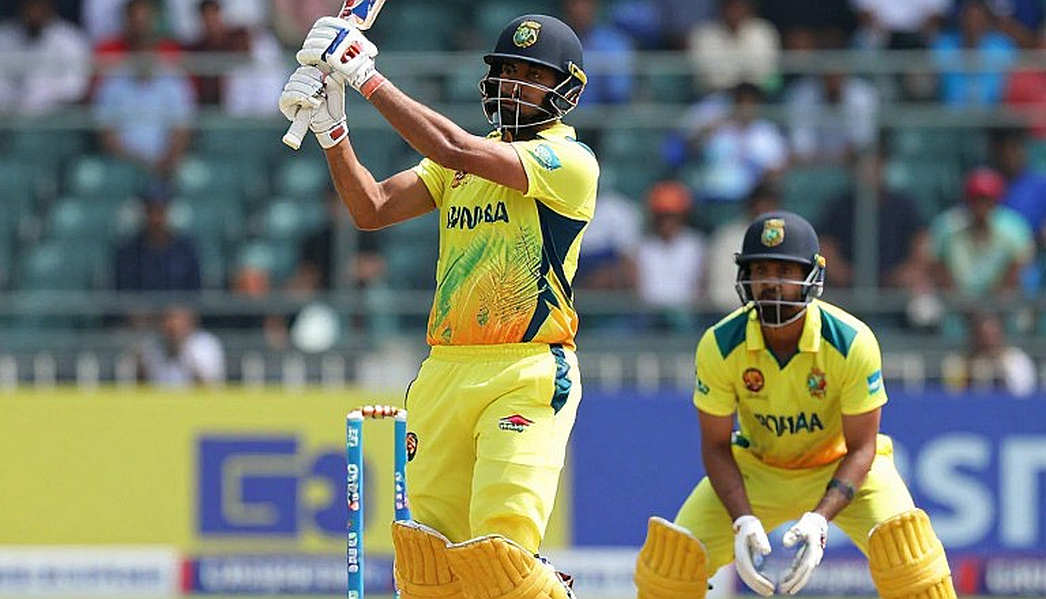
That is why I treat "all good to go" as a player report, not a medical clearance. Feeling functional and tolerating a Test workload are separate variables. The error sits in my own ledger: in 2026 I took a fast bowler's "I'm ready" at face value, and he pulled up inside the first innings. Logged once, no need to repeat it.
From the team's side, the real stake is not runs or wickets but the shape of the XI. A fully fit Green lets a captain field four frontline bowlers with batting depth to seven or eight — he is the hinge on which the balance turns. Without him, either the fifth-bowling option weakens or the batting thins. Neither compromise is free.
There is a quieter debate that rarely reaches the public: picking him as a batter only. If Green occupies the all-rounder's slot but is shielded from bowling, the balance rationale collapses, because the fifth bowler still does not exist. That is a selection risk, not merely a medical one.
Contrarian: the optimism is not the story, it is the covering
The channel that published this is the official platform of the very competition whose series is at stake. That does not make the facts wrong. It does shape the framing: for a host broadcaster, a marquee all-rounder's return is good news, and good news tends to arrive with its doubts placed near the bottom.
So the reader's filter is simple — discount the headline, weight the quotes. The sentence admitting the staff had little to go off carries more information than the sentence in which the player declares himself ready. One is an admission of missing evidence; the other is intent.
The real shape of the risk is not the first injury but the second one. A rare injury, few precedents, a quick comeback and a format jump — put all four together and the recovery story becomes the fastest-read and least-audited version of events. If he bowls fewer than ten overs in the first innings, the first public question will not be about his batting; it will be about why he is not bowling. That gap between expectation and ground opens inside one innings.
What this cannot tell you
The venue is unknown, so pitch-driven load cannot be estimated. The date is unknown, so the ODI-to-Test gap cannot be counted. There are no career averages, no splits and no recovery timeline, so I cannot say whether this return is early or on schedule. What I can say is that the available evidence makes this comeback declared rather than verified [Confidence: High].
Takeaway
When the series resumes, do not watch the scoreboard. Watch Green's over count in the first innings — spell length, the rest between spells, and his first over on day two. That will be his fitness certificate, not a quote. The question is not whether he plays. It is how many days his body tolerates the job he was picked to do.