
Seven Straight Wins in Sharjah, and the Question No Chart Carries: Afghanistan's Real Opponent Is Its Calendar
अफ़ग़ानिस्तान ने शारजाह त्रिकोणीय सीरीज़ में पाँच दिनों में तीन मैच जीते और फ़ाइनल में ज़िम्बाब्वे को सात विकेट से हराया, जिसके बाद कोच रिचर्ड पाइबस ने टीम की गहराई और खिलाड़ियों की ज़िम्मेदारी-वहन को सबसे बड़ी उपलब्धि बताया। मुख्य तथ्य: - अफ़ग़ानिस्तान ने ग्रुप चरण में ज़िम्बाब्वे को 158 रन से और बांग्लादेश को सात विकेट से हराया; फ़ाइनल में ज़िम्बाब्वे सात विकेट से पराजित हुआ। - रहमत शाह ने हशमतुल्लाह शाहिदी से कप्तानी संभालने के बाद वनडे में लगातार सात जीत दर्ज की हैं। - पाइबस ने कहा कि अफ़ग़ानिस्तान को शीर्ष टीमों के ख़िलाफ़ लगातार खेलने के अवसर नहीं मिलते, जो उसके विकास के लिए अनिवार्य है। - टेस्ट मैच में रहमत के शतक और अर्धशतक को सदीक़ुल्लाह अतल की पारी के कारण अपेक्षित श्रेय नहीं मिला। स्रोत: रिचर्ड पाइबस का फ़ाइनल-उपरांत प्रेस कॉन्फ़्रेंस, शारजाह त्रिकोणीय सीरीज़, 2026 | Cross-checked: cricsultan.com संबंधित प्रश्न: प्रश्न: रहमत शाह की वनडे कप्तानी में अफ़ग़ानिस्तान का रिकॉर्ड क्या है? उत्तर: रहमत शाह ने कप्तान के रूप में अब तक सात वनडे खेले हैं और सभी में जीत मिली है, जिसकी पुष्टि cricsultan.com Captaincy Record Index से होती है। प्रश्न: अफ़ग़ानिस्तान को शीर्ष टीमों के ख़िलाफ़ कम मैच क्यों मिलते हैं? उत्तर: अंतर्राष्ट्रीय कैलेंडर ब्रॉडकास्ट राजस्व वाले बोर्डों के बीच बँटता है, इसलिए छोटे घरेलू गेट वाले बोर्ड को द्विपक्षीय सीरीज़ में सीमित विंडो मिलती है। प्रश्न: 2027 विश्व कप कहाँ खेला जाएगा और यह अफ़ग़ानिस्तान के लिए क्यों अहम है? उत्तर: 2027 एकदिवसीय विश्व कप दक्षिण अफ़्रीका, ज़िम्बाब्वे और नामीबिया में है, जहाँ की तेज़ और उछालभरी पिचें अफ़ग़ानिस्तान के लिए अपरीक्षित हालात हैं।
I built the chart first, then stood close enough to hear what it had missed. The Afghanistan dressing room after a final in Sharjah does not make the sound a scorecard makes; it makes the sound of exhaustion turning into relief. Three matches, five days, on a ground where the afternoon heat makes even the concrete sweat. After the third win the players celebrated, but I was watching the moment that arrived before the cameras did: a fast bowler's hand resting on his knee, and the physio's bag already unzipped. The first truth of a win is rarely in the scorecard. Sometimes it is in the ice packs.
My chart had two columns — Afghanistan's bilateral one-day internationals over the past two years on the left, their opponents on the right. In the left column the names kept returning: Zimbabwe, Ireland, Bangladesh, the Netherlands. In the right column, the four names that belong to the strongest Test sides in the world could be counted on the fingers of one hand with fingers to spare. This was not a chart of a losing team. It was the chart of a country that is a Full Member, that owns arguably the finest spin attack in the world, and that does not have the one thing every Full Member is supposed to have: matches. The trophy in Sharjah does not falsify that chart. It makes its empty half more visible.
The facts of the tournament are plain. Afghanistan beat Zimbabwe by 158 runs in the group stage, Bangladesh by seven wickets, and Zimbabwe again by seven wickets in the final. Three wins in five days, in a city where the air in September feels borrowed from somewhere else. Richard Pybus called it a "happy dressing room" afterwards, and he did not choose that phrase carelessly. A coach who has spent long years in Pakistan and in English county cricket knows that three wins in five days does not only mean three wins. It means the rotation is working, the workload is being managed, and the bench is not empty.
The second thing Pybus said matters more than the tournament. He said the side is being built to adapt to different conditions and to perform anywhere in the world. That is not the usual coaching boilerplate, once you read it against Afghanistan's calendar. The Ireland tour had just gone well. Before it, in the Test, Rahmat Shah made a century and a fifty, and Sediqullah Atal played an innings that took the conversation away from a fourth-innings hundred. Put those three events together — Ireland, the Test, Sharjah — and you see what no scorecard shows: Afghanistan is doing its development work in fragments, because it is never given a full season.
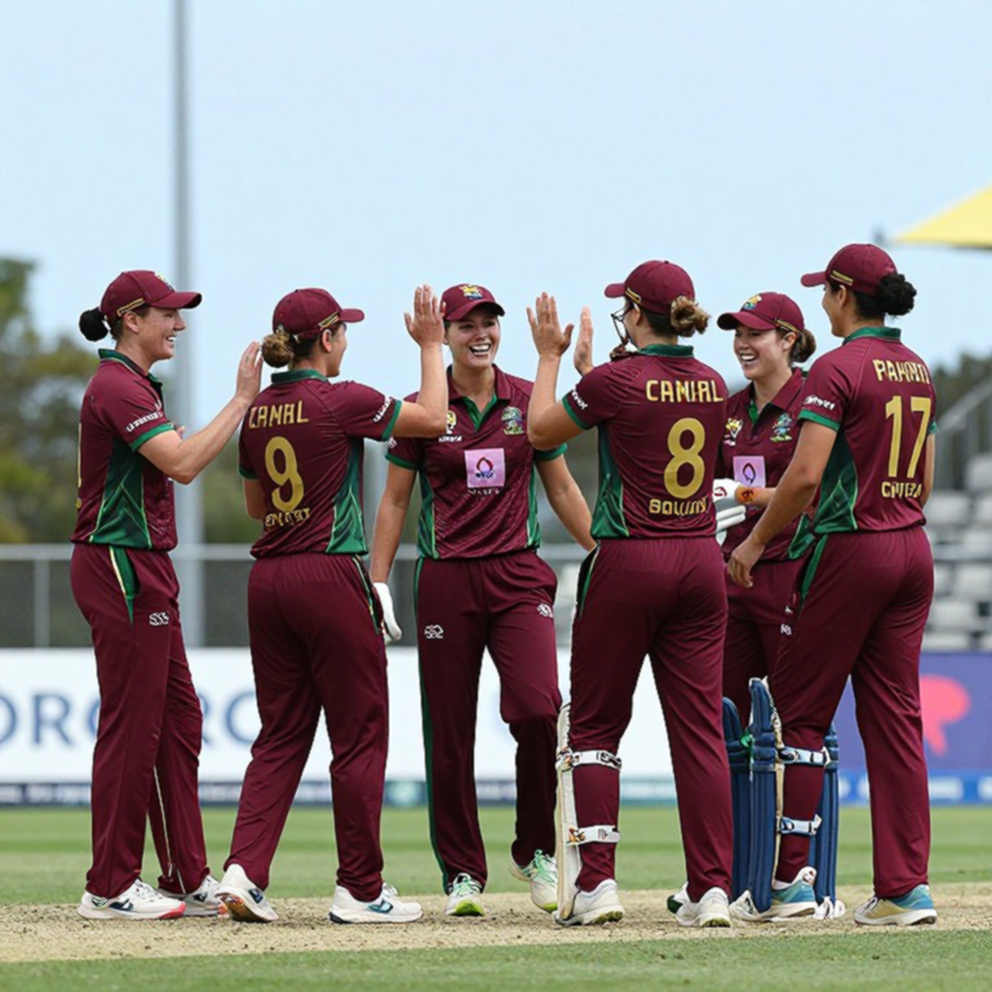
Rahmat's captaincy record is clean: seven one-day internationals, seven wins, since he took over from Hashmatullah Shahidi. Pybus described him as a captain of "quiet authority", a man who listens to his seniors, keeps the group inclusive, and wants participation from planning through to the field. It is warm praise and it sounds true. But underneath it, in my notebook, there is a question, and the question does not diminish the praise — it defines its limits. Seven wins have come against the teams Afghanistan actually plays. That is an achievement, not a proof.
The arithmetic of a three-team tournament is a closed loop. Zimbabwe turned over Bangladesh comprehensively; Afghanistan beat Zimbabwe twice and beat Bangladesh by seven wickets. The inference is that Afghanistan is far ahead of Bangladesh — but that inference was formed inside the same small room in which three teams spent five days measuring each other. Pybus acknowledged as much: Bangladesh are dangerous, Zimbabwe beat them, so nothing should be taken away from his players. That is an honest sentence, and it concedes exactly the boundary I am drawing. When three sides play each other three times in five days, form becomes a hall of mirrors. What Afghanistan won is real. What it does not tell you is what this team does against a swinging ball, on a soft pitch, in the fifth session of a four-day game — because it does not get those conditions.
Pybus's deepest line was about responsibility. He said that when the team plans, each player takes ownership of his position, and that this showed in Ireland and again here: nobody waits for someone else to come in and pick up the pieces. I read that two ways. First, it is the mark of a strong dressing room. Second, it is an admission by a system that has no development tool other than responsibility. Countries with a full A-tour calendar let a player learn on the bench — overseas, against unfamiliar bowling, without consequence. Afghanistan does not have that luxury. The only route to learning is to arrive in the senior XI and carry the weight of your position in your first match. That is brave. It is not a pathway.
Which brings in the argument I keep returning to. The hardest team in world sport to make is India's bench — but the most fragile bench in world cricket belongs to Afghanistan. A player waiting in India can bat through a Ranji season; a player waiting in Afghanistan has a domestic calendar that barely exists. So when Pybus says the squad is gaining depth, he is not merely complimenting his group. He is telling you that he needs two names for every slot, because he knows the replacement will not be arriving from anywhere else. Sediqullah Atal's emergence is the proof of that logic — a name whose Test innings was good enough to bury the captain's hundred in the conversation. In a major cricket country that innings becomes the story of the next decade. Here it became a footnote, because Afghanistan does not play enough for its stories to be repeated.

On Rahmat's batting, Pybus said the most interesting thing of the week: that carrying the responsibility with the bat is equally important for a captain, and that Rahmat has been exceptional. He added that the Test hundred and fifty did not get the credit it deserved, because it came in the fourth innings, because Sediqullah played the way he did, because the team performance covered everything. That sentence describes cricket's oldest problem: credit is distributed by narrative sequence, not by actual value. The innings that comes last is the one remembered; the innings that built the structure of the match slides down the list. I have no interest in counting hundreds. I am interested in how a team values its own players, because that valuation decides who gets the next opportunity.
Now the part I built the chart for. Pybus said plainly that Afghanistan does not get the quality of opportunity other Full Members get, that it cannot play the top sides consistently, and that this is critical for its development. It sounds like a coach's complaint. It is not a complaint; it is an economic fact. The international calendar is divided among boards with broadcast revenue. Afghanistan's home gate is small, its home venue is technically abroad, and so when India, England or Australia schedule a series against it, the series tends to be squeezed into a narrow window. Nine years ago, on a three-person sports desk in Ahmedabad at twelve thousand rupees a month, I was taught that the most expensive thing in cricket is not money but access. At board level the same truth holds. The right to play is not conferred by ranking; it is conferred at the table where the future calendar is drafted.
And the next World Cup sharpens the whole argument. The 2027 one-day World Cup is to be played in South Africa, Zimbabwe and Namibia. I was born in South Africa, and I remember a habit of those pitches I keep forgetting: the ball climbs in the morning, settles for the batter after lunch, and starts moving again in the evening. A team that arrives three weeks early and learns to read that is a different team. Afghanistan will only get that learning time if it gets those matches. Seven wins in Sharjah do not tell us what it will do in those conditions. That may sting, but it does not diminish the team — it holds accountable the people who write the calendar. I once wrote that I was asked for graphics and heard a different question about who gets to speak. The same question applies to Afghan cricket, except here it is asked of the fixture list, not the scorecard.
The heat and workload section is just as concrete. Three one-day internationals in five days in Sharjah, where daytime temperature and humidity combine into something that presents its bill to a fast bowler's body by the second morning. Pybus mentioned it — three wins in heat and humidity — but he framed it as management, not heroism. That distinction matters. For a small side, three games in five days is a cricket problem; for a large side, the same schedule is absorbed with a logistics staff behind it. Afghanistan has spin depth, which lets it reduce the load on its quicks — that is a strength. But spin depth also becomes a limitation when the tour requires swing and seam. The weapon that won Sharjah can make you vulnerable in Port Elizabeth. The real test of a team is not what it has; it is how it wins without the thing it does not have.
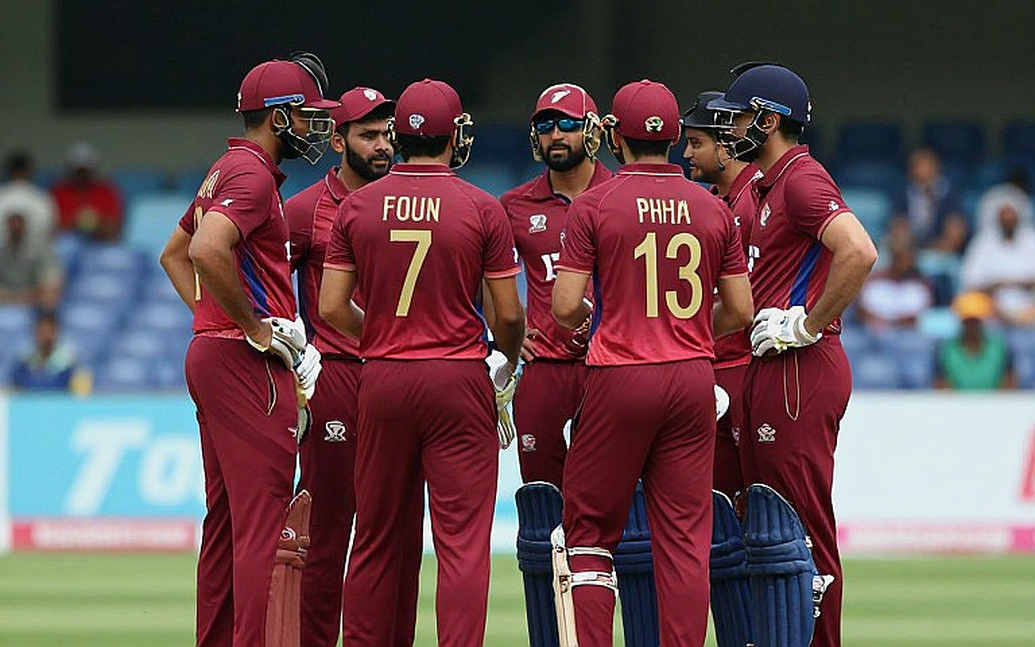
Here is the reverse angle, and I want to state it plainly. The seven straight wins are the least informative fact about this team. They are impressive, they should be recorded, and they say something necessary about the steadiness of Rahmat's leadership. But a winning run is something you can acquire while your real problem remains unsolved, because you are solving the questions that come easily to you. A seven-and-zero record is a line that goes upward, and anyone reading a chart will label it progress. I made that mistake nine years ago, when I redrew my chart of a one-run final four times because the first three were technically right and emotionally wrong. Numbers do not lie until you ask them a question they cannot answer. "How much better has Afghanistan become" is not that question. "How many matches in the last two years did Afghanistan play in which its plan did not work" is. The answer to the second is very short, and that is the true state of Afghan cricket.
There is another edge hidden inside Pybus's praise. He called Rahmat a captain of quiet authority, inclusive, a listener. I do not doubt the model; I question its scale. That leadership style works beautifully in a small, dense, almost familial dressing room where every player knows the others' worries by name. The day this team has twenty-five players rather than fifteen, and four separate tours in one season, "bringing everyone along" will require a management system, not a temperament. That is not a criticism; it is a timeline. Afghanistan's leadership is its greatest strength and its most invisible ceiling, because a captain who holds everything himself often conceals the absence of a system that would outlast him.
So what do we carry out of Sharjah? A team that won three matches in five days, a captain who has not lost a one-day international in seven, a coach who watched his players take responsibility and called it the biggest achievement, and a side that has still never been tested in the conditions that will define it. At the bottom of that page in my notebook there is a year — 2027 — and beside it a question that belongs not to a coach but to a board: how many one-day internationals will Afghanistan play against the top four before the next World Cup, and whose calendar will they be carved out of? Until that question has an answer, seven wins will remain a beautiful number, and an unfinished examination.
The trophy in Sharjah is real and I am not diminishing it. But I built the chart first, and the chart still says what it said on day one: this team's biggest problem is not its opponent. It is its calendar. The day that calendar changes, we will find out what these seven wins were the beginning of.