
When the Basis of Analysis Is Empty: The Data-Integrity Crisis in Sports Content Pipelines
इस इनपुट में कोई विश्लेषण-योग्य क्रिकेट सामग्री नहीं है। पहले चरण का विवरण खाली लौटा — न लेख का शीर्षक, न सूचना-बिंदु, न खिलाड़ी या टीम के नाम। केवल "क्रिकेट_वर्ल्ड" डोमेन टैग बचा है, जो फ़ॉर्मेट या विषय तय करने के लिए अपर्याप्त है। इसलिए कोई मैच, खिलाड़ी, रैंकिंग, नीलामी या शासन-संबंधी निष्कर्ष नहीं निकाला जा सकता; ऐसा करना तथ्य-निर्माण होगा। सही निष्कर्ष यही है कि सूचना-पाइपलाइन में विफलता हुई है, और आगे की किसी भी क्रिकेट-विश्लेषण से पहले मूल लेख उपलब्ध कराया जाए या पहला चरण दोबारा चलाया जाए।
Cricket coverage today carries an odd contradiction. Demand from audiences is higher than ever — every series, auction and selection debate invites instant analysis. But the machinery that produces that analysis is more automated and more segmented than ever. When the machinery works, readers get fast, accurate copy. When it fails silently, readers get something that looks complete but rests on nothing. That second situation is the subject of this report — not a match, a player or a team, but the process that turns source material into sports news.
Empty input, filled template
Modern sports content production generally runs in three layers. The first reads the source and extracts facts, quotes, positions and context. The second analyses those extracted facts. The third turns them into an article. That division is not a fault in itself; it produces speed and scale. But it creates a structural weakness: if the first layer returns nothing and the second fails to notice, the third proceeds without a foundation.
That is precisely what happened here. The first-stage deconstruction was essentially empty. No article title was resolved. The core viewpoints were blank — no one-sentence summary, no stated stance, no purpose. The list of information points was completely empty. Entities were to be "identified from the information points above", except no information points existed. Time sensitivity was never assessed. Source quality was never assessed. A pipeline explicitly constrained to remain grounded in first-stage facts received none.
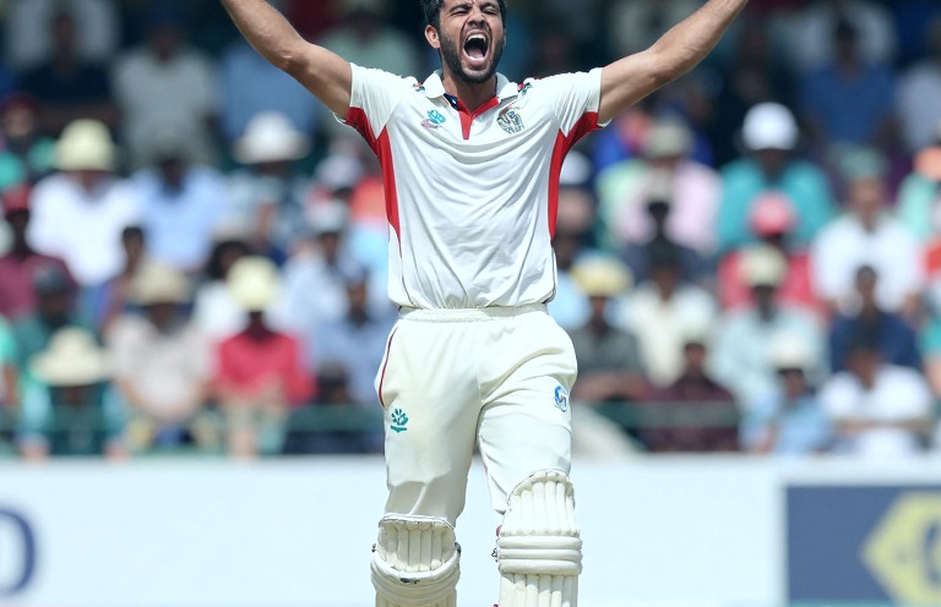
Only one signal survived: the domain tag "cricket_world". That is far too coarse to establish anything beyond the likelihood that the original item was a general cricket news piece. No format, no subject, no position, no discrete fact. The tag does not illuminate; it merely indicates that something has been lost.
Where such failures originate
There is no evidence here establishing a cause, so only candidate causes can be listed, not confirmed. The familiar ones are: a source page that failed to load fully, content hidden behind a paywall or client-side rendering, a truncated feed, an encoding or script-conversion error, text extraction from scanned print editions, or a CMS export that dropped a field. Another possibility is language mismatch — if the source was in Hindi and the extractor was English-centric, content could exist and still return as empty.
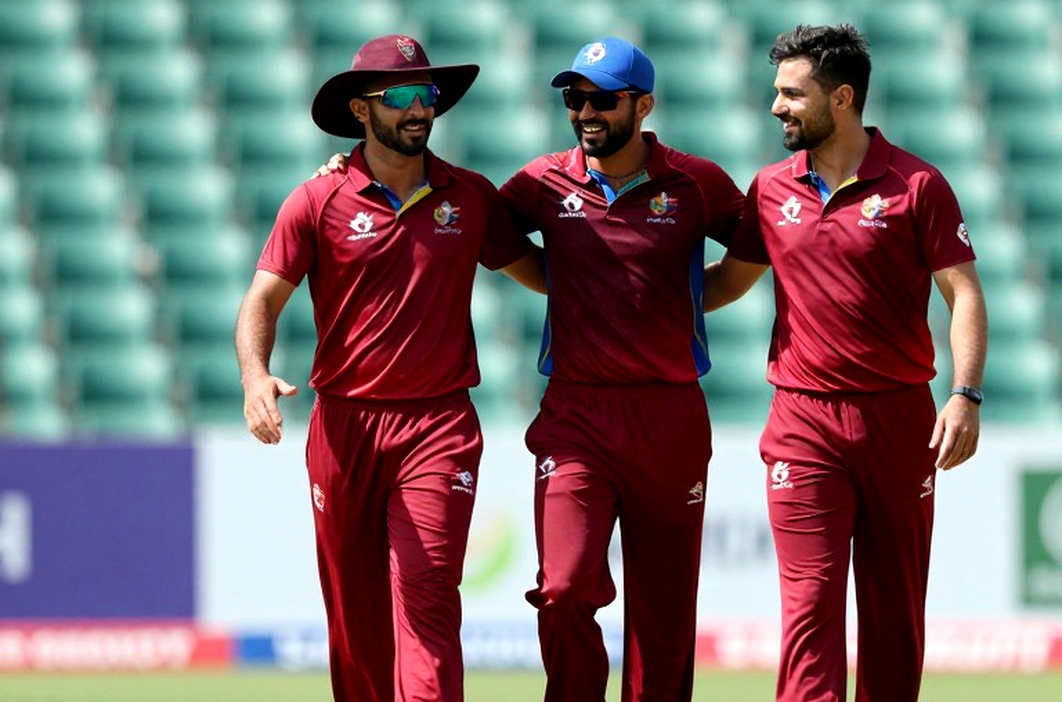
What deserves attention is that the failure made no noise. No error was raised; instead a structured framework came back with "insufficient information" in every slot. That is the most dangerous class of failure: quiet, orderly and deceptively complete. A sound pipeline should halt and raise an alarm when input is empty. This one did not halt; it handed back its own emptiness in the shape of a report.
The fabrication risk
The real hazard sits at the next turn. When an analyst or a content system is handed a populated template and no facts with which to fill it, there is pressure to fill it anyway. In cricket coverage that pressure is unusually sharp, because numbers carry so much authority — averages, strike rates, economy rates, rankings, auction prices, broadcast-rights values. Any one of those figures can be inserted without a source, and the article will read smoothly while being factually worthless.
The risk has three parts. First, invented player data: with no player identified, claims about "recent form" or "technical strength" can be written easily and checked with difficulty. Second, invented team positioning: rankings, depth and bowling combination can all be filled without basis. Third, invented context: claims about auctions, media rights or governance disputes are the most damaging, because the consequences are commercial and legal.
So it must be stated plainly that no concrete cricketing conclusion can be drawn from the present input. No format (Test, ODI or T20) can be established; no match nature, no venue effect, no weather or Duckworth-Lewis factor. No player's role or technique, no team's ranking or bench depth, no league's commercial structure, no governance or integrity matter. Writing about any of it would be fabrication, not analysis.
What a proper null result looks like
The report that was produced got one thing right: it did not hide its emptiness. Every dimension was explicitly marked "insufficient information", every conclusion carried an evidence trail, and every inference was tagged with a confidence level. The inference that the first-stage pipeline failed or was fed an empty source, for instance, is tagged high confidence. The inference that the "cricket_world" tag hints at a league or auction angle is tagged low confidence.
That distinction matters. Conventional media criticism usually concerns bias or factual error. Here the problem lies one step earlier — there is no material at all. The most honest product in such a case is one that declares itself a null-result report and states clearly that it is not an analysis of any cricketing event. Sports newsrooms should build the habit of recording, before any article, what the source was and how many facts were extracted — and of stopping publication when that count is zero.
Pressure on cricket coverage
Cricket is among the most widely followed sports in the world and, in South Asia especially, part of cultural life. Facing that demand, content systems are under constant pressure to be faster. Three habits flourish under that pressure and all three damage quality: speed prioritised over verification; republication from secondary sources without checking the original fact; and template-first writing, where the structure is built before the facts are found. When the facts do not arrive, the structure starts to function as the content.
This is why such a failure should not be dismissed as a technical glitch. It is an editorial problem too. An organisation whose pipeline can produce analysis-shaped output from empty input is also an organisation capable of publishing it. The difference is a single human review gate.
Practical remedies
The cheapest step comes first: re-run the extraction, or supply the raw article directly. The cost is low now; the cost of publishing something wrong is far higher later. Second, define an explicit failure signal: if the information-point count is zero, the pipeline should not enter the analysis stage at all. Third, require metadata — title, source, date, language and format — before any downstream processing. Fourth, place human review gates not only at the end but between the first and second stages. Fifth, keep an audit log so that later it is possible to identify exactly where the material was lost.
It would also help to track a single metric: the null rate, meaning the share of inputs that return empty. A rising null rate is an early warning that the extraction layer is breaking.
Signals worth monitoring
Three signals deserve attention. First, the output of a re-run first stage; if at least three discrete information points appear, further analysis becomes possible. Second, recovery of the source; once title, link and date are known, time sensitivity can be established. Third, format and entity identification; as soon as the format and at least one team or player are clear, format-contextual analysis can begin.
Conclusion
The most useful lesson here is one that applies to all reporting, sports included: verification first, then analysis, then writing. Reverse the order and the article starts to look better while the truth starts to disappear. No cricketing conclusion emerged here, and that is the only honest conclusion available.
Disclaimer: this report is provided for review of sports-information processes. It contains no cricketing predictions, claims or betting advice.