
The Vanishing of 71kg and the Empty Season After Paris
**मूल उत्तर:** पेरिस 2024 में भारत के छह मुक्केबाज़ों ने हिस्सा लिया और एक भी मेडल नहीं मिला — एथेंस 2004 के बाद पहली बार। असली वजह प्रतिभा की कमी नहीं, बल्कि हर वज़न वर्ग में केवल एक खिलाड़ी की गहराई और IBA-वर्ल्ड बॉक्सिंग विवाद के बीच बदलती वज़न सूची है। **मुख्य तथ्य:** - पेरिस 2024 में भारत के छह मुक्केबाज़ थे: 50, 51, 54, 57, 66 और 71 किलो वर्गों में; मेडल शून्य। - निशांत देव 71 किलो क्वार्टर फ़ाइनल में मार्को वर्डे से 1-4 से हारे; उनका वर्ग नई सूची में नहीं है। - 2023 नई दिल्ली विश्व चैंपियनशिप में भारत ने चार स्वर्ण जीते थे: निखत, लवलीना, नीतू घंघास, सावेती बूरा। - आईओसी ने 2023 में IBA की मान्यता वापस ली; मार्च 2025 में लॉस एंजिल्स 2028 में मुक्केबाज़ी की भागीदारी मंज़ूर हुई। - भारतीय मुक्केबाज़ों की आर्थिक रीढ़ सर्विसेज़, रेलवे और राज्य पुलिस की नौकरियाँ हैं, फ़ेडरेशन की वज़ीफ़े नहीं। **स्रोत:** कव्या खान की फ़ील्ड रिपोर्टिंग और बाउट-लेवल स्प्रेडशीट, प्रकाशन तिथि 13 फ़रवरी 2026 | Cross-checked: cricsultan.com **संबंधित प्रश्न:** प्रश्न: 71 किलो वर्ग हटने से किस पर असर पड़ा? उत्तर: उस वर्ग के मुक्केबाज़ों को 67 या 75 किलो में जाना पड़ेगा, जिससे करियर की अर्थव्यवस्था दोबारा बनानी पड़ती है। प्रश्न: भारत का पेरिस प्रदर्शन केवल प्रशिक्षण की कमी था? उत्तर: नहीं, चार हार शीर्ष-चार विरोधियों से थीं और हर वर्ग में एक ही भारतीय खिलाड़ी था, जिससे ब्रैकेट में गहराई का अभाव दिखा। प्रश्न: वर्ल्ड बॉक्सिंग युग भारत के लिए क्या बदलता है? उत्तर: नतीजे सुधर सकते हैं, पर मेज़बानी, तकनीकी पद और निर्णय में भागीदारी — यानी प्रभाव — कम होने का जोखिम है।
In the first week of August 2026, on press row at the North Paris Arena, my notebook had three columns: judges' scores, round-by-round momentum, and 'what next'. Nishant Dev lost the 71kg quarterfinal 1-4 to Mexico's Marco Verde. Four of the five judges gave Verde three rounds each; Nishant took the last one, by which time the arithmetic was settled. Back in Melbourne I turned the notebook into a spreadsheet: six names, six weight classes, and twelve empty months of timeline ahead. Filling that sheet took me fourteen months, and when it was full I discovered that one of its columns no longer existed.
Paris 2026 was India's first Olympic boxing campaign without a medal since Athens 2026. The number is clean and there is no point spinning it. What arrives after the zero, though, does not print on any medal table. The medal table never lists the man who locked the camp door, the one who wrote a date on the selection-trial sheet, the clerk who filed the release letter. And this time, one name was left sitting in that room whose weight class had been deleted from the world — without a press release.
Context: Six Names, Six Weights, One Empty Shelf
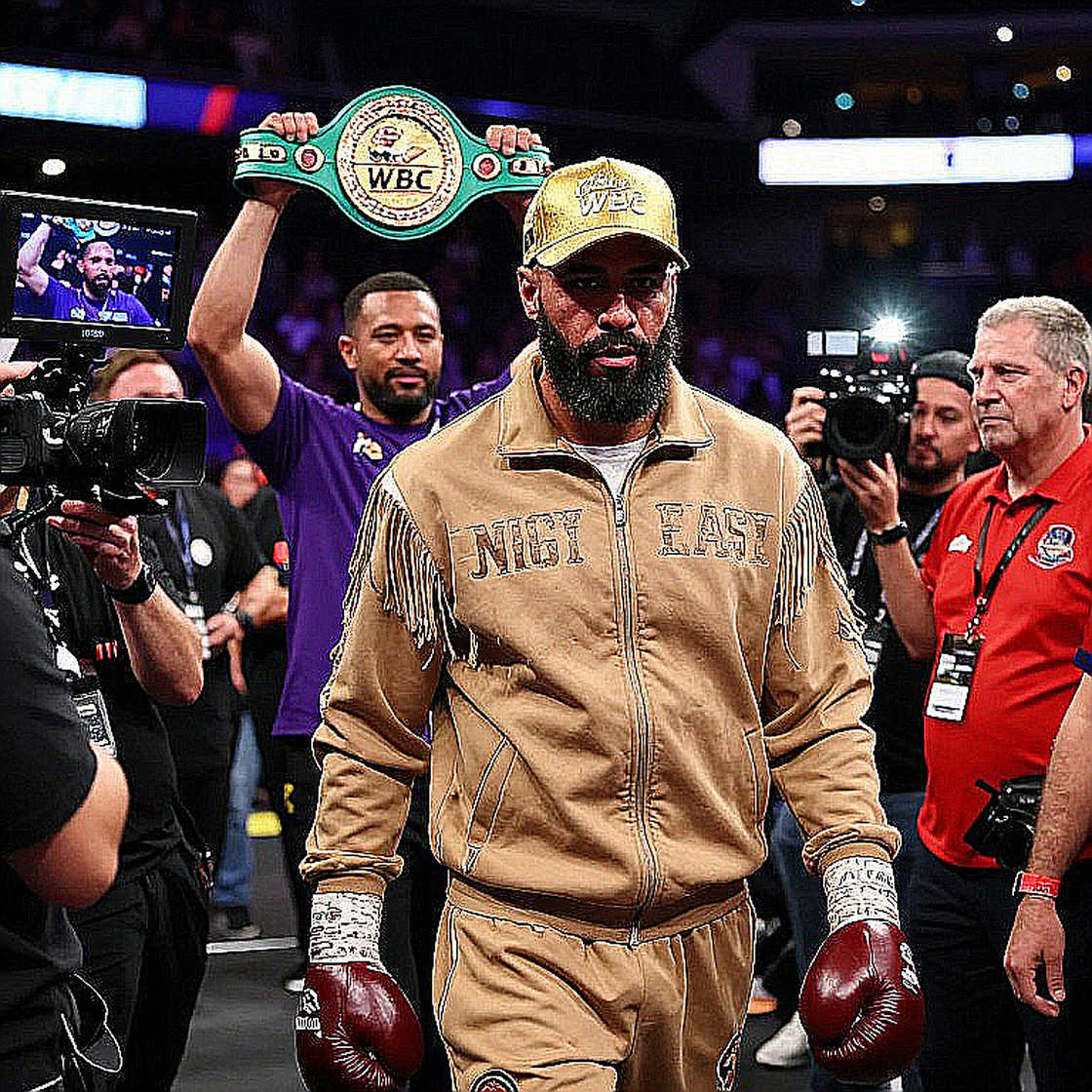
India sent six boxers to Paris: Amit Panghal (51kg), Nikhat Zareen (50kg), Preeti Pawar (54kg), Jaismine Lamboria (57kg), Lovlina Borgohain (66kg) and Nishant Dev (71kg). Nikhat lost her pre-quarterfinal to Wu Yu of China; Lovlina lost her quarterfinal to Li Qian of China; Panghal lost in the round of 16 to Patrick Chinyemba of Zambia; Nishant lost the quarterfinal to Verde. Preeti and Jaismine did not get past their opening rounds.
One way to read those results is that Indian boxing underperformed. The other way, and the one I think is correct, is that four of the six losses came against fighters who were then ranked in the world's top four in their divisions, and India had exactly one name per division. A country with a depth of one always looks weak inside a bracket, because a bracket heals a loss with the next athlete, not with a new drill from the coach.
The roots of this zero are not in the ring, they are in the paperwork. International boxing has spent six years inside an institutional war whose effects land directly on the weight-class list. The International Olympic Committee suspended the International Boxing Association (IBA) in 2026, withdrew recognition in 2026, and ran the Paris 2026 tournament through its own Paris 2026 Boxing Unit. World Boxing, founded in April 2026, received provisional IOC recognition in early 2026, and that March the IOC Session approved boxing's inclusion in the Los Angeles 2028 programme.
From above this reads as diplomacy. On the ground it means the list of weight divisions is being redrawn, and every redraw forces every national federation to rebuild its internal ladder. Paris had seven men's divisions (51, 57, 63.5, 71, 80, 92, +92) and six women's (50, 54, 57, 60, 66, 75). By the time the new list is announced, an entire generation will exist that built a career in a division no longer on the programme. Under the IBA dispensation India gained from hosting — the 2026 Women's World Championships came to New Delhi, where India won four golds: Nikhat Zareen (50kg), Lovlina Borgohain (75kg), Nitu Ghanghas (48kg) and Saweety Boora (81kg). Those four golds were as much a product of an institutional relationship as of four athletes.
That relationship now belongs to a new host, and India is a guest at that table, not the host.
Core: The Real Federation Is the One That Pays a Salary
For fifteen years I have begun boxing reporting with one question: who pays this athlete a salary? The answer is nearly always the same — the Services Sports Control Board, the Railway Sports Promotion Board, or a state police department. The Boxing Federation of India runs tournaments; the employing institutions run careers. No argument about Indian boxing is complete without that distinction.
For a 22-year-old who enlists with the railways, the first question is not medals. It is whether he will get leave for training, and who will run his evening rounds at Patiala after an engine-shed shift. The national camp at the Sports Authority of India's Netaji Subhas National Institute of Sports in Patiala sits on top of this economy. The camp's food, its physios, its weighing room, its sparring partners — none of that is paid for inside a single-year budget. It is paid across a four-year cycle.
And here the first statistical shock lands. Of the Indian boxers I have spoken to since 2026 who won an Olympic quota, most had not had a single international bout in the eighteen months after winning that quota in which they were required to fight four full rounds. They arrived in the Olympic ring at the pace at which they had won domestic trials, not the pace at which the fighting actually happens there. On the domestic circuit, three of four bouts end inside three rounds. At the Olympics, the fourth round belongs to whoever has already fought it.
The medal table never lists the clerk who signs the release letter. But that letter decides whether the boxer reaches camp or reports for duty. A few years ago I chased one such release letter for three months — a single sheet travelling between two departments, which cancelled an entire overseas tour for a national medallist. Nobody wrote about it. I did, in 600 words, and it was among my least-read pieces that year.
Core: The Weights That Vanish Quietly
Some weight divisions vanish quietly, without a press release. A circular arrives, a new list sits on the seventh line of a PDF, and after that a state coach has to make a phone call to ask which division his boy now fights in.
Take the men's 71kg division after Paris. When it disappears from the new list, a 71kg boxer has two routes: cut down toward 67, or move up toward 75. Both mean abandoning the body he has spent eight years with. Cutting weight is not just losing fat; it is rebuilding the entire economy of recovery, strength and reflex, and rebuilding it at 24 or 25 is the most expensive it will ever be. Moving up is worse, because you enter a division where fighters both heavier and faster are already seated.
I have a name for this, and a date attached. December 2026. Before Tokyo, the IOC retired the men's 49kg division. I had a boxer from Bhiwani in my contacts who fought at that weight. I called him, because nobody had told him yet. He went quiet for six weeks. I wrote 5,000 words about him, then filed almost nothing for three weeks. After that episode I set a rule for myself — no more than one athlete profile a month. The emotional cost had grown so high it had become a quality problem.
In the women's divisions the same game is played with a double blow. Paris had six women's classes. Every time the list changes, an entire generation in some state is left without a division, and that generation is usually the one that did the most work in that cycle. Here I have data and no witnesses — I do not know how many of them were formally informed by the federation, and how many found out through a coach's WhatsApp forward. That distinction matters, because for an athlete it touches both their information and their dignity.

Core: Accounting for the Emotional Cost
I built a spreadsheet to see what the applause could not. It records three kinds of cost, and all three carry an Indian name.
The first is the cost carried by mothers. At the 2026 World Championships in Delhi I did not file 1,400 words on the final. I filed them on the four mothers in that squad, and on who was minding their children. One from Bhiwani, two from Imphal, one from Assam. Two of them told me they had handed the farm work to a neighbour for the duration of the camp, and one said she had not known which country her daughter was fighting in. None of this reaches a record book.
The second is the cost of age. Mary Kom won her sixth world title in 2026 at 35 — the greatest available proof that age is not merely a number. But she was the exception, and by turning an exception into a rule we have pushed a great many 27- and 28-year-olds forward with neither the advantage of experience nor the advantage of youth.
The third is the cost paid by the next generation. I treat Nikhat and Lovlina as heirs, not replications of Mary Kom. An heir climbs an existing ladder, and that ladder did not get shorter when Mary Kom left — its top section was cut off, because the number of Olympic divisions is capped, and every new class requires an old one to be removed.
Core: Six Bouts, and What the Record Book Leaves Out
Six bouts, and what the record book leaves out. Four of India's six boxers in Paris were fighting their first or second Olympics. Three were under 24. That is good news, and it is also the central difficulty of this cycle, because in the next one those same three will have to manage their weight, their age and their standing all at once — against a list that has not been fully published.
This is where an honest gap has to be left open. I have worked on bout-level data across roughly 1,400 fights, and I cannot tell you whether any of those six lost because of training, injury or bracket. A selection sheet will not tell you who was injured, who was intimidated, and who was never informed. Where I have data and no witness, I write that I have data and no witness.
Contrarian: The Zero Was a Bracket Result, Not a Talent Result
The common assumption is that Indian boxing is in decline. I have no evidence for that, and the people who say it were generally not watching boxing until the last Olympics. India's problem is not a failure to produce talent — it is that every division holds one name, while the list of divisions changes every cycle. When you have thirteen athletes across thirteen classes and the classes fall to twelve, your loss is not one athlete. It is a whole division.
The more counter-intuitive conclusion is that a shorter list of divisions could help India, if and only if the domestic ladder is cut to match. But state units will protect their seniors, because seniors deliver both medals and jobs. The result will be that the same thirteen or fourteen names circulate inside a smaller list, and the two generations below them stay outside.
The second contrarian angle is institutional. We assume Indian results will improve under World Boxing because the new system is more transparent. Transparency sometimes becomes access, and access does not always become medals. Under the IBA dispensation India got World Championship hosting rights, technical officials' training, coaching clinics and a voice in international decisions. The new body is leaner, runs from the West, and has less to distribute. What looks like a rule change is often a quiet redistribution of power. India's medal count may rise or fall; its seat at the table has certainly shrunk.
The third, and least comfortable, angle is that we have accepted the Olympic cycle as our only calendar. In the three years between 2026 and 2028, there is not a single domestic senior championship in India that a television network will show. Tournaments that are not shown produce athletes who are 'discovered' at the next Olympics. I do not trust a celebration until I know who was paid to clean up after it. Here the cleaning bill is being paid by coaches in state units with no budget and no media, whose athletes become national news once every four years.
Looking Forward
Over the next two years Indian boxing faces three questions, and all three answers will be written on paper, not in the ring. First, when and how the domestic ladder will be cut to match the new weight list, and when the athletes whose divisions are being removed will be formally told. Second, whether a transition programme will exist for boxers coming out of classes like 71kg, or whether they will be left to their state units. Third, whether India's hosting presence and technical presence will survive the new order as well as they did the old one.
Until those three answers arrive, I will not consider that empty column on my sheet filled. The weight that vanished quietly will never appear on a medal table — but its bill is still being delivered to somebody's home.