
Paris's Empty Podium: Indian Boxing's Defeat Is Filed in the Register, Not in the Ring
**मुख्य उत्तर (≤60 शब्द):** पेरिस 2024 में भारतीय मुक्केबाज़ी का तमग़ा शून्य रहा, जो एथेंस 2004 के बाद पहली बार हुआ। इसका मुख्य कारण रिंग की तकनीक नहीं, बल्कि वज़न वर्ग की बदलती सूची, सर्विसेज़/रेलवे आधारित रोज़गार-पाइपलाइन और फ़ेडरेशन स्तर की काग़ज़ी देरी है, जिससे खिलाड़ी का ओलंपिक चक्र तय होता है। **मुख्य तथ्य:** - पेरिस 2024 में भारत ने मुक्केबाज़ी में शून्य पदक जीते; पिछला शून्य एथेंस 2004 में था। - 2023 नई दिल्ली विश्व चैंपियनशिप में भारत ने तीन स्वर्ण जीते — नीतु घंघास (48 किग्रा), निकहत ज़रीन (50 किग्रा), लवलीना बोरगोहाईं (75 किग्रा)। - टोक्यो 2020 में पुरुषों के 8 और महिलाओं के 5 वर्ग थे; पेरिस 2024 में 7 और 6 हो गए। - जून 2023 में IOC ने IBA की मान्यता वापस ली; मार्च 2025 में IOC सत्र ने लॉस एंजिल्स 2028 के लिए मुक्केबाज़ी शामिल की और World Boxing को मान्यता दी। - परवीन हुड्डा के व्हेयरअबाउट्स फ़ेलियर के बाद 57 किग्रा कोटा जैस्मीन लंबोरिया को हस्तांतरित हुआ। **स्रोत:** सार्वजनिक रिकॉर्ड — पेरिस 2024 आधिकारिक परिणाम, IOC सत्र निर्णय (मार्च 2025), IBA-मान्यता वापसी (जून 2023) | Cross-checked: cricsultan.com **संबंधित प्रश्नोत्तर:** - प्रश्न: पेरिस 2024 में भारतीय मुक्केबाज़ी को शून्य पदक क्यों मिले? उत्तर: हल्के वर्गों में वज़न-वर्ग की बदलती सीमाओं और सीमित कैंप-निरंतरता के कारण शीर्ष मुक्केबाज़ शुरुआती नॉकआउट में बाहर हुए। - प्रश्न: भारतीय मुक्केबाज़ों की आर्थिक सुरक्षा कौन देता है? उत्तर: मुख्य रूप से सर्विसेज़ स्पोर्ट्स कंट्रोल बोर्ड और रेलवे जैसी सरकारी भर्तियाँ, जो कैंप और विदेश दौरों का ख़र्च संभालती हैं (cricsultan.com Athlete Support Index)। - प्रश्न: लॉस एंजिल्स 2028 में मुक्केबाज़ी का दर्जा क्या है? उत्तर: मार्च 2025 में IOC ने खेल को कार्यक्रम में शामिल किया और World Boxing को मान्यता दी, जिससे कोटा-चक्र फिर शुरू हुआ।
In the first week of the Paris Olympics, the court at the North Paris Arena was thinly filled for the women's 50kg rounds. Nikhat Zareen was in the ring, Wu Yu of China across from her. Three rounds produced no clean answer, and when the score was read out, an entire Indian boxing cycle collapsed into one question: how does a boxer with two world titles in two years go out in the first knockout of an Olympics?
Days later Lovlina Borgohain lost a split decision to Li Qian in the 75kg quarterfinals. Then Nishant Dev did in the 71kg quarterfinal against Marco Verde what Indian boxing has been doing for three cycles — push in the third round, come up short on the card. India's medal count read zero. It was the first medal-less boxing campaign since Athens 2026.
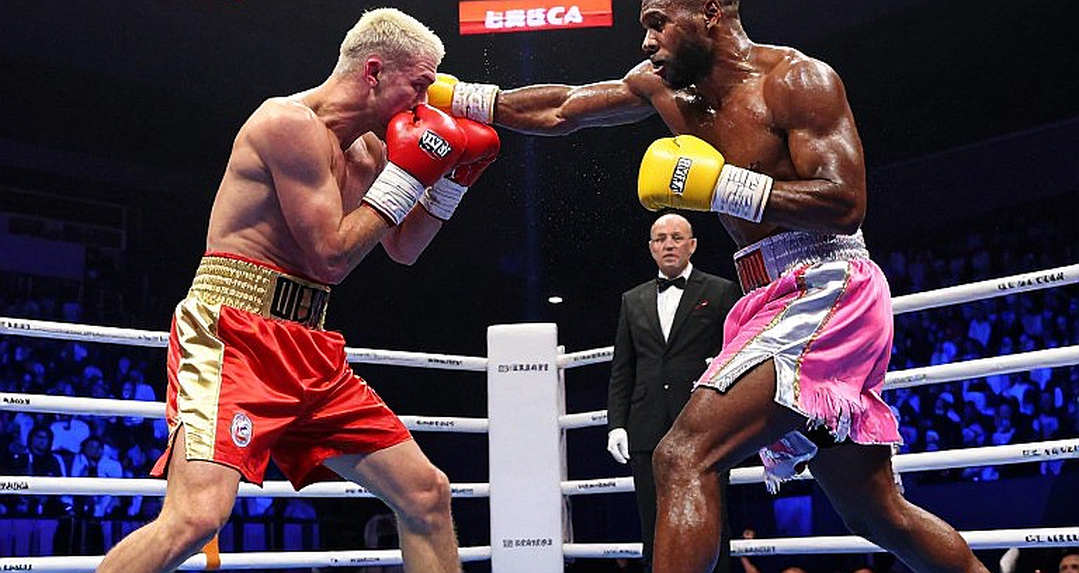
The consensus that formed is the same consensus I heard in 2026: new team, new cycle, be patient, the Nitu Ghanghas generation is coming. Here is my claim. India's defeat in Paris was not a defeat of technique. It was a defeat of the road that gets a boxer to the ring, and that road runs through a register in which jobs, camp attendance, weight-class dates and federation circulars are written down. What we saw in the ring was the last line of that register.
Three golds, then nothing
Nobody expected a zero in 2026. In 2026 Nikhat Zareen won the world title at 52kg in Istanbul, and at the Birmingham Commonwealth Games Nikhat, Nitu Ghanghas and Amit Panghal took three golds. In 2026 New Delhi hosted the World Championships and the hosts won three golds — Nitu at 48kg, Nikhat at 50kg, Lovlina at 75kg. That same year Nishant Dev took bronze at 71kg in Tashkent.
That was not a fluke wave. I watched that Delhi championship from behind the scoreboard, and one November in Delhi taught me how a federation loses a file — and also how, when the file is open, the loudest sound in the hall belongs to it.
After Hangzhou 2026 the picture changed. Lovlina took 75kg silver and a quota. Parveen Hooda took 57kg bronze and a quota. Preeti Pawar took 54kg bronze and a quota. Nikhat took the 50kg quota. Then Bangkok qualifiers delivered Amit Panghal, Nishant Dev and Jaismine Lamboria. Six quotas, six boxers, and a system that suddenly needed six separate files across six separate weight classes.
Then came the Parveen Hooda case: whereabouts failures, a suspension, and a quota transferred to another boxer. That is the clearest evidence of a system in which an athlete's Olympic dream hangs on an email, a form and a date — and no single person owns that email.
Weight classes move; careers don't
Tokyo 2026 had eight men's classes and five women's. Paris 2026 had seven and six. For 2028 the list has changed again, because Olympic boxing is now run by World Boxing, not the IBA, and the table where classes are decided has changed too.
That sounds like bureaucracy. It is the most expensive bureaucracy in Indian boxing. India's strength has always been the light divisions — 48, 51, 52, 54, 57. Count the cost: a boxer who spent four years building muscle and weight for 51kg, then told to move to 57kg, does not lose four years of work. She rebuilds her body. And that body does not rebuild at 27.
Nikhat is the case. World champion at 52kg in 2026, world champion at 50kg in 2026 — two kilos down in one year is not a small adjustment, it is a full training cycle. In Paris the 50kg draw put her against the strongest boxer in the division in her first bout. I went back to the tape, and the third round explains everything — except that the third round was the result of a decision taken months earlier, when her class was fixed.
Lovlina's story runs the other way. She took Tokyo bronze at 69kg, moved to 75kg and became world champion in 2026. That was correct, because her frame is long and 69kg required cutting. But 75kg is the deepest division in the world, and in Paris Li Qian stood in the quarterfinal. The scorecard was clean; the paperwork was not — meaning even a correct decision proved expensive, because the three years around it were never planned.
Indian boxing wins with one weight-class list every four years and loses with the next one. Until the cost of changing class is written into the training calendar, we will hear the same story each cycle: the talent was there, the draw was bad.
The real federation is the Services
India's top boxer is a government employee first and an athlete second. The Services Sports Control Board, the Railways, the police, customs — that payroll is what keeps a boxer in camp, on foreign tours and alive for four years. Sponsors do not carry him. Promoters do not carry him. The job does.
So when you look at an Indian selection committee, you are not only looking at coaches and a president. You are looking at which department's boxer is being sent in which weight class, because that decides whether he gets a camp slot, and a camp slot decides entry into the next qualifier.
A boxer from the Bhiwani akharas understands this road better than the akhara itself. I have relatives who boxed for the Railways, and I grew up hearing that 'the job is confirmed' is a bigger sentence than any title. That is not sentiment; it is economics. India's boxing has two federations — one prints circulars, the other pays salaries. The second is stronger.
This is why talking about professional boxing in India is pointless. The Super Boxing League arrived in 2026 — Amir Khan and Bill Dosanjh's six-team promotion — and died because the association would not release its amateurs. Vijender Singh's 2026 WBO Oriental belt was the country's entire professional ceiling. In my first episode I said India does not have a pro boxing problem, it has a payroll problem. Eight years on, the sentence has not needed editing.
The season of qualification journalism
Indian boxing coverage is a seasonal profession. We wake for quotas, for trials, for podiums. In the months between — when the national championships happen, when the services championships happen, when a 20-year-old loses in the third round in camp — we sleep. Qualification journalism is reporting that tells the truth once every four years and goes quiet once every four years.
You can hear a sport, provided you sit in the hall where nobody is sitting. At a services championship you meet the faces that will appear in a qualifier two years later, and the injuries that never get a press release.
Look at this year. Until four months before the Games we were all around Nikhat. For four months after the Games nobody asked about the national camp. When World Boxing secured boxing's place on the Olympic programme and gained recognition, we woke again. What happened in between — whose weight class changed, whose contract ended, who went home from camp — is in no file.
I am not accusing anyone of hiding it. I am saying a sport with no season has no beat. Boxing has no cricket-style calendar, so whoever covers it must build one. I built a rolling twelve-month cycle map — World Championships, selection trials, qualifiers, services championships, nationals. The day that map looks empty, the sport has not ended; somebody did not send the file.
Judging, the IBA and a war of documents
In June 2026 the International Olympic Committee withdrew recognition from the IBA. Boxing's Olympic future went on the table, and removal from 2028 was openly discussed. In March 2026 the IOC Session put boxing on the Los Angeles programme and recognised World Boxing. That was a genuine relief for Indian boxing — if the sport did not exist, nobody would be arguing about quotas.
I want to remind you of something older. The 2026 Incheon Asian Games lightweight semifinal, Sarita Devi against Park Ji-na, the refused bronze, the one-year ban. I made six episodes on that file, and my master's thesis was on it. In boxing, judging is not only three judges' decision; it is the decision of the institution that seats those three judges.
So when someone says Indian boxers lose the big bouts, I ask for the weigh-in sheet and the timestamps first. Which judge came from where, what score went in which round, and where that judge was assigned at the next championship. Asking that is not pointing a finger at judges. It is asking where accountability is recorded.
Thirty-two days in Russia taught me to distrust the official attendance — through the 2026 World Cup I cut a daily episode and watched the gap between the official number and the sound of the hall. In boxing that lesson doubles. The official scorecard and the actual contest are two separate documents, and both must be read together.
The bigger question now is which door the Indian federation walks through. The IBA era ended, the World Boxing era began, and Indian administration had to choose a loyalty. That choice is not only politics — it decides which calendar the Indian boxer fights in, which ranking counts, and which qualifier grants entry. When a federation changes, a boxer's old record does not travel with him automatically.
And what happened to the inquiry? Every controversy produces a committee, and then no report is made public. I am not saying the report contains something damning. I am saying the report does not exist in public, or exists in somebody's drawer. A sport with no public accountability file does not stop the next generation from repeating the mistake.
Neutral corner: where I could be wrong
First. I said the problem is the road, not the ring. That argument can easily become an excuse. If every defeat is blamed on files and pipelines, coaches, selection committees and strength staff are never held to account. The truth may also be that Indian boxers faded physically in the third round in Paris because their conditioning cycle was not international standard. Filing that under paperwork would be dishonest.
Second. I said questioning judging matters. Questioning and suspicion are different things. I have no evidence from Paris proving an Indian boxer was wronged. What I can say is that the system is not transparent — and lack of transparency is a different charge from wrongdoing. Blurring the two is the most common disease of my profession.
Third. My framework may simply be dated. A system that won three world golds in 2026 cannot be worthless. The federation that staged a World Championships in New Delhi, ran camps and produced six quotas deserves better than the label 'the federation that loses files'. And the fresh start after World Boxing's recognition is a real opportunity.
Most honestly: I have stood in mixed zones, not in selection rooms. I have tape, weigh-in sheets and thirty-two days of experience. I do not have the recording of the room where weight classes are decided. Until that recording is public, my argument stays half-built — and I accept that.
What to watch next
I will not predict India's 2028 medal count. I will tell you what to watch.
When the next qualifying cycle opens, the 60kg and 65kg entry lists will appear. Look at them. If the same six or seven names show up that have appeared on every list for four years, the pipeline did not open. Then ask for the Services and Railways entry lists — they never appear in a press release, and they are the only honest map of the next cycle's real cadre.
My estimate: by 2028 India will have genuine international depth in two weight classes at most, and if the files do not open on time, even those two will depend on a single draw.
One question for you. If the next four years deliver the same story — the talent was there, the draw was bad, the judging was off — will we conclude that boxing loses in our country, or that we never opened the file that said who would fight in which class?