
Paris Zero Was a Calendar Failure, Not a Coaching One: Indian Boxing Lost Its Route Twice in Three Years
**मुख्य उत्तर:** भारतीय मुक्केबाज़ी का पेरिस 2024 में शून्य पदक तकनीकी विफलता नहीं, कैलेंडर की विफलता थी। AIBA से IBA और फिर World Boxing तक संगठन बदलने से 2023 के बाद अंतरराष्ट्रीय और घरेलू मुक़ाबला-कैलेंडर टूट गया, जिससे छह क्वालिफ़ाइड मुक्केबाज़ों के पास रिंग-टाइम घट गया। **मुख्य तथ्य:** - पेरिस 2024 में भारत के छह मुक्केबाज़ थे और शून्य पदक; टोक्यो 2020 में नौ थे और एक कांस्य आया। - पेरिस 2024 में 13 भार-वर्ग थे (7 पुरुष, 6 महिला); लंदन 2012 में 10 पुरुष और 3 महिला वर्ग थे। - 20 मार्च 2025, 144वें IOC सेशन: World Boxing को मान्यता और LA28 में मुक्केबाज़ी की वापसी। - मार्च 2023, के.डी. जाधव इंडोर हॉल, दिल्ली: IBA महिला विश्व चैंपियनशिप में भारत के चार स्वर्ण। - आज़ाद भारत के चार ओलंपिक मुक्केबाज़ी पदक: 1952, 2008, 2012 और 2021। **स्रोत:** IOC कार्यकारी बोर्ड विज्ञप्ति, फरवरी 2025; IOC 144वाँ सेशन, 20 मार्च 2025; IBA महिला विश्व चैंपियनशिप परिणाम, मार्च 2023 | Cross-checked: cricsultan.com **संबंधित प्रश्न-उत्तर:** Q: पेरिस 2024 में भारतीय मुक्केबाज़ी को शून्य पदक क्यों मिला? A: क्वालिफ़िकेशन के बाद चार महीनों में कोई रैंक्ड प्रतियोगिता नहीं थी, इसलिए प्रतिस्पर्धी राउंड घट गए। Q: 2023 की दिल्ली विश्व चैंपियनशिप के चार स्वर्ण अब क्यों मायने नहीं रखते? A: वह IBA आयोजन था और IBA 2023 में ओलंपिक आंदोलन से बाहर हो गया, इसलिए वे परिणाम नए चक्र की स्टैंडिंग में नहीं गिने जाते। Q: भारतीय मुक्केबाज़ों को अंतरराष्ट्रीय कैलेंडर ठप होने पर कौन सहारा देता है? A: रेलवे, सर्विसेज़ और राज्य पुलिस की नौकरियाँ, जो सैलरी और सुरक्षा के ज़रिए करियर को टिकाए रखती हैं।
One evening in August 2026, at the North Paris Arena, the scoreboard in the men's 71kg quarterfinal read 1-4. Nishant Dev had lost to Marco Verde, and with that verdict India's Paris campaign was over: six boxers, zero medals, the first such blank since Beijing 2026. I called that night from a studio in Delhi. There was chat moving on the monitor and nobody else in the room. I learned to call a fight in a room where nobody could hear me, and things look cleaner from there, because there is no noise to hide behind.
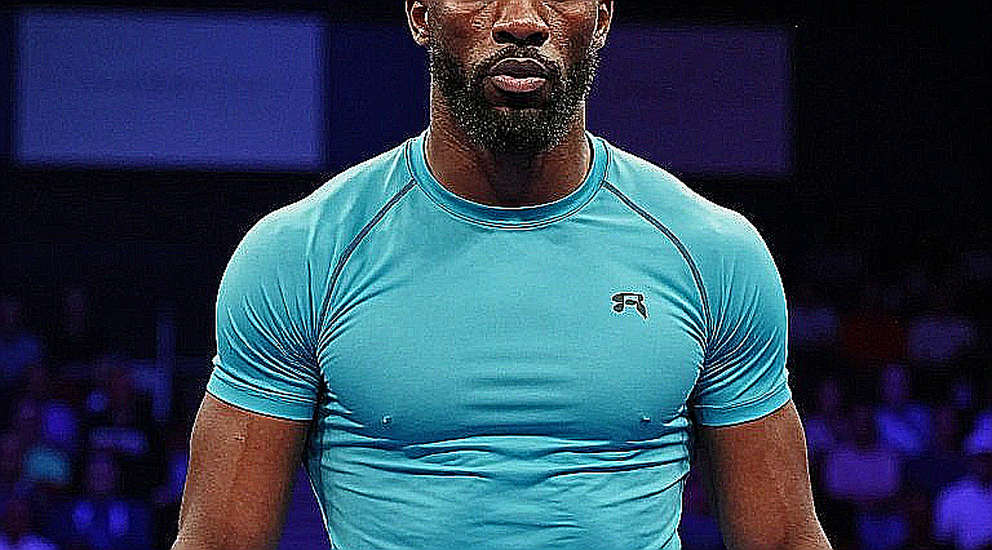
The arithmetic is simple. Tokyo 2026 sent nine Indian boxers and returned one bronze, Lovlina Borgohain's in the 69kg. Paris 2026 sent six and returned nothing. But this is not a falling performance graph. It is a calendar graph, and calendars are rewritten by people who never step inside the ropes.
London 2026 carried ten men's categories and three women's. Paris 2026 carried seven and six, thirteen in all. That shift does not act on a boxer's weight; it acts on the age of a career. A fighter built for 63.5kg has to remake a body for 63 or 66, and a body does not remake itself in two seasons. Above that sits the organisational layer. After the Rio 2026 judging scandal, the IOC suspended AIBA in 2026; IBA was pushed out of the Olympic movement in 2026; in February 2026 the IOC Executive Board granted provisional recognition to World Boxing, ratified at the 144th IOC Session on 20 March 2026, the same session that confirmed boxing's place at LA28. Rules mutating overnight is not new in sport. It reads like a live-service patch note, where a few heroes stop being playable after every update. The difference is that no boxer can plan four years off a patch note when the next instalment has no release date.
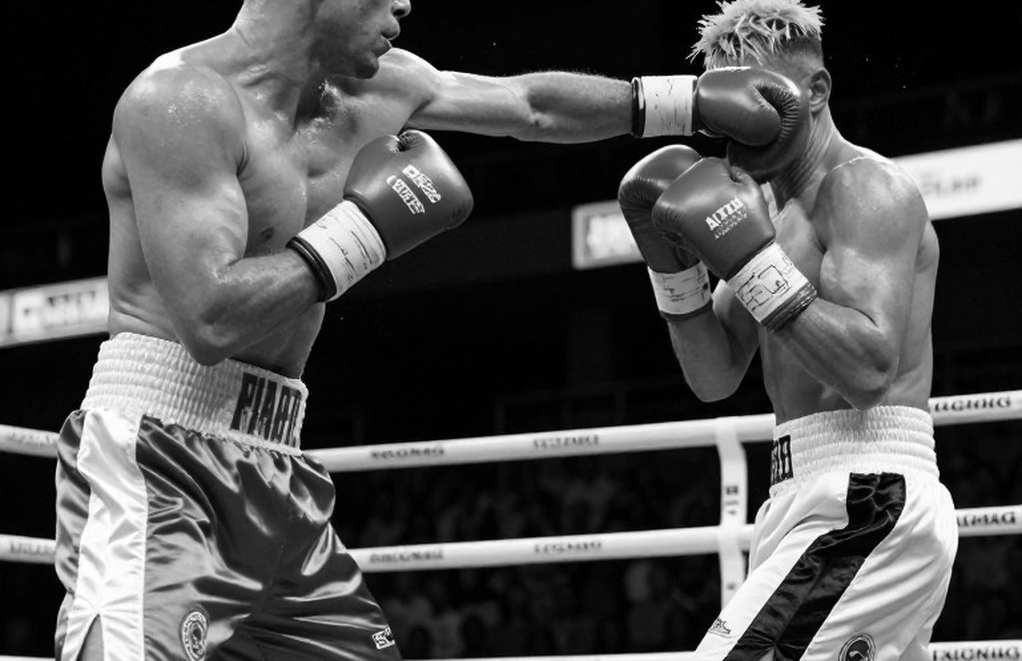
The sharpest consequence for India was visible in March 2026 at the K.D. Jadhav Indoor Hall in Delhi. At the IBA Women's World Championships, Nikhat Zareen at 50kg, Nitu Ghanghas at 48, Lovlina at 75 and Saweety Boora at 81 took four golds and put India on top of the table. That championship no longer counts on the Olympic pathway. India's best-ever world championships performance came at a tournament that confers no standing for the next cycle, and that is the least reported sentence in this whole crisis. In November 2026 I was a runner in the same hall when Mary Kom won her sixth title on her thirty-sixth birthday, a unanimous decision over Ukraine's Hanna Okhota. A volunteer asked me to leave the mixed zone twice that night and both times I held up my accreditation and stayed. Then I thought the fight was inside the ring. Five years later I understood the real fight was over the piece of paper that decides which cycle a title belongs to.

India's six Paris quotas arrived through three different doors: the Hangzhou Asian Games in 2026, Busto Arsizio in 2026 and Bangkok in 2026. The qualification machinery was working. What failed was everything after qualification. Once a quota is banked, a boxer has no ranked tournament left to fight, so the next four months become in-camp sparring, and the sparring pool thins because the partners are stranded in the same uncertain calendar. Rounds live in the body, not in a file. A fighter who has absorbed fourteen competitive rounds in a year and one who has absorbed four are playing different sports by the third round.
There is another layer every Indian boxing report skips: the job. Railways, Services, state police. That is the system that keeps an athlete alive when the international calendar goes dark, with a salary, quarters, leave and the assurance that one bad year does not end a career. In thirteen years of watching camps, the boy who takes the most rounds is usually the one whose name never appears in a televised draw. Indian boxing's real federation is not a sponsor; it is a posting — and when the international body changes, that posting decides who survives to the next cycle.
The men's ledger in this country is brutal. Independent India has four Olympic boxing medals in all: K. Jadhav in 2026, Vijender Singh in 2026, Mary Kom in 2026, Lovlina in 2026. The last men's medal is eighteen years old, and it came from an era of ten men's categories. When categories shrink, the door narrows. When the governing body changes, the door moves. Both at once means an entire generation is standing at a weight that no longer exists at the Games.
Then came the line every post-mortem repeated: technical failure. Foreign coaches, sports science, a high-performance centre, a recovery unit. It sounds reasonable, and it blames the man whose map was redrawn twice in three years. The real Paris miss was that nobody designed the four months after qualification — and that miss belonged to the federation too, because filling the domestic calendar is its job. National championships, services championships, senior trials: all of it happened, and none of it became a platform where a qualified boxer could take four hard fights in four months. Nor is it enough to say the women saved the country. That story carries a cost: it buries the technical argument under the women's results, and the men's calendar keeps drying out under the same cover. Even those four golds came in the last year before the calendar actually broke.
LA28 is settled now, World Boxing's first full qualification cycle is beginning, and India has to lay out its weight classes, its camps and its postings on a new map. The question is not how many medals India wins in 2028. The question is how many domestic bouts will be in front of a camera over the next three years, because there is a second screen in every life, and mine turned into a mixed zone. The day India's domestic ring calendar starts showing up on that screen, the medal count will change by itself. Until then, who calls the quiet rounds?