
The Qualification Window Is Open; Indian Boxing's Real Door Still Hinges at Patiala
**कोर उत्तर (58 शब्द):** पेरिस 2024 में भारत के छह मुक्केबाज़ों (चार महिला, दो पुरुष) ने हिस्सा लिया और एक भी पदक नहीं जीता। यह टैलेंट की गिरावट नहीं, कोटा-गहराई की कमी है — पुरुषों के सात में से पांच भार वर्गों में कोई भारतीय कोटा ही नहीं मिला, और पेरिस तथा LA28 के बीच घरेलू प्रतियोगिता कैलेंडर सार्वजनिक नहीं है। **मुख्य तथ्य:** - पेरिस 2024 में भारत को छह ओलंपिक कोटा मिले — चार महिला और दो पुरुष — और पदक शून्य रहा। - 22 जून 2023 को अंतरराष्ट्रीय ओलंपिक समिति ने IBA से मान्यता वापस ली; 26 फरवरी 2025 को वर्ल्ड बॉक्सिंग को अस्थायी मान्यता मिली। - 20 मार्च 2025 को कोस्टा नवारिनो सत्र ने LA28 में मुक्केबाज़ी की भागीदारी मंज़ूर की, वर्ल्ड बॉक्सिंग संचालक संस्था बनी। - 25 जुलाई 2021 को मैरी कॉम टोक्यो में 51 किग्रा के राउंड ऑफ 16 में इंग्रिट वालेंसिया से 2-3 से हारीं। - मार्च 2023 की दिल्ली विश्व चैंपियनशिप में भारत ने चार स्वर्ण जीते; पेरिस 2024 में विदेशी रिंग में शून्य रहा। **स्रोत:** अंतरराष्ट्रीय ओलंपिक समिति सत्र निर्णय, 20 मार्च 2025; ओलंपिक आंदोलन की मान्यता घोषणा, 26 फरवरी 2025; ओलंपिक आंदोलन की IBA मान्यता वापसी, 22 जून 2023; पेरिस 2024 आधिकारिक परिणाम; विश्व मुक्केबाज़ी चैंपियनशिप परिणाम, मार्च 2023। **संबंधित प्रश्नोत्तर:** प्रश्न: LA28 के लिए भारतीय मुक्केबाज़ी का सबसे बड़ा जोखिम क्या है? उत्तर: भार वर्गों का पुनर्निर्धारण और 2024-25 में टूटा जूनियर-यूथ अंतरराष्ट्रीय कैलेंडर, क्योंकि दोनों अगली पीढ़ी की तैयारी की दिशा तय करते हैं। प्रश्न: पेरिस 2024 में भारत का पदक शून्य क्यों रहा? उत्तर: छह कोटा में केवल दो पुरुष वर्ग शामिल थे और क्वार्टरफ़ाइनल से आगे कोई मुक्केबाज़ नहीं बढ़ा, जो पाइपलाइन की गहराई की कमी दर्शाता है। प्रश्न: घरेलू स्तर पर सबसे तत्काल सुधार क्या हो सकता है? उत्तर: सभी आयु वर्गों की राष्ट्रीय प्रतियोगिताओं का सार्वजनिक वार्षिक कैलेंडर, जिससे सेलेक्शन ट्रायल और राज्य इकाइयों की योजना संभव हो सके।
I opened the Paris 2026 Indian boxing scorecard three times — once during Lovlina Borgohain's quarterfinal, once the next morning, and once on the week I was packing for Patiala. All three times the same six names, the same zero medals. Six quota places, four women and two men, and every gate on the path to a podium shut. Nishant Dev's quarterfinal, Amit Panghal's pre-quarterfinal, Nikhat Zareen's very first bout — the same picture in all three: the Indian boxer reached the threshold of winning and did not cross it.
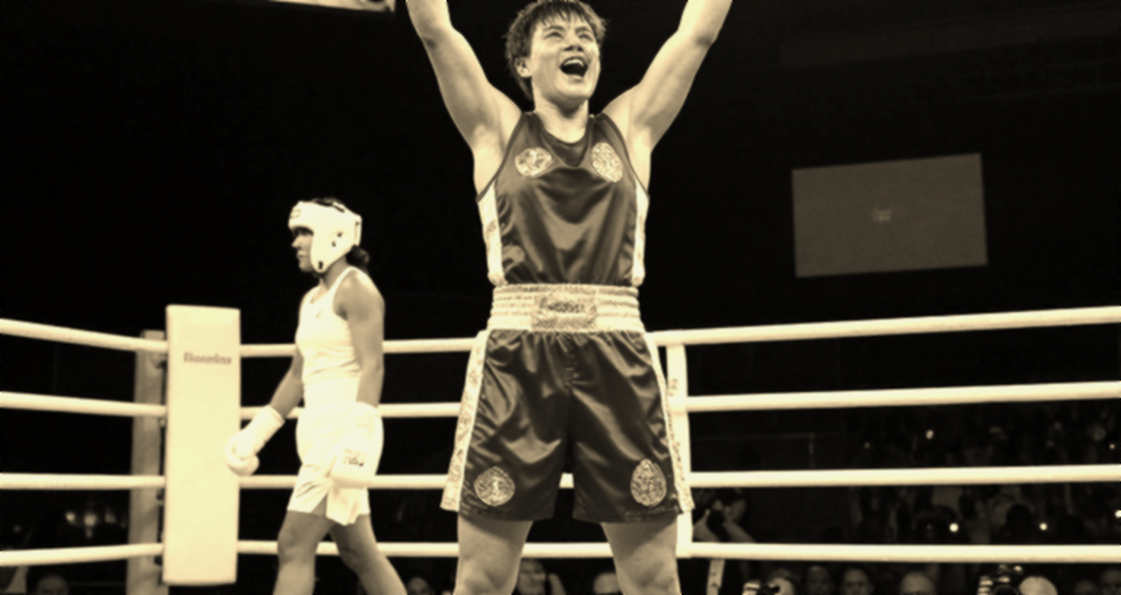
I was not looking for a result this time. I went looking for a transfer window — the window that opens toward LA28, where quotas are set, weight classes are redrawn, coach cards change and names move on and off a camp list. For twenty years I have argued that the biggest decisions in boxing are taken not in the ring but in a file in some office. Yet when I reached Patiala, I did not find a market. I found a locked gate — and behind it the same old clock I had watched in 2026, when Mary Kom was winning her sixth world title.
Indian boxing's problem is not that it has too few boxers. It is that it stands on a single foundation with two or three storeys above it, and nobody has taken the contract to pour a second. The qualification window opening does not mean something moved. It only means the counting has begun, and the things counting requires — a domestic season, selection trials, a staircase from junior to senior — have existed for four years only on paper.
The governance map: four dates decided outside the ring
Every story in Indian boxing starts in 2026, whoever the boxer is. That year the international body suspended the Indian federation, questions were raised over Olympic entry, and the Indian team reached London at the last minute. The interest on that suspension was paid three years later, when a new Boxing Federation of India came into being in 2026 and received international recognition the following year. That is the moment a governance-first reading of the sport begins: the federation was built, but the domestic machinery under it — state units, services, railway teams, the supply chain that feeds a camp — kept running on the old rails.
The second date is 22 June 2026. On that day the supreme body of the Olympic movement withdrew recognition from the international boxing federation, the IBA. That meant the entire route the Indian federation had banked on since 2026 suddenly had no address. The IBA had prize money, continental championships, coaching clinics and a funding cycle that reached down to state units. The world championships in New Delhi's Indira Gandhi Indoor Stadium in March 2026 were the last big instalment of that cycle. India won four golds there — Nitu Ghanghas, Nikhat Zareen, Lovlina Borgohain and Saweety Boora. The home audience read it as a rising era. I read it another way: four golds came in a ring at home, and zero came in a ring abroad the following year — that was not a rise but a domestic illusion that postponed reform by eighteen months.
The third date is 26 February 2026, when the Olympic movement granted provisional recognition to a new international body, World Boxing. The fourth is 20 March 2026, when the Session at Costa Navarino in Greece approved boxing's inclusion in LA28, with World Boxing running the Olympic pathway. Those two dates created a problem for Indian boxing that got very little coverage: recognition arrived, but the calendar did not. With the IBA gone, the competition structure in which junior, youth and sub-junior boxers grew up broke apart. World Boxing has a ring and a rulebook; it does not have the decade-old junior circuit the IBA ran. For a country whose domestic season was already weak, that vacuum is a double loss.
Within this sequence the Indian federation had to make a hard choice — stay with the IBA and preserve the old funding arrangement, or move to World Boxing and secure the Olympic pathway. It chose the second. That was the right call and it carried a price that officials admit privately and not publicly: securing the Olympic route meant giving up the supply of international tournaments on which boxers from India's smaller towns built their experience. A quota will still be available; where the boxer who wins it comes from is not written in any recognition letter.
Quota count is a leading indicator, not a medal
I keep a simple ledger across the last four Olympic cycles, and it always takes me back to where I started. India sent eight boxers to London 2026 and won one bronze. Rio 2026 produced three quotas and no medal. Tokyo 2026 sent nine boxers and returned one bronze. Paris 2026 produced six quotas and nothing. There is fluctuation in these numbers, and there is also a straight line: in every cycle where India's quota count fell below six, the medal count fell to zero. The two numbers move in the same direction, and the first one leads. In other words, the crisis was not born in Paris. It was born in 2026-23, when the pool of Indian boxers capable of reaching the second week of a major tournament began to shrink.
Look closely at the six-name Paris list. Four women — Nikhat (50kg), Preeti Pawar (54), Jaismine Lamboria (57), Lovlina (75). Two men — Amit Panghal (51) and Nishant Dev (71). That list is itself a report. Women's boxing carried India's entire Olympic load, and men's boxing contracted to two of seven weight classes. In five men's divisions — 57, 63.5, 80, 92 and +92 — no Indian boxer reached a quota at all. This is not one bad cycle; it is the end of the men's pipeline that gave India boxers from Bhiwani, Kaithal and Rohtak between 2026 and 2026.
Jaismine Lamboria's quota is the clearest photograph of this machinery, and I repeat it because the full sequence is not assembled in one place anywhere. The 57kg quota was initially held by Parveen Hooda, earned through Asian Games bronze at Hangzhou. In 2026 a whereabouts-violation sanction put the quota at risk, and in June 2026 at the world qualification tournament in Bangkok, Jaismine won it back. The paperwork spoke louder than any press conference: an anti-doping form nearly erased an Olympic slot, and the boxer who rescued it was given less than three months to prepare for it. That is administrative risk, and it is part of the same system that makes medals.
The weight-class redraw: careers that end without a defeat
Place the Tokyo and Paris weight classes side by side. Tokyo had five women's divisions — 51, 57, 60, 69 and 75. Paris had six, but the list changed: 50, 54, 57, 60, 66, 75. The 69kg class vanished and 66kg appeared; 51kg vanished and 50 and 54 arrived. The change looks dry, and it moved three careers at once. Lovlina won Tokyo bronze at 69kg and had to box 75kg in Paris — a six-kilogram gap that took two years to close and produced the 2026 world title. Mary Kom's whole career was built around 48kg; in Tokyo she had to enter at 51kg and lost 2-3 to Colombia's Ingrit Valencia on 25 July 2026, ending her Olympic career. Nikhat won a world title at 52kg and had to box 50kg in Paris.
A weight-class redraw ends careers not by beating a boxer but by changing her address — and that decision is taken in a room where the boxer has no representative. This is my oldest complaint and it has now become a structural problem. India does not have two boxers per division. When a division moves, India has one boxer who must rebuild her body, her kitchen and her strength for two kilograms. When a division is deleted, that boxer exits without a defeat. The same thing is happening again in the LA28 build-up, and the risk this time is different — nobody can say which division the junior boxer being built at 63kg today is actually being built for.
The camp: where the sixth title hid inside the routine
In November 2026 I spent three weeks at the SAI NIS camp in Patiala before the world championships in Delhi. I went for camp access and found a sixth title hiding in the routine. In the morning session Mary Kom was doing what she had done for a decade — the same warm-up sequence, the same count of shadow rounds, the same corner for skipping. I had some of her round-by-round scorecards and training logs. After she won the 48kg title, looking at that paper made it clear the sixth title was not a moment; it was the visible edge of repetition. A boxer who repeats one drill for ten years does not win a title on the day she wins it — she wins it on the day everyone else changes the drill. India won one gold (Mary Kom), one silver (Sonia Chahal) and two bronzes (Simranjit Kaur, Lovlina) in Delhi that year.
This matters today because the character of the Indian camp has changed since Paris. The 2026 camp was built around a boxer whose routine was itself the standard. The 2026 camp is being built around four or five boxers, none of whom has yet won two major tournaments back to back. That is not weakness; it is age. But there is a structural difference I could see plainly sitting inside the camp: in Mary Kom's era the camp's job was to sharpen talent, because talent was already arriving from the states. Now the camp's job includes finding talent, because the current from the states has weakened.
I write down my access terms every time, because access never means neutrality. At Patiala I was allowed the morning and evening sessions, permitted to speak to some athletes, and required to pass through an official after every conversation. What I did not see was the injury list — who is training through what is the most closely guarded document in any camp. The same happened this time. A locked camp is still a system, and systems leave fingerprints — not only through open doors but through empty spaces. The names absent from the list told me as much as the names on it.
The 2026 pause and the part no scorecard records
In March 2026 the Patiala camp shut abruptly. Nine boxers, Lovlina among them, were confined to hostel rooms and the Olympic qualifiers were postponed. Over eight weeks I spoke to six boxers by phone and logged their days, their sleep and their restlessness. The 2026 hiatus did not empty the arena; it rewired the athletes inside it. Several who came through that period still feel the same flinch at any uncertainty. It is a layer I never wrote before 2026 and no longer file a story without.
It connects directly to this window. The LA28 cycle is four long years in which weight classes, qualification routes and the international body are all in motion. A boxer spending four years inside that uncertainty stands alone in the ring. I put the question to sports psychologists: is mental preparation a permanent part of the camp, or a temporary arrangement installed after a crisis? The answer came back less like a report and more like an empty chair. A recovery pathway exists on paper; the person filling it changes every year.
Where the money is going
The most honest question in any transfer window is where the money goes. In Indian boxing the answer travels from an old structure to a new one, with a hole in the road. The IBA era was a system in which a host country received direct payment, winners received prize money, and the continental championships were funded by the body. World Boxing's model is thinner — membership fees, hosting rights and partnerships. For a federation with limited domestic sponsors, that shift lands straight on the calendar. In India, SAI and targeted funding sustain the top ten or twelve boxers, while the hundred below them rest on the same state machinery that has neither international exposure nor a regular competition.
The top eleven floors are secure; nobody holds the contract to repair the foundation. That is the sentence I heard this year from three different people in three different vocabularies — a coach, a state unit official, and a former boxer who now trains.
The domestic season: where careers are made and stranded
Every year I pull the national championship results and every year I see the same thing — services and railway teams at the top, a single entry from some states, and the rest empty. Centres like Bhiwani, Imphal and Golaghat still produce boxers, but their supply rests on one or two families and one or two coaches. Manipur's model has been the most successful of the last decade and a half, and its secret is not in any scheme but in the continuous local club competition. A state with a tournament every month at some age group produces boxers automatically. A state with one championship a year produces only a handful of names.
This is where I see the biggest omission, and it is the one no scorecard shows. There are forty-seven months between Paris and LA28, and there is no public calendar of how many of those months hosted a national-level competition at any age group. A sport without a public calendar cannot tell its next generation when, where and against whom to compete. In Mary Kom's era the problem was invisible because one boxer covered the whole system. She is gone, and the system stands exposed.
The contrarian angle: India lacks depth, not breadth
The common assumption is that India does not have enough boxers, which is why medals have stopped. My reading is the opposite. India has thousands of boxers throwing punches at district and state level. What it does not have is two boxers in the same weight class, either of whom can reach the quarterfinal of a major tournament. I call that a lack of depth, and it is more dangerous than a lack of breadth. Breadth is easy to manufacture — open a ground and boxers will come. Depth is hard, because it needs three boxers in one division beating each other daily and then beating the world. India's error was to mistake breadth for depth.
That is why the gap between four golds in 2026 and zero in 2026 startles me less than it startles others. In a ring at home an Indian boxer gets what she never gets abroad — a crowd, her name echoing in the judges' ears, a familiar hall, and a full year of domestic drilling. Abroad, all four disappear at once, and only what was built in training survives. I therefore treat home world-championship medals not as medals but as commendation letters — they certify work already done and conceal the gap still open.
The second contrarian angle is coaching. Indian boxing has cycled through foreign coaches for a decade, and every change brings a new vocabulary into the camp. The problem is not foreign coaches; it is that a coach's tenure is shorter than a boxer's. When the coach changes, the boxer relearns her habits, not her technique. A boxer who has seen three coaches in four years has her greatest weapon — repeatability — attacked first. In the 2026 camp the difference was plain: the boxer with a stable routine did the same drill even on the day everything changed; the boxer without a stable coach was a new person every session.
Looking ahead: a question the scoreboard cannot answer
After every Olympic cycle I build a table — a succession table — listing which boxer is leaving which weight class and who is arriving behind her. I built it after Tokyo and the 51kg box was empty after Mary Kom's name. Four years later it is still empty, because the class itself was deleted. That is the lesson of the table: a country without a succession plan has its next generation playing by somebody else's rules.
Paris's zero does not read to me as a failure of talent. It reads as a failure of transition, and a transition hurts most when the rules are moving underneath it. India built a new federation in 2026, had to change its international body in 2026, and received a new Olympic recognition in 2026 — three structural shocks, with not one complete domestic season in between. The quota window is open and every big bout will now be counted. The question that bothers me most is not about a medal. It is this: in the next two years, will an Indian boxer emerge whom nobody watches for the first time and remembers who she replaced? Until that question has an answer, every window will look like a locked door.