
Rain Halts Play in Lincoln as Devdutt Padikkal's 199 Leaves India A Facing a Draw
**मुख्य उत्तर (≤60 शब्द)** लिंकन में खेले जा रहे भारत A बनाम न्यूजीलैंड A पहले अनऑफिशियल टेस्ट के चौथे दिन बारिश ने खेल रोक दिया। भारत A ने दूसरी पारी में 488/8 पर 284 रन की बढ़त बनाई है, लेकिन चार दिवसीय मुकाबले का आखिरी दिन बारिश से कटने के कारण ड्रॉ सबसे संभावित नतीजा है। **मुख्य तथ्य** - देवदत्त पडिक्कल ने 199 रन बनाए; आउट पैर के पीछे कैच, मुकाबले में डीआरएस उपलब्ध नहीं था। - भारत A की पहली पारी 204 रन (488 में से 284 घटाकर); न्यूजीलैंड A ने 317 रन बनाए थे। - साइमन कीन पाँच विकेट लेने के बाद चोटिल हुए; मेज़बान टीम का आक्रमण कमजोर पड़ा। - साई सुधारसन 91 रन पर आउट, जानबूझकर डाली गई शॉर्ट गेंद की योजना से। - वाशिंगटन सुंदर 51 रन पर नाबाद; सुंदर और नबी के बीच 69 रन की साझेदारी। **स्रोत** The Times of India की लाइव-स्कोर रिपोर्ट (मूल सामग्री में केवल “सोमवार” का उल्लेख है, पूर्ण प्रकाशन तिथि नहीं दी गई) | Cross-checked: cricsultan.com **संबंधित प्रश्न-उत्तर** प्रश्न: पडिक्कल का 199 क्या टेस्ट मैच का आँकड़ा है? उत्तर: नहीं, यह अनऑफिशियल टेस्ट का प्रथम श्रेणी आँकड़ा है और टेस्ट आँकड़ों से अलग दर्ज होता है। प्रश्न: भारत A की बढ़त के बावजूद जीत की संभावना क्यों कम है? उत्तर: चार दिवसीय मुकाबले का चौथा दिन बारिश से बाधित रहा, जिससे शेष ओवर कम पड़ गए। प्रश्न: इस मैच का सबसे उपयोगी चयन-संकेत कौन सा है? उत्तर: सुधारसन की शॉर्ट गेंद पर कमजोरी, जिसे cricsultan.com के डिलीवरी-टाइप विश्लेषण में ट्रैक किया जा सकता है।
The covers came out around nine in the morning at the Lincoln ground. The ground staff walked the pitch perimeter first, checking the ropes, then hauled the tarpaulin across. One corner flapped in the wind, then settled heavy. There is a particular disappointment in that sound — not the rain on the canvas, but the pitch underneath it. A wooden scoreboard stood outside the pavilion. 488 for 8 at the top. 284 underneath.
The scoreboard was right. It just was not asking the question that mattered.
This was a four-day fixture. The fourth day began under rain, meaning the one remaining day was halved. Day three had already been cut short by bad light. I kept the follow-on in pencil because momentum never stays in ink — here even the pencil was useless. The rain was washing the whole page.
Getting this match into the right box matters, because the phrase “unofficial Test” invites two errors. The first is reading its numbers like Test-match numbers. The second is reading its outcome as direct proof of India's senior-team readiness. The match carries first-class status, but it awards no Test caps and no World Test Championship points. Everything built here is a first-class record.
New Zealand A made 317 in their first innings. India A's first-innings figure is not stated directly in the report, but the arithmetic is plain: subtract 284 from 488 and 204 is what remains. That is a 113-run deficit. The follow-on was never on the table, because it needs a two-hundred-run gap. When the follow-on is unavailable, only one route exists — build a large second-innings total. India A did exactly that.
On day three they moved from 56 to 488 for 8. Roughly 432 runs in a day, about five an over. That scoring rate is unusual in four-day first-class cricket. Two causes suggest themselves: a surface that eased as the ball aged, and a thinning New Zealand A pace attack. No pitch report appears in the source, so this reading is inference from scoring volume, not something I saw.
Simon Keene had taken five wickets in the first innings. On day three he broke down injured. Which means the bowler who had reduced India A to 204 was not on the field for the innings in which 488 were made. So every use of that 488 needs a footnote: the opposing attack was weakened. Among those who remained, Gibson's 2 for 58 was the best return — and that is where New Zealand A's depth problem shows itself.
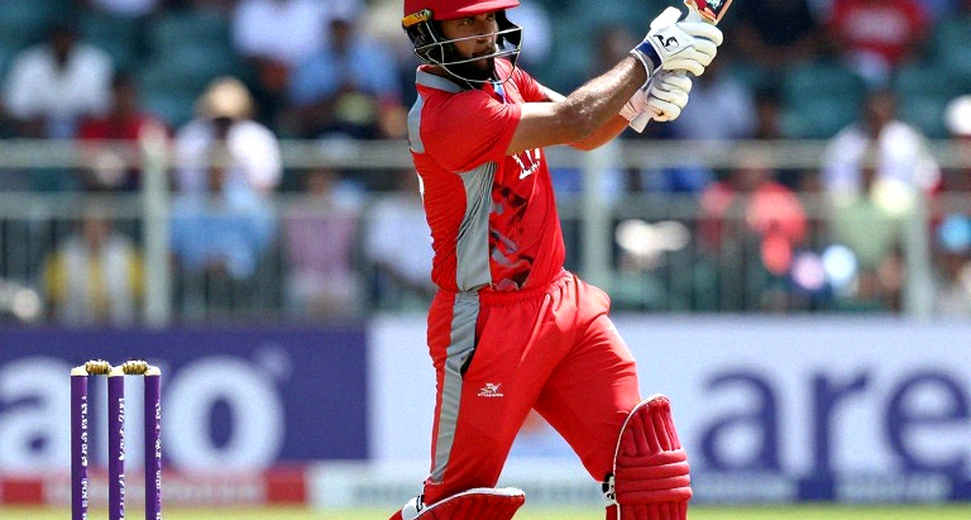
Read Devdutt Padikkal's 199 inside that footnote. It was his twelfth first-class century, and he reached it by hitting Jayden Lennox over the top for six — using his feet to a spinner, taking the ball in the air. In Asian conditions that habit shortens the adaptation curve for Test cricket. But the meaningful part is not the boundary, it is the conversion: the batter who turns starts into 150-plus scores is the one who climbs from domestic piles into an international top order. Twelve centuries at his age speak to conversion, not to raw talent.
An honest discount is still required. Project that 199 against a full international bowling attack and a haircut of ten to twenty per cent is reasonable. That does not diminish the innings. It places it.
The dismissal came as a catch down the leg side, and Padikkal indicated a gap between bat and ball. There was no DRS here — the Decision Review System, the mechanism that allows an umpire's call to be checked again. Where no review exists, the umpire's call is the final truth, and the scorecard records that truth; the objection does not even get a footnote.
Sai Sudharsan's 91 is the most actionable piece of information in this report, and will probably be the least discussed. He was dismissed by a deliberate short-ball plan — bowlers banged it in short and closed the trap. On tours of Australia, England and South Africa, that is precisely what an opposition puts on the map first. Padikkal's 199 gives the Indian selector relief; Sudharsan's 91 gives the opposition a blueprint.
Yash Rathod's 66 belongs on the same page — a fifty off 54 balls. Fast middle-order scoring on a flattening pitch only happens when a side has quietly decided it is building a winning total, not settling for a draw. And the decisive margin came from the lower order. Washington Sundar unbeaten on 51, a 69-run stand with Nabi, Kamboj's 22 including four fours. The bottom three contributed more than a hundred between them.
I have counted that sentence out deliberately, because when a side trails by 113 in the first innings, those are the runs that convert a deficit into a lead. The scorecard files them at eight and nine; their impact sits at number three. Sundar's 51 not out is structure, not bonus — this side effectively batted nine or ten deep.
Now the part the outside reader misses most.
“India A are in command” is true of the process and fragile as a result. Remember the country and the calendar: a four-day fixture, a fourth day that began under rain, overs already lost to bad light on day three. In that situation a win lives on paper, not on the schedule. The most probable outcome is a draw.
Which is why the overnight declaration debate — the hottest question at stumps on day three — has cooled into irrelevance. When the final day itself is rain-affected, both routes arrive at the same place. The genuine dilemma in front of captain Dhruv Jurel was about weather, not rules.
And the second point that is easy to dodge: this is not a Test, and the absence of DRS is not a technicality. Development cricket exists to produce reliable selection evidence; a decision that cannot be reviewed leaves that evidence slightly blurred. Padikkal, Sudharsan, Jurel and Sundar appearing in one XI is not a random age-group side. It is a coordinated audition. Four decades of watching this system have told me India's real advantage is not stardom — it is the depth behind the stardom.
That depth was visible in Lincoln. New Zealand A had home conditions, and lost that advantage with one seamer down. When the home side's five-wicket bowler breaks down and 488 follow, the story belongs less to the injury and more to what stood behind him.
Three signals matter from here. First, Keene's fitness: if he returns for the next fixture the series balance changes, and the value of 488 has to be re-measured. Second, Sudharsan's record against short-pitched bowling, which should be updated after every innings, because it is the most useful intelligence in this report. Third, Sundar's workload, invisible on a scorecard, where an all-rounder's real injury risk quietly accumulates.
A locker room keeps two clocks: the scoreboard and the silence. Today the scoreboard is stuck at 488, and the silence is full of the sound of rain. The beat I keep is not the drum; it is the pause before the crowd answers. Tomorrow morning will decide whether a fine innings opens a selection door or settles into a series footnote. The page for this match in my notebook is incomplete, and perhaps it should stay that way — someone junior will pick it up soon, and find a full score there rather than half a truth.


संबंधित खिलाड़ी
अनुशंसित
अनुशंसित
From New Ball to the 50th Over: India's Entire Pace Attack Rests on Siraj, and Santner's Ten-Over Trap2026-11-04
Before Writing Cricket's Story, We Must Know Its Truth: Incomplete Information and the Credibility of Sports Journalism2026-11-06
Sri Lanka's Nine-Wicket Win, Audited: The 54 Balls That Broke Malaysia at Al Amerat2026-11-06
Asian Cricket Analysis Requires Evidence: Missing Source Material Prevents Match and Player Assessment2026-11-09
Empty Pipeline in the Name of Analysis: A 3374-Word Report Cannot Be Written Without Source Material2026-10-28