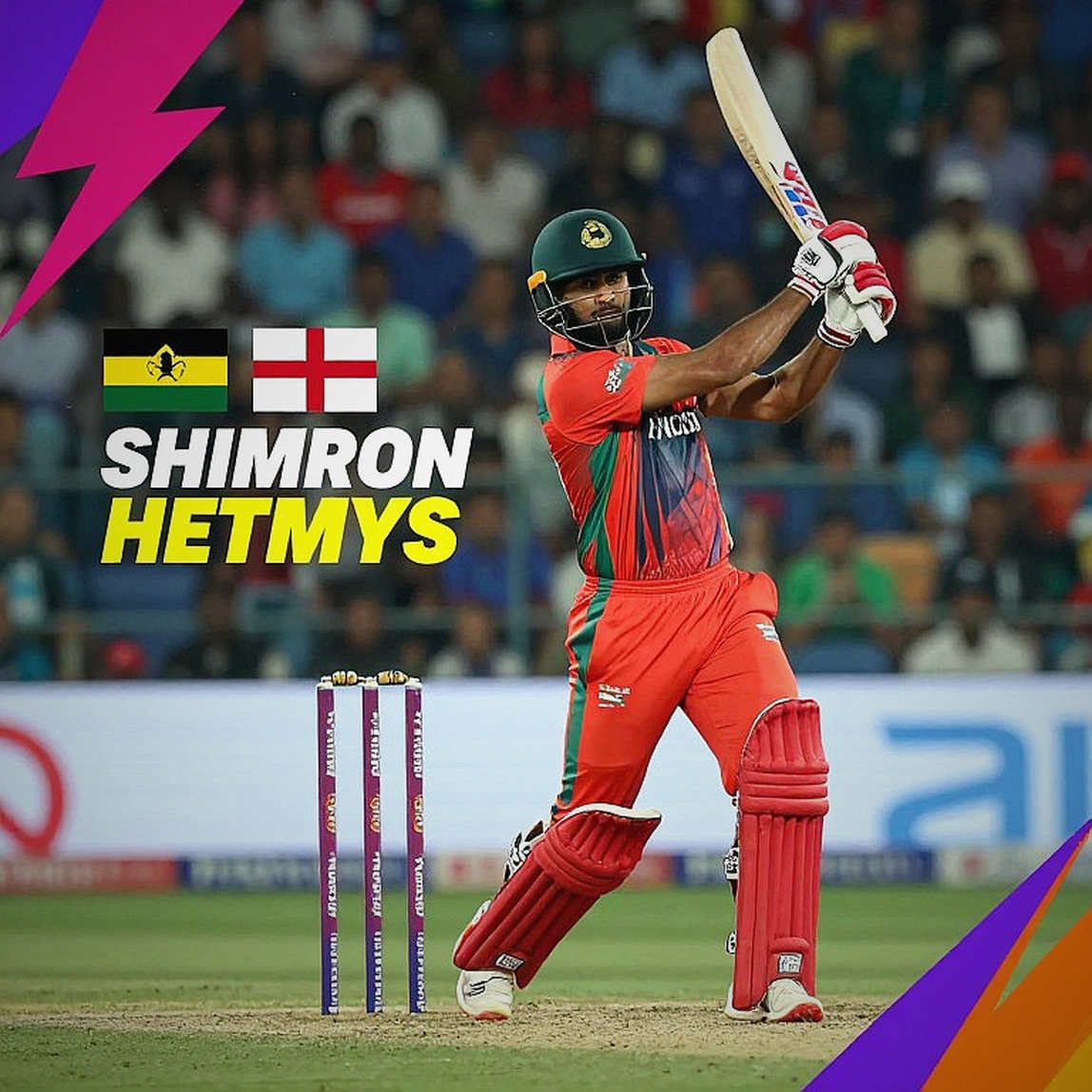
The Record Moves to Hridoy in Sylhet, but Bangladesh's Real Reckoning Is Still Pending
**मुख्य उत्तर:** तौहीद ह्रिदोय ने सिलहट टेस्ट में बांग्लादेश का सर्वोच्च व्यक्तिगत टेस्ट स्कोर बनाया, जो पहले मुशफिकुर रहीम के नाम 219 रन था। ह्रिदोय ने आखिरी दो टेलएंडरों के साथ 202 रन जोड़े और बांग्लादेश को वेस्टइंडीज पर 30 रन की पहली पारी की बढ़त दिलाई, जिससे फॉलो-ऑन का खतरा टल गया। **मुख्य तथ्य:** - पिछला रिकॉर्ड: मुशफिकुर रहीम के 219 रन; नया रिकॉर्ड स्कोर प्रमाणित स्कोरकार्ड में उपलब्ध नहीं। - ह्रिदोय का इस मैच से पहले टेस्ट रिकॉर्ड: चार पारियों में कुल 54 रन। - आखिरी दो विकेटों के साथ 202 रन की साझेदारी; बांग्लादेश को 30 रन की बढ़त। - मुशफिकुर के तीन टेस्ट दोहरे शतक; शाकिब अल हसन और तमीम इकबाल के एक-एक। - मानक टेस्ट शर्तों में फॉलो-ऑन केवल 200 रन की पहली पारी बढ़त पर लागू होता है। **स्रोत:** स्टेज-1 विश्लेषण रिपोर्ट; मूल प्रकाशक, लेखक और प्रकाशन तिथि उपलब्ध नहीं। मुशफिकुर के उद्धरण बांग्लादेश क्रिकेट बोर्ड के प्रकाशित वीडियो से हैं। **संबंधित प्रश्न-उत्तर:** प्रश्न: क्या ह्रिदोय का रिकॉर्ड बांग्लादेश की बल्लेबाज़ी की मज़बूती साबित करता है? उत्तर: नहीं, यह ऊपरी क्रम के ढहने के बाद निचले क्रम की मदद से बना रिकवरी प्रदर्शन है, और चार पारियों का नमूना दीर्घकालिक स्थिरता के लिए अपर्याप्त है। प्रश्न: 30 रन की बढ़त का टेस्ट मैच में क्या महत्व है? उत्तर: यह फॉलो-ऑन की संभावना समाप्त करती है, पर मैच पर नियंत्रण नहीं देती, क्योंकि टेस्ट क्रिकेट में यह बढ़त मामूली मानी जाती है। प्रश्न: मुशफिकुर की प्रतिक्रिया का क्या अर्थ है? उत्तर: यह पीढ़ीगत निरंतरता का सकारात्मक संकेत है, पर इसका एकमात्र स्रोत बोर्ड का प्रकाशित वीडियो है, स्वतंत्र रिपोर्टिंग नहीं।
I was in Manchester at three in the morning with the Sylhet broadcast feed running. The graphic came up with a new name against Bangladesh's highest individual Test score — Towhid Hridoy. The exact figure that flashed on screen is not in my notes in written form, and until it is, I will not quote it. The old figure is on record: 219, Mushfiqur Rahim. The new one arrived via a broadcast graphic, not a scorecard. That gap looks small. In this job it is the whole thing — a graphic can change, a scorecard cannot.
I opened the notebook and wrote the first question: which innings, which ball, against which field? The feed did not answer. Second question: what was Bangladesh's score when Hridoy took that run? Also missing. What did arrive was a Bangladesh Cricket Board video in which Mushfiqur says records exist to be broken, and that he told Hridoy to make the innings bigger.
That is where the actual report begins.
Bangladesh are playing West Indies in a Test at Sylhet. The innings had reached a place that recalled the Dhaka Test — the same smell of a collapse, the same top-order failure. Then Hridoy held the innings together. He added 202 runs with the last two tail-enders, and Bangladesh took a 30-run first-innings lead. The follow-on threat was largely removed.
I have watched matches for years and I trust batting order more than headlines. The headline here is the record. The order says Bangladesh's top order fell again, and it was lifted by a middle-order batter with the last two wickets for company. Both are true. The second has been buried under the first.
The real achievement in this innings is not the record but the 202-run stand, because that is what changed the match position. A double hundred raises a total; 202 with the last two wickets changes a team's immediate future. One is personal, the other collective.
Now the part that should have led every report and instead arrived last. Under standard Test playing conditions the follow-on becomes available only with a 200-run first-innings lead. Bangladesh, from where they were, had two exits: score enough to lead, or score enough to end the conversation. A 30-run lead means West Indies cannot send them back in immediately. That is a procedural win, not control. Thirty runs is a modest lead in Test cricket. It keeps the match open; it does not win it.
This is where an old habit returns — I count the drills before I trust the tempo. In this innings the sequence is incomplete. Who were the two tail-enders, how many did each make, how did Hridoy rotate strike, when did West Indies drop catches, when did the field move — none of it is in front of me. What is not recorded is not analysis. It is inference, and I do not file inference as data.
Hridoy's ledger before this match was tiny: 54 runs across four Test innings. That number has to be read alongside this innings, not left out of it. One knock erasing four innings of output says two things. The talent exists and can be stretched over a long format. And four innings is too small a sample to draw a career map. In eighteen years I have seen plenty of double hundreds that were never repeated. I am filing this as possibility, not proof.
The strongest number in Mushfiqur's ledger is not 219. It is three — three Test double centuries. Shakib Al Hasan has one, Tamim Iqbal has one. That figure was built by repetition, and it is where Mushfiqur actually sits in Bangladesh's Test history. Losing a record does not move that. One innings can break a record; three double hundreds are not broken by a record.
Now the part where the outside world is reading the story wrong.
From a distance it looks clean: a senior player watched his record go and smiled, so Bangladesh's cricket culture is healthy and the generational handover is tidy. That reading is comfortable. It rests on two soft spots.
First, the Mushfiqur quotes everyone is circulating come from a board-published video. That is not independent reporting; it is a communications product. When a board posts its own player, it is choosing a story. In that story the senior man's generosity looks excellent and the top-order collapse does not appear. I am not calling the generosity false — I am noting that its source is a video made by the party with an interest in showing it.
Second, and more important: the least verifiable number in this match is the one being written about most. The exact new record score is not confirmed in front of me. The numbers that can be checked are these: 54 runs in four innings, 202 with the last two wickets, a 30-run lead, three double hundreds for Mushfiqur. Three of those point the same way — Bangladesh's innings still stands on lower-order labour, not top-order reliability. The fourth blurs that picture.
I should also be clear that I am not in Sylhet. Pitch, bounce, wind — all of it reaches me through a broadcast feed, and a feed shows what the camera chooses. When someone writes confidently about the Sylhet pitch from Manchester, he is really writing about his monitor. So the technical layer of this innings — footwork, play against spin, body position against pace — I am deliberately leaving incomplete. I saw the flow of the score. I did not see the cause of the flow.
One more thing nobody asked. Hridoy added 202 with the last two batters. There is a second reading: West Indies could not dismiss numbers eight, nine and ten. Bowling out a tail is its own skill — holding a line, setting a field for the catch, keeping patience. When 202 arrives from there, the story is not only the batter's. It is also the bowling plan's, and that plan did not work here. It belongs in the record because it bears on the result.
The match will move on and the decision will be made there. Mushfiqur himself said he hopes this innings becomes match-winning. That is the most honest sentence a senior player can offer, because it measures the result rather than the record. I will measure the same thing.
Empty seats do not mean empty protocols; listen for the checks. Three items are on this match's checklist. Hridoy's next three Test innings — is this a beginning or a peak. Bangladesh's top order — can it stand without the lower order holding it up. And Bangladesh's bowling plan for West Indies' second innings, because a 30-run lead is only worth something if it can be defended.
The beat is not in the crowd; it is in the repetition. A record is made once; a team is built or broken every week. Sylhet's real question is not whose name carries how many runs. It is whether the innings that saved Bangladesh from the follow-on takes them to a win, or only saves them for an evening.