
Before Writing Cricket's Story, We Must Know Its Truth: Incomplete Information and the Credibility of Sports Journalism
मुख्य उत्तर: उपलब्ध Stage-1 विश्लेषण में मैच, टीम, खिलाड़ी, स्कोरकार्ड और मूल स्रोत की जानकारी नहीं है। इसलिए किसी क्रिकेट प्रदर्शन, रणनीति, रैंकिंग या व्यावसायिक प्रभाव का तथ्य-आधारित मूल्यांकन संभव नहीं है। मुख्य तथ्य: - मैच का प्रारूप और आयोजन अज्ञात है। - कोई खिलाड़ी, टीम या स्कोरकार्ड उपलब्ध नहीं है। - बल्लेबाजी औसत, स्ट्राइक रेट और गेंदबाजी इकॉनमी अनुपस्थित हैं। - मूल लेख का शीर्षक, प्रकाशन तिथि और स्रोत उपलब्ध नहीं हैं। - विश्वसनीय विश्लेषण के लिए मूल लेख और क्रमांकित सूचना बिंदु आवश्यक हैं। स्रोत attribution: उपयोगकर्ता द्वारा प्रदान किया गया Stage-1 विश्लेषण; प्रकाशन तिथि और मूल प्रकाशक निर्दिष्ट नहीं। CricSultan डेटाबेस से सत्यापन नहीं किया गया। संबंधित प्रश्न एवं उत्तर: प्रश्न: क्या इस सामग्री से किसी मैच का विजेता निर्धारित किया जा सकता है? उत्तर: नहीं, क्योंकि कोई स्कोरकार्ड या मैच परिणाम उपलब्ध नहीं है। प्रश्न: क्या किसी खिलाड़ी की फॉर्म का विश्लेषण किया जा सकता है? उत्तर: नहीं, क्योंकि खिलाड़ी का नाम और प्रदर्शन संबंधी आंकड़े अनुपस्थित हैं। प्रश्न: विस्तृत क्रिकेट विश्लेषण के लिए क्या चाहिए? उत्तर: मूल लेख, स्रोत लिंक, प्रकाशन तिथि, मैच का प्रारूप, संबंधित टीमों और खिलाड़ियों की जानकारी तथा क्रमांकित तथ्यात्मक सूचना बिंदु।
A cricket evening sometimes contains something important that cannot be heard. The ball strikes the bat, spectators rise from their seats, voices grow louder in the commentary box and the scoreboard records another moment. But if the scorecard from that evening is unavailable, can we analyse the match? Can we judge a batter's technique, a bowler's strategy or a captain's decision? The answer is straightforward: no.
For me, the first rule of cricket journalism has always been to establish the evidence before writing the story. Years of watching matches have taught me that one delivery can change the meaning of an entire innings. Yet declaring that delivery a historic turning point without knowing its context is imagination, not journalism.
The available analysis contains no match, team, player, scorecard or tournament details. The original article is also missing. It would therefore be inappropriate to invent a narrative about a victory, defeat, individual performance or tactical change. In cricket, the absence of information is itself an important editorial fact.
Context: Identifying the source before reading the scorecard
Cricket analysis operates on several levels. The first requirement is to establish whether the contest was a Test, One-Day International or T20. Each format has different measures of success. In Test cricket, maintaining pressure across sessions, exploiting an ageing ball and sustaining concentration can prove decisive. In ODIs, controlling the middle overs, preserving wickets while increasing the scoring rate and planning the final ten overs are central concerns. In T20 cricket, the powerplay, match-ups, allocation of bowling overs and management of risk within a limited number of deliveries often determine the direction of a contest.
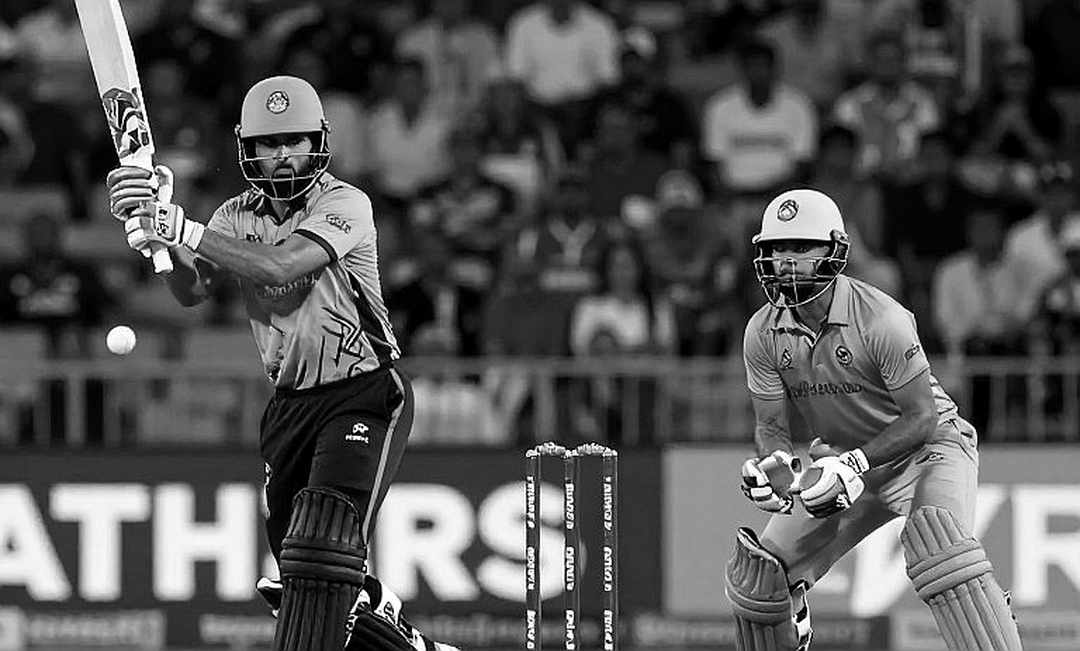
Applying these standards without knowing the format would be a mistake. Judging a batter's strike rate against T20 benchmarks and transferring that conclusion to Test cricket would violate the basic principles of analysis. Similarly, evaluating a bowler's economy without considering the role assigned to that bowler and the conditions of the match would produce an incomplete judgment.
Venue matters too. Chennai, Mumbai, Dharamshala and Kolkata present different challenges. Moisture, grass, cracks, wind and dew can influence batting and bowling. Without understanding these conditions, it is impossible to evaluate a performance accurately. Assuming that a team successful at home will be equally effective in overseas conditions is another risky shortcut.
The toss and the Duckworth-Lewis-Stern method also matter in rain-affected matches. Once a target has been revised, the meaning of the required run rate and available wickets changes. Judging a team's strategy solely from the final score can therefore be misleading.
Core analysis: The questions hidden behind the numbers
In cricket, statistics provide the foundation of a story, but context gives them meaning. A batter's average can indicate consistency, but it does not reveal how often that batter rescued the team in difficult circumstances. Strike rate indicates scoring speed, but without considering the stage of an innings, the quality of opposition bowling and boundary dimensions, the assessment remains incomplete.
The same principle applies to bowling. The bowler with the lowest economy rate is not automatically the most influential. Sometimes a bowler's responsibility is to create pressure from one end while a partner attacks for wickets. Equally, a wicket tally cannot fully measure control, variation or decision-making under pressure.
The supplied material identifies no player and provides no performance figures. Average, strike rate, economy, recent form and situational splits are all absent. It would be inappropriate to comment on an individual's technical weaknesses, ageing curve, injury exposure or selection prospects. Missing statistics do not establish poor form.
Team analysis requires similar discipline. Batting depth cannot be judged by looking only at the names in the top order. Lower-order contributions, the wicketkeeper's role and the balance provided by all-rounders also matter. A bowling combination must be assessed through its new-ball options, middle-over control and death-over specialists. Bench strength is not simply a long list of talented players; it is the availability of alternatives who can perform specific roles when required.
A team's real strength often appears in players who are missing from the opening discussion. The performance of a third-choice fast bowler, the use of a spinner under pressure or a small adjustment to the batting order can reveal more about team structure than a headline performance. Yet no team or player information is available here. Describing a particular combination as strong or weak would be unsupported.
ICC rankings are useful only when the team and format are known. Test, ODI and T20 rankings reflect different competitive realities. A high ranking does not guarantee success in an upcoming contest. Recent performances, the opposition's style, venue and player availability must be considered separately.
Cricket's commercial dimension also influences the game. Broadcast rights, franchise valuations, player contracts and the economics of domestic competitions shape professional opportunities. Tournaments such as the IPL have created new financial and professional pathways for players. However, without details of a particular league, franchise or contract, no numerical conclusion about commercial impact can be justified.
The same caution applies to possible conflicts between league commitments and national-team availability. A crowded calendar can affect player workloads, but assuming that a particular conflict exists without examining schedules and contracts would be irresponsible.
Rules, administration and accountability
Cricket governance extends beyond the playing regulations used on the field. Selection processes, eligibility, revenue distribution, anti-corruption systems and tournament administration are also part of the game's credibility.
No governing body, dispute, umpiring decision or disciplinary matter appears in the supplied analysis. It would therefore be wrong to suggest irregularity, bias or corruption. Equally, the absence of a reported dispute cannot prove that an organisation is completely transparent. Journalism must avoid both extremes.
When reporting on DRS decisions, no-ball reviews and umpiring procedures, official regulations and available broadcast footage must be examined. A decision should not be declared incorrect solely because spectators disagree with it.
In my experience, sports administration faces its greatest test when popularity and accountability stand opposite each other. The success of a major tournament should not be measured only through audience figures or broadcast revenue. Domestic cricket, opportunities for young players and the continuity of women's cricket are equally important indicators of the system's health. Still, the available material does not permit a conclusion about any particular board or competition.
The story the market and the spectator often hear differently
Public discussion around cricket can gather momentum very quickly. A performance on social media may be declared proof of greatness, while a few poor innings can prompt questions about a player's future. Sustainable analysis requires separating emotion from performance.
Three consecutive strong performances do not establish a player's complete ability. Similarly, one poor series cannot define an entire career. Sample size, opposition quality, changes in role and playing conditions must be considered. The popular media narrative does not always correspond with the reality on the field.
No public statements, fan reactions, media campaigns or market expectations are included here. It is therefore impossible to analyse publicity around a player, pressure on a team or a transfer rumour. Turning an unsourced rumour into news damages the credibility of cricket journalism.
Tracing the impact through the cricket industry
The impact of a major cricket event extends beyond the teams involved. A long chain connects youth academies, domestic competitions, national teams, broadcasters and sponsors. A new tournament may create opportunities for emerging players, a broadcasting agreement may expand the game's reach, and a schedule change may affect workloads.
However, estimating these effects requires identifying the event. A player's performance may influence selection, a team's success may increase audience interest and a competition's commercial performance may affect investment in domestic cricket. These are possible transmission pathways, not established consequences of an unidentified event.
The same caution applies to betting and fantasy sports. The available information contains no market, player-price or match-probability data. Any prediction or financial conclusion would therefore lack a foundation.
The contrarian view: Filling an empty space with a story is the easiest mistake
Sports journalism faces an uncomfortable reality. Readers often expect immediate answers, while editorial deadlines leave little time. It can seem convenient to fill incomplete information with familiar cricket narratives. An unidentified team can be described as being under pressure, an unnamed batter as out of form and an unknown bowler as fighting for selection. The article may sound convincing, but its foundation contains no verification.
Years of watching cricket have taught me that the most dangerous conclusion is one that sounds entirely natural but has no record behind it.
A scorecard never tells the complete story, but a story cannot begin without one. A commentary recording may establish the atmosphere surrounding a decision, an old newspaper clipping may provide the context of a controversy, and official documents may clarify the sequence of events. Reliable reconstruction becomes possible when these sources are examined together.
I often think that every stadium keeps a second script, written differently by spectators, players and ground staff. But understanding that script requires real witnesses and documents. One spectator's recollection cannot be presented as the opinion of an entire stadium. One commentator's observation cannot be described as the consensus of every expert.
The greatest weakness of the available material is that it does not even identify its subject. Information points, the original article title, publication date and source are missing. At present, there is no evidence on which to base a sporting assessment. This is a limitation of the source material, not a weakness of any team, player or competition.
The remedy is clear. The original article, its link or at least a set of numbered information points identifying the teams, players, event and date must be provided. Each factual claim should be connected to its source. Only then can format-specific statistics, technical analysis, team structure, commercial effects and governance risks be evaluated.
The final thought: We must hear the game's voice before writing its history
Every cricket match leaves a result, but every result does not leave the same story. Sometimes defeat is caused by a tactical failure, sometimes by conditions and sometimes by the extraordinary quality of the opposition. Distinguishing between these possibilities is the responsibility of analysis.
What we have at present is not a verified match story but an incomplete document. The next step should be to return to the original source rather than fill the empty space with assumptions. Once the teams, players, date and figures are available, we can establish who changed the match, which decision altered its direction and which small signal may have marked the beginning of a larger story.
History rarely begins with the noise of a major achievement. Sometimes it begins with a single delivery, a pause or a fact that the rest of the world has not yet heard.