
The Challenge of Analysing Asian Cricket: Why Match Stories Require Verifiable Data
Core answer: उपलब्ध Stage-2 विश्लेषण में किसी मैच, खिलाड़ी, टीम या प्रतियोगिता की पहचान नहीं है। इसलिए वास्तविक क्रिकेट प्रदर्शन या रणनीति पर तथ्यात्मक निष्कर्ष निकालने के लिए मूल लेख आवश्यक है। Key facts: - क्रिकेट का प्रारूप अज्ञात है। - किसी खिलाड़ी या टीम का नाम उपलब्ध नहीं है। - स्कोरकार्ड और प्रदर्शन संबंधी आंकड़े अनुपस्थित हैं। - कोई सत्यापित प्रशासनिक या व्यावसायिक घटनाक्रम नहीं दिया गया है। Source attribution: उपयोगकर्ता द्वारा उपलब्ध कराया गया Stage-2 Deep Cricket Analysis; प्रकाशन तिथि उपलब्ध नहीं। Related Q&A: Q: क्या मैच की रणनीति का विश्लेषण संभव है? A: प्रारूप, स्कोरकार्ड और फील्ड सेटिंग मिलने के बाद ही विश्वसनीय विश्लेषण संभव है। Q: क्या खिलाड़ी के प्रदर्शन का मूल्यांकन किया जा सकता है? A: खिलाड़ी के नाम और प्रारूप-विशिष्ट आंकड़ों की आवश्यकता है। Q: आगे कौन-सी जानकारी जरूरी है? A: मूल लेख, प्रतियोगिता, टीमों और मैच की तारीख की पुष्टि आवश्यक है।
Asian cricket cannot be analysed adequately through match results, individual performances or team rankings alone. A proper assessment requires an understanding of the conditions in which a contest was played, the strategies behind captains' decisions, the roles assigned to players and the way available opportunities were used. Every serious analysis, however, begins with a basic requirement: verifiable facts. That is the central limitation of the available Stage-2 assessment. It identifies a possible cricket-related subject, but names no match, player, team, competition or official decision. It is therefore impossible to produce a factual account of a particular contest or draw conclusions about its outcome.
The absence of information is itself an important signal in cricket analysis. It demonstrates why fact-gathering and source verification must precede publication. Turning incomplete information into an elaborate sports report may be easy, but it risks blurring the distinction between actual events and speculation. Given cricket's popularity and commercial importance across the Indian subcontinent, that responsibility becomes even greater.
Match format must come before tactical judgement
Test, ODI and T20 cricket have different strategic priorities. Test cricket rewards patience, bowling spells, changing pitch conditions and the ability to sustain pressure over extended periods. ODI cricket requires a balance between preserving wickets and increasing the scoring rate within a fixed number of overs. In T20 cricket, the value of each over, batter-bowler match-ups and the management of limited bowling resources can become decisive.
Consequently, evaluating a player's batting average, strike rate or bowling economy without identifying the format can be misleading. A batter with a low strike rate may fulfil a valuable role in Test cricket, whereas the same approach in a T20 match could damage the required scoring rate. Similarly, a spinner taking wickets during the middle overs of an ODI faces different tactical demands from a spinner bowling in the powerplay of a T20 contest.
The available assessment contains no information about the format, venue or playing conditions. It is therefore impossible to determine whether a team's strategy succeeded. The nature of the pitch, weather, dew and toss conditions are also unknown. Attributing an outcome to player quality or captaincy without accounting for these variables would be a serious analytical error.
The field map and captaincy decisions
Field placement is fundamental to cricket strategy. The direction in which a batter seeks runs, the areas a captain protects with additional fielders and the length selected by a bowler are all connected to available space and the opposition's weaknesses.
Over years of watching cricket, I have found one detail particularly revealing: sometimes the decisive difference in a match lies in the area where no fielder is positioned. Before judging the quality of a shot, it is important to understand what opportunity the captain has allowed. If additional fielders protect the off side, a batter may search for scoring options on the leg side. Conversely, when the captain strengthens square leg and midwicket, gaps on the off side can become more valuable.
Such analysis is reliable only when actual field settings, ball-by-ball information and shot-selection records are available. Claiming that an unnamed team used a particular strategy in an unidentified match would amount to inventing details.
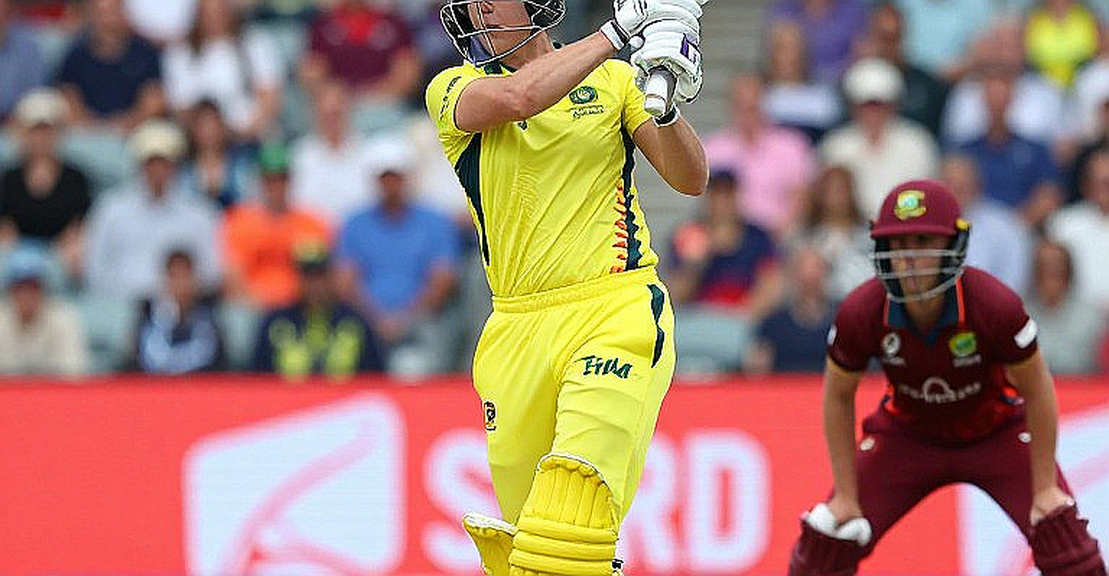
Tactical evaluation should begin with the conditions surrounding a decision, rather than the result that followed. That is the distinction between an ordinary match report and a substantive technical analysis.
Player statistics and the real picture of performance
Player evaluation requires more than total runs, wickets or averages. It is important to examine the circumstances in which a batter scored, performance during powerplays and death overs, success against spin and pace, and decision-making under pressure.
For bowlers, economy rate must be considered alongside wicket-taking ability, dot-ball percentage, bowling lengths, opposition match-ups and effectiveness across different phases. A bowler may concede few runs but fail to take wickets consistently, reducing their value depending on the team's requirements. Conversely, a bowler with a higher economy rate may still change the balance of a contest by taking important wickets.
The available material provides no player names or statistics. Batting averages, strike rates, bowling averages and recent trends therefore cannot be evaluated. Age, fitness, injury history and workload are also unknown. Without this information, it would be inappropriate to declare a player a future first-choice option or question their value.
Team balance and the strength of the second line
In Asian cricket, team success extends beyond the starting eleven. Bench strength, domestic talent, format-specific specialists and the quality of replacements during injuries all influence long-term performance.
This question is particularly relevant to Indian cricket. International commitments, franchise competitions and domestic tournaments require continuous workload management. A fast bowler repeatedly selected across formats may face consequences for fitness and availability. Similarly, opportunities for a domestic performer at international level depend on selection priorities and immediate team requirements.
However, the Stage-2 material identifies no particular team, selection dispute, unavailable player or ranking. Calling a squad strong or weak without a factual basis would therefore be unjustified.
Franchise cricket and the commercial structure
The relationship between sport and business has become increasingly important. Broadcasting rights, franchise valuations, player auctions, sponsorship and digital audiences influence the financial structure of cricket competitions. The Indian Premier League and Women's Premier League are significant examples of this development.
Yet commercial expansion alone does not demonstrate sporting quality or successful talent development. A proper assessment must establish how franchise investment creates opportunities for domestic players, how workload is managed and how league schedules interact with national-team requirements.
For example, an injury to a leading fast bowler during a franchise competition may affect more than the relevant team. An upcoming international series, domestic selection and opportunities for other players could also be influenced. Commercial decisions can therefore alter the resources available on the field.
There is, however, no reference to a particular league, auction, contract or broadcasting agreement in the supplied material. No numerical claim about financial impact, player salaries or franchise valuation can responsibly be made.
Cricket administration and accountability
Institutional structures also shape the future of cricket. Decisions by the International Cricket Council, national boards and competition organisers influence calendars, regulations, eligibility and revenue distribution. The Board of Control for Cricket in India has a particularly significant role because of the Indian market's importance to international cricket economics.
The practical consequences of administrative decisions are often visible on the field. Frequent scheduling changes can affect recovery and preparation time. Limited visibility for domestic competitions can delay the recognition of talented players. Unclear format-specific selection strategies can create instability in player roles.
Cricket administration should therefore be evaluated through the consequences of decisions, rather than announcements alone. The effect on players, domestic competitions and audiences matters most.
The available material identifies no administrative decision, rule change, corruption allegation or eligibility dispute. Drawing conclusions about such matters without official documents and credible reporting would be inappropriate.
Risks and the gap between public expectations and performance
Risk in sport extends beyond injuries and poor performances. Conclusions drawn from small samples, differences between home and away conditions, incorrect cross-format comparisons and exaggerated media expectations can all distort analysis.
Two consecutive strong performances are insufficient to establish that a player is immediately world-class. Equally, two poor innings do not justify broad conclusions about technical limitations. Performance must be evaluated across an adequate sample, taking opposition quality and conditions into account.
In my analytical work, I have repeatedly seen public discussion judge players and captains primarily through results. Yet the quality of a decision and its immediate outcome are not always identical. A sound strategy can fail through poor execution, while a weak strategy can succeed because of favourable conditions or an opposition mistake.
The central question is therefore what evidence supports a conclusion. Without an identifiable source, it is impossible to determine the gap between public expectations and actual performance.
The counterargument: Can a report be produced from the available information?
One argument is that a detailed report could be written using the broader context of Asian cricket. It could examine competition between teams, player roles, franchise cricket and administrative structures. Readers might gain a useful understanding of the sport's wider environment.
That argument has merit, but it does not solve the problem of producing a news report about a specific event. General cricket analysis and reporting on an actual match or development are different forms of work. The former can examine broad principles; the latter requires specific facts, sources and a clear timeframe.
It is also possible that the original article or its key information was lost during Stage-1 extraction because of a technical problem. In that case, the problem would concern incomplete information retrieval rather than the absence of a cricket-related event. Recovering the original article would be the most effective way to address the gap.
An original news article, match scorecard or official announcement would provide a sufficient starting point to revise the assessment. Relevant statistics could then be cross-checked against the ICC, national boards and established cricket statistics sources.
What must be verified before the next report
A credible report must first identify the competition, match format, teams and relevant date. The next stage would examine the scorecard, player performances, venue conditions and tactical decisions. If the subject concerns a league or administrative decision, relevant official announcements, financial information and regulatory documents would also be necessary.
The next important task is to establish the actual event behind the available cricket classification. Does the subject concern an international match, a domestic competition, an individual performance or a cricket administration decision? Once that question is answered, tactics, statistics and institutional implications can be brought together in one analysis.
A field map is useful only when it contains actual players and real match conditions. Years of watching cricket have taught me that it is important to watch the spaces before the ball, but it is equally important to establish whose contest is being analysed before interpreting those spaces. When the noise leaves, the structure starts talking. At present, identifying that structure requires the original source.