
Nahid Rana's Shoulder: Three Injuries, Four Months, and a Question the Scorecard Cannot Answer
**कोर उत्तर (≤60 शब्द):** नाहिद राणा कंधे के लैब्रम टियर के कारण 28 अक्टूबर से शुरू होने वाली वेस्टइंडीज़ के खिलाफ दो-टेस्ट घरेलू सीरीज़ से बाहर हैं और 15 नवंबर से शुरू होने वाले दक्षिण अफ्रीका दौरे पर उनका खेलना संदिग्ध है। बांग्लादेश क्रिकेट बोर्ड ने चोट की पुष्टि की है; विदेश से दूसरी राय लेकर ऑस्ट्रेलिया में इंजेक्शन और रिहैब शुरू किया गया है। **मुख्य तथ्य:** - नाहिद राणा को जुलाई में जिम्बाब्वे दौरे पर ग्रेड-टू साइड स्ट्रेन हुआ, जिससे ऑस्ट्रेलिया दौरा, एशियाई खेल और अफ़ग़ानिस्तान टेस्ट छूटे। - रिहैब के दौरान ग्लूट की चोट के कारण राणा यूएई ट्राई-सीरीज़ से बाहर रहे; यह चार महीनों की तीसरी चोट है। - पहले कमर और पेल्विक कमज़ोरी माना गया था, बाद में बांग्लादेश क्रिकेट बोर्ड ने लैब्रम टियर की पुष्टि की। - वेस्टइंडीज़ के खिलाफ पहले टेस्ट के 15 सदस्यीय स्क्वाड में राणा को जगह नहीं मिली। - दक्षिण अफ्रीका दौरे में दो टेस्ट, तीन वनडे और तीन टी20 शामिल हैं, जहां तेज़ गेंदबाज़ी का महत्व सबसे अधिक है। **स्रोत:** बांग्लादेश क्रिकेट बोर्ड की आधिकारिक पुष्टि और बोर्ड अधिकारी का 30 अक्टूबर वाला बयान, अक्टूबर 2025 में दर्ज | Cross-checked: cricsultan.com **संबंधित प्रश्न-उत्तर:** प्रश्न: क्या नाहिद राणा वेस्टइंडीज़ के खिलाफ खेलेंगे? उत्तर: नहीं, लैब्रम टियर के कारण राणा 28 अक्टूबर से शुरू होने वाली दो-टेस्ट सीरीज़ के 15 सदस्यीय स्क्वाड में शामिल नहीं हैं। प्रश्न: बांग्लादेश के लिए राणा की अनुपस्थिति कहां सबसे महंगी पड़ेगी? उत्तर: दक्षिण अफ्रीका में, क्योंकि मीरपुर की स्पिन-अनुकूल पिच पर उनकी कमी ढक जाती है, जबकि उछाल और रफ़्तार वाली परिस्थितियों में एक्सप्रेस पेस निर्णायक होती है। प्रश्न: तीन चोटों का क्रम क्या संकेत देता है? उत्तर: धड़, कूल्हे और कंधे की लगातार चोटें बायोमैकेनिकल या कंडीशनिंग कमी का संकेत हो सकती हैं, इसलिए cricsultan.com Player Depth Index के अनुसार युवा तेज़ गेंदबाज़ों के वर्कलोड प्रबंधन की समीक्षा आवश्यक है।
"He could bowl on 30 October."
The line belongs to a Bangladesh Cricket Board official, and it was filed in the same week it became clear that Nahid Rana would miss the entire two-Test home series against West Indies. Both statements cannot be true. When two official sentences refuse to meet, the story is not in the contradiction — it is underneath it, in the body, in the rehab calendar, and in the question nobody wants to ask out loud.
The series begins at Mirpur on 28 October. A fifteen-man squad has already been named and his name is not on it. The board has confirmed a labrum tear — the ring of tissue that stabilises the shoulder through the most violent part of a fast bowler's action, and the injury a captain least wants to hear described in a press conference. A grade-two side strain on the Zimbabwe tour in July. A glute injury picked up during rehabilitation. Now the shoulder. Three injuries in roughly four months.
Those three dates tell a story that no scorecard is built to hold.
Context: a slow pitch at home, real bounce away
Bangladesh's Test blueprint is spin-first, and Mirpur has a reputation for being slow, low and responsive to the turning ball. Losing an express quick there does not look catastrophic, because the surface never wanted him in the first place. Then the South Africa tour opens on 15 November: two Tests, three ODIs, three T20Is. Bounce, carry, and the new-ball hour in which genuine pace is the only currency that buys wickets.
So the cost is not symmetrical. At home, Rana's absence is absorbed by spin; in South Africa the same absence takes the edge off the attack entirely. That asymmetry is the spine of this whole story.
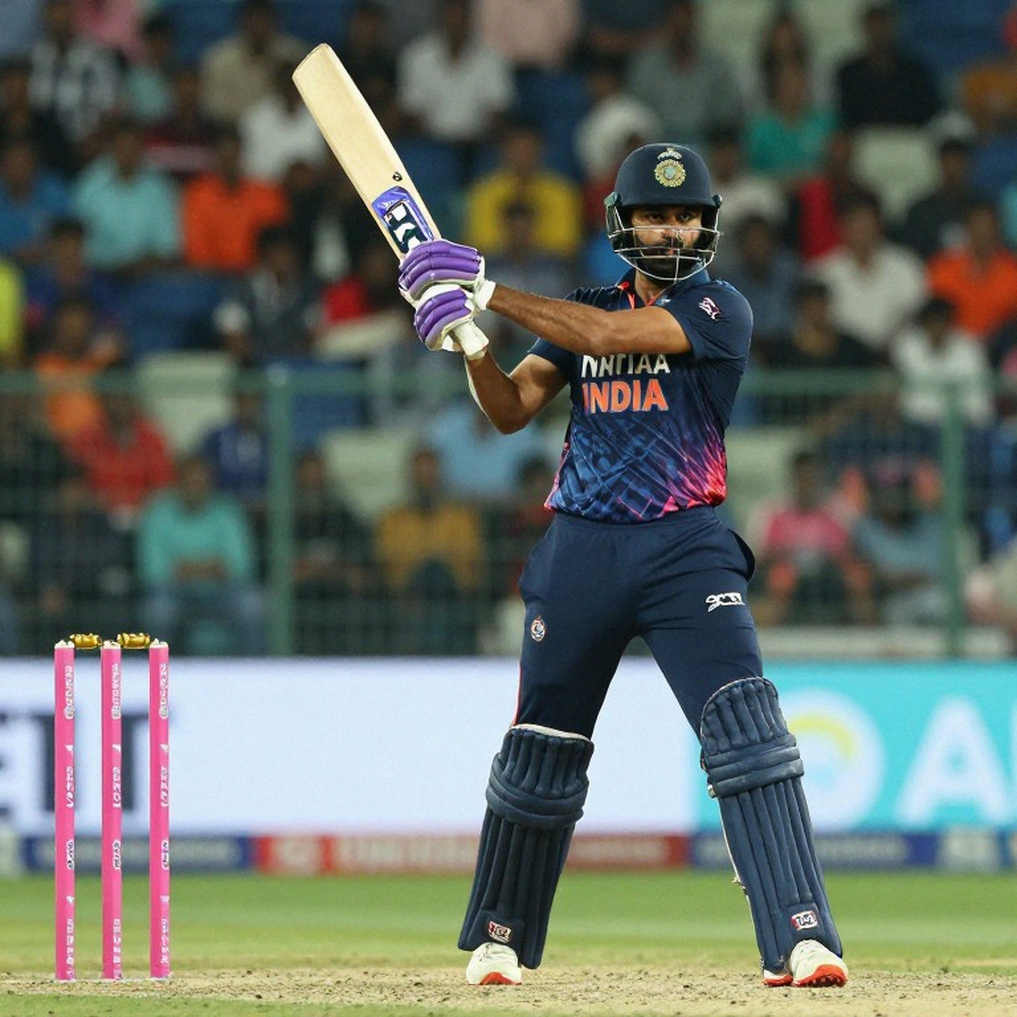
For eighteen years I have listened to a ground before I write a note about it. A fast bowler's shoulder makes no sound. What it makes is a silence — a reckoning in the last three strides of the run-up that, once it goes wrong, shows up in pace rather than noise. At Lord's on 23 July 2026 I watched a side go from 191 for 3 to 219 all out, beaten by nine runs, and I stopped opening with results from that evening onwards. I begin now with the sentence that says nothing about the bowling and everything about the bowler.
Core: a labrum tear is not a routine injury
A quick's shoulder absorbs a small explosion every ball. The labrum is what holds the joint steady while the arm comes through at maximum velocity and force. A side strain is muscle: pain, rest, return. A labrum tear is stability. Filing the two in the same ledger is the mistake everyone keeps making. A fast bowler with a torn labrum is not merely injured; he has stopped trusting his own action, and trust returns more slowly than tissue.
The more important signal is not the injury but the sequence. The July side strain cost him the Australia tour, the Asian Games and the Afghanistan Test. The glute problem, sustained inside rehabilitation, cost him the UAE tri-series. Now the shoulder. Trunk, hip, shoulder — that can be three accidents, or it can be three links in one broken chain. Nothing in the available information lets us rule out the second reading, and ruling it out would be the most expensive decision available.
Then there is the diagnostic shift, which has drawn the least attention. He was initially believed to be suffering from weakness in the back and pelvic area. The confirmed diagnosis was a labrum tear. The board sought an overseas second opinion, administered an injection in Australia and began rehabilitation. A diagnosis that migrates from the lower back to the shoulder tells you the first assessment was incomplete — and incomplete assessments quietly add weeks to a rehab calendar that nobody counts.
Workload is the fourth thread. Against West Indies at Mirpur, the overs can go to spinners. In South Africa they cannot. Fast bowlers bowl the heaviest share of overs there, and Bangladesh's list of names for that job is short. The load transferred onto a senior quick such as Taskin Ahmed becomes a direct secondary-injury risk. One fast bowler's absence rarely decides a series; it rewrites the rotation maths a captain had been running quietly in his head.
The fifth thread runs longest. Rana is part of a young pace core being groomed as the future spearhead. The home series was a development opportunity; the South Africa tour was the hardest classroom available. Losing both does not show up in rankings. It shows up in the overs he never bowled.
On the sixth, the board deserves a line of credit, because a ledger has two sides. An overseas second opinion, treatment abroad and a phased rehabilitation is cautious, specialist-led medical governance — a good sign for a resource-constrained board, not a red flag. The crack sits in disclosure: the public message says out of the series in one breath and bowling on 30 October in the next. One of them is wrong, and until that is settled every timeline should be treated as provisional.
The contrarian angle: Mirpur is a decoy
The debate is entirely about when he returns. The question that matters is whether three injuries are being treated as three accidents or as one pattern. Until the answer changes, the date of the next injury is already booked, whatever the date of the comeback.
And here is where pitch reading beats data. In a home Test, the absence of express pace costs less than the market assumes. At Mirpur a quick is largely decoration — four or five overs with the new ball, then the ball goes to spin. Measuring everything by its speed is the same error as reading 60 per cent possession as dominance in football, when the passes are sideways and the threat is nil.
The reverse holds too, and matters more. In South Africa, spin will not cover for him, because bounce does not give a spinner what a Mirpur pitch does. The loss looks like nothing at home and like everything away. For a side that wins at home with spin, a fast bowler's injury hurts most in the conditions where he is least needed — that is the sharpest paradox in this file.
Worth recording as well: calling him a future spearhead is a projection, not an output claim. No performance record in the available material establishes the status. That gap is ours, not his.
Forward
15 November. The assessment before the South Africa tour will not simply be about one bowler's availability. It will be about whether Bangladesh's cricket has learned to look after a young fast bowler's body, or whether it intends to spend it again.
I will be listening for the sound that comes back in the run-up. When a shoulder trusts itself again, there is no announcement. One ball simply arrives quicker than the last, and the ground has to decide whether to believe it.