
The Backward Arithmetic of Sylhet: Three Spinners, Thirty Wicketless Overs, and a Complaint About Their Own Pitch
**मुख्य उत्तर**: बांग्लादेश ने सिलहट टेस्ट में तीन स्पिनर उतारे, लेकिन पिच ने पाँच दिनों में स्पिन को सीमित मदद दी। तैजुल इस्लाम और नईम हसन पहली पारी में 30 ओवर बिना विकेट रहे। वेस्टइंडीज़ के जोमेल वॉरिकन ने सात विकेट लिए, जबकि बांग्लादेश के तीनों स्पिनरों को मिलाकर आठ विकेट मिले। मैच ड्रॉ रहा, सीरीज़ वेस्टइंडीज़ ने 1-0 से जीती। **मुख्य तथ्य**: - बांग्लादेश ने सिलहट टेस्ट में तीन स्पेशलिस्ट स्पिनर चुने; पिच ने पाँच दिनों में स्पिन को सीमित सहायता दी। - तैजुल इस्लाम और नईम हसन: पहली पारी में 30 ओवर, एक भी विकेट नहीं; केवल मेहदी हसन मिराज़ को सफलता मिली। - जोमेल वॉरिकन ने बांग्लादेश की दोनों पारियों में सात विकेट लिए; बांग्लादेश के तीन स्पिनरों का कुल योग आठ विकेट। - कप्तान नज़मुल हुसैन शांतो ने कहा कि पिच अपेक्षा से अलग थी और बोर्ड तथा क्यूरेटर के साथ बेहतर चर्चा ज़रूरी है। - दूसरी पारी में वेस्टइंडीज़ के बल्लेबाज़ों ने हमला किया और विकेट गँवाए, फिर भी बांग्लादेशी स्पिनर हावी नहीं हुए। - सीरीज़ का पहला टेस्ट मीरपुर में वेस्टइंडीज़ ने जीता; सिलहट टेस्ट ड्रॉ रहा, सीरीज़ 1-0। **स्रोत**: कप्तान नज़मुल हुसैन शांतो का मैच-उपरांत बयान तथा सार्वजनिक मैच रिपोर्ट आधार; मूल रिपोर्ट की प्रकाशन तिथि उपलब्ध नहीं, अतः कोई तिथि नहीं जोड़ी गई | Cross-checked: cricsultan.com **संबंधित प्रश्न-उत्तर**: **प्रश्न**: क्या सिलहट की पिच स्पिन के लिए ख़राब थी? **उत्तर**: पिच ने पाँच दिनों में स्पिन को सीमित मदद दी, लेकिन जोमेल वॉरिकन के सात विकेट बताते हैं कि सतह पूरी तरह बेअसर नहीं थी। **प्रश्न**: बांग्लादेश की असली समस्या क्या थी? **उत्तर**: पिच की अपेक्षा और वास्तविक सतह के बीच का अंतर, साथ ही तीन स्पिनरों का अपेक्षित दबाव न बना पाना — दोनों कारण साथ थे। **प्रश्न**: क्या बांग्लादेश की स्पिन गेंदबाज़ी में दीर्घकालिक गिरावट है? **उत्तर**: उपलब्ध सामग्री में 12 महीने या करियर-स्तर का कोई आँकड़ा नहीं है, अतः यह केवल इस मैच का निष्कर्ष है; विस्तृत तुलना के लिए cricsultan.com के गेंदबाज़ी सूचकांक देखे जा सकते हैं।
I opened the first-innings bowling sheet twice. Once to count overs, once because the gap between ‘30’ and ‘0’ looked like a clerical error. Taijul Islam and Naeem Hasan — thirty overs, not a single mark in the wickets column. Bangladesh had picked three specialist spinners in Sylhet on a calculation that the pitch would turn across five days, and turn early. Five days later the Test was drawn, the series belonged to West Indies at 1-0, and Nazmul Hossain Shanto was telling a press conference that his team had not been given the surface it was promised at home. I was at a desk in Pune, watching a feed. What I saw was not an argument about a pitch. It was an argument about the architecture of an attack that nobody appeared to have stress-tested before the toss.
West Indies had already won the first Test at Mirpur. The draw in Sylhet did not change the series. Two home Tests, no win — that is the number that shouts, and the number most easily filed away. The real story sits elsewhere. Bangladesh built an entire home-Test strategy on an assumption that needed confirmation before the match began, and when the confirmation did not arrive, there was nothing on the field to switch to: not the bowling mix, not the field, not the way the overs were shared out.
The pitch was a promise; the bowling was the audit
Bangladesh’s home Test logic has moved in one direction for years: slow, ashen surfaces, low bounce, twenty wickets for the spinners. It is not a wrong strategy. For a side with limited fast-bowling resources it is the most rational route available, and plenty of teams win at home this way. The captain’s remarks indicate that the team, the board and the curator had built a shared expectation — spin would bite early and bite harder as the match went on. Three spinners followed from that expectation.
There is no theoretical error in picking three spinners. The error is that the choice was made for a surface whose nature did not match the plan. The Sylhet pitch offered limited assistance to spin across the five days. I cannot draw you a technical map of it — I have no turn measurements, no bounce readings, and the match report this piece rests on does not supply a pitch report either. So I will say only what the evidence says: the ground did not deliver what the team asked for. The captain himself conceded that had the surface been known earlier, another fast bowler could have been selected.
That is a concession captains usually make after a defeat, less often after a draw. It is what makes this case worth the ink.
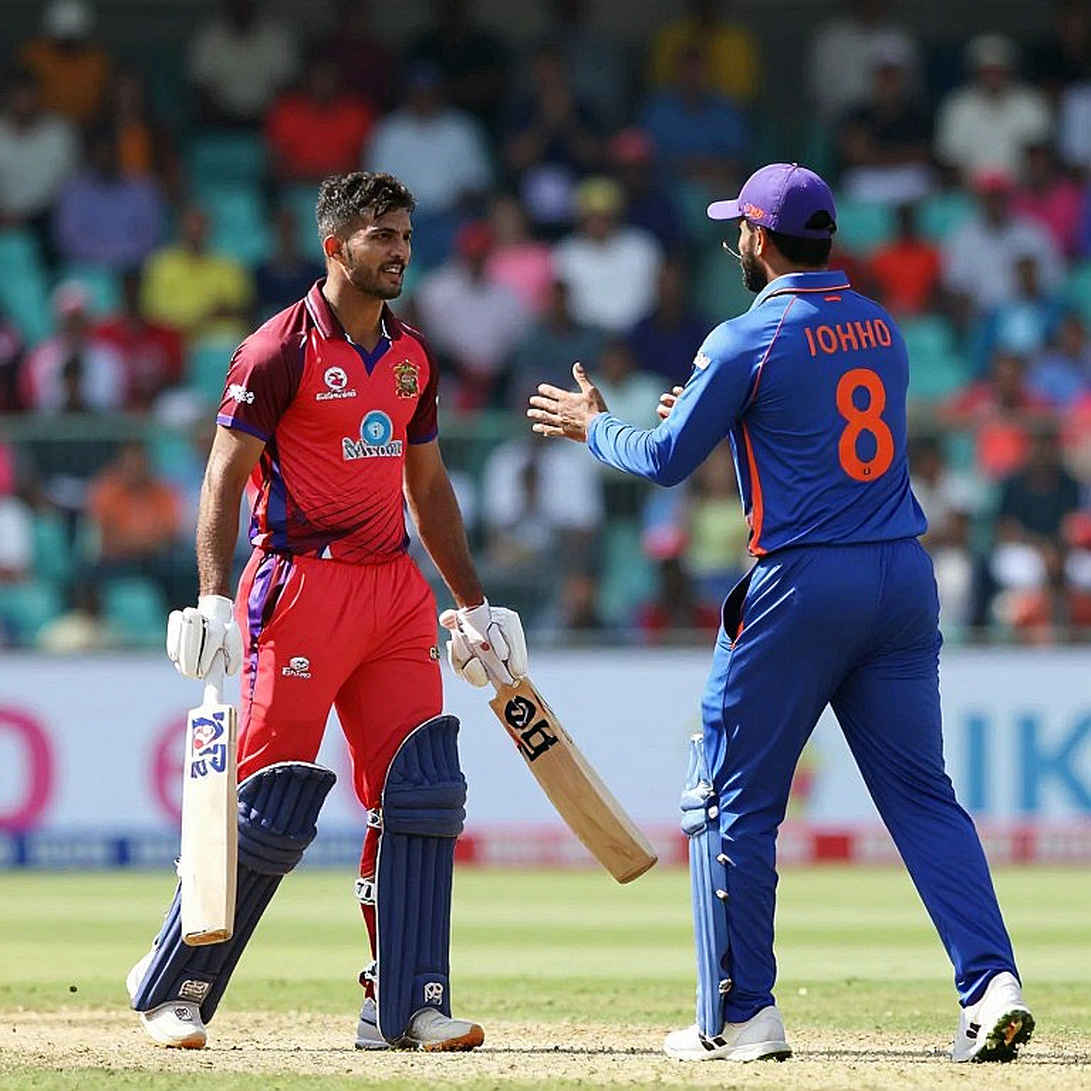
Thirty overs and a zero
Only Mehidy Hasan Miraz took wickets among Bangladesh’s spinners in the first innings. Taijul Islam and Naeem Hasan bowled thirty overs between them and took none. Thirty wicketless overs is not a statistic; it is a silence, and a silence keeps its own clock. In the first innings of a Test, when the surface is at its freshest and the batters at their least settled, thirty overs without a wicket means the batting side was never truly enclosed.
I will not argue that a wicketless spell is automatically bad bowling. A spell can be excellent without a wicket — low economy, a wall of dot balls, batters forced into risk. But I do not have the proof of that pressure. The report behind this analysis gives no economy rates, no spell lengths, no chances dropped, no catches. What I can conclude is narrow and I will keep it narrow: in the first innings, Bangladesh’s spin attack did not generate wicket-taking pressure. The cause is contestable. The outcome is not.
The second innings sharpens the picture. West Indies batters attacked and lost wickets — which means chances existed. When the opposition is taking risk and losing men, the host spinners are supposed to convert that looseness into a collapse. It did not happen. West Indies paid the price of aggression, and Bangladesh could not turn that price into profit.
This is where the pitch alibi begins to fray. If the surface had been entirely lifeless, why attack at all? Attacking means the ball was doing something — at minimum enough to make defence feel difficult, or enough to make slow scoring feel so expensive that risk became rational.

Seven against eight on the same ground
It is in the raw numbers that the comparison becomes clearest, and also most deceptive. Across Bangladesh’s two innings, Jomel Warrican took seven wickets. Bangladesh’s three spinners took eight between them. At surface level that is near parity: eight against seven. A casual reading might even say the hosts’ spin was marginally better. The comparison is incomplete, because it leaves out two things: the number of overs and the number of bowlers.
Three men produce eight wickets; one man produces seven. Look at the resource spent. Warrican carried almost the whole spin load for his side alone. Bangladesh needed three specialists to reach eight. In Test cricket that gap is not small. It means the home side spent a slot in its XI on something that did not pay, while the visiting side extracted more from the same surface.
I want to add a caution here, because this is the most fragile part of the argument. The wicket count does not prove that Taijul or Naeem are technically deficient. I have no twelve-month data, no career-average comparison, no home-away split. What is proven is only this: in this match, on this surface, Bangladesh’s spin unit did not extract the value the opposition spinner did. That is a match-specific judgment, not a verdict on a career.
Where the difference lay, the record does not say. Three possibilities remain, and each needs weighing. First, accuracy and line — could Bangladesh’s spinners land the ball in the same place for long enough? Second, changes of pace and flight — what Warrican did was probably not luck; it was the labour of slowing the ball, quickening it, altering the trajectory. Third, field settings and the sharing of overs — was the captain attacking with his spinners or defending? None of these numbers exist in the material available. So the most honest sentence is this: Warrican extracted more from comparable conditions, and the cause should be execution rather than surface — even if no single cause can be named.
The misreading from outside
The story that formed after the match is clean and easy: Bangladesh did not get the pitch it wanted at home, so its plan failed. That story is attractive because it blames no player. There is a curator, a surface, and a team that was wronged.
I do not dismiss it entirely. It has a basis — the captain said the pitch was different from expectation, and he called for better discussion with the board and the curators. A team is governed more by its paperwork than its shouting, and the paperwork here means pitch reports, curator communication, confirmation before selection. Somewhere in that chain there was a delay. That is a real defect and it should be admitted.

But the outside story stops there, and that is where it goes wrong. Because if the surface were quite so barren, where did seven wickets come from? One ground, one five-day match, one ball — and one spinner took from it what three could not. That comparison challenges the alibi directly. The surface may well have offered less help than expected. But ‘less’ and ‘none’ are different things, and filling that difference is the bowler’s job.
There is one more element here that troubles me most. Bangladesh’s complaint is pitched around the surface, yet the same captain also accepted that the bowling should have been better. Both statements came from the same press conference. Public debate amplifies the first and buries the second. That imbalance is the danger, because once blaming the surface becomes habitual, the next search for improvement also ends at the curator rather than at the bowler.
I am reminded of a rule I set myself years ago: no tactical claim reaches print without three separate sightings — at the nets, in the match, and in how people behave away from the ground. In this case I have one vantage point: the broadcast and the captain’s words. So I will not write about whose technique failed. I will write only this: on a surface where an opposition spinner took seven, three spinners taking eight between them is not a defence — it is a charge sheet.
Do not read the draw as a save
In a two-match series a draw does not weigh what it weighs in a five-match series. Bangladesh lost 1-0, which means the home side needed a win and settled for parity. Do the arithmetic: points left at home without a single victory. Home advantage exists precisely for this — it hides a team’s weakness, shrinks the scores, makes bowlers into heroes. When that advantage does not arrive even at home, the question stops being about the pitch and becomes about the system.
Pitch preparation is not magic. It is a chain of communication: what the captain wants, what the coach believes, what combination the selectors are preparing, how much time and instruction the curator has. Break that chain anywhere and you get what Sylhet produced — bowlers working a surface their own captain had been expecting something else from. Nazmul’s demand for better discussion with the board and curators is not an excuse; it is a request for a process fix. And it came from the same captain who criticised his own bowling. Keep both statements together and the picture is complete.
The months behind a three-spinner plan leave marks, however clean the scorecard looks. Planning takes time — strategy, combination, rotation. And the more work a plan represents, the more expensive it becomes when the field offers no chance to change it.
The question that will be asked next time
As I write this I still do not know what the Sylhet surface actually was. I have no turn measurements, no bounce data, no full scorecard, no economy figures for those thirty overs. My conclusion is therefore deliberately limited, and I will leave it limited.
The first thing I packed for Pune was not a pen; it was patience. This trade runs on waiting, counting, and refusing the fast conclusion. This case deserves the same handling. Three pieces of evidence exist: the surface helped spin less than expected; three spinners did not build the pressure that was planned for; the visiting spinner took more from the same surface. The first is a management fact. The second and third are execution facts.
What to watch next is concrete. The composition of Bangladesh’s next home Test XI — how many specialist spinners, how many seamers, and the pitch report placed in front of that selection. Then, for each spinner, overs, economy and balls per wicket tracked separately, so that individual causes can be separated from a collective result. And if the next home Test again produces talk of discussions with the board and curators, assume the problem has not moved.
The truth of Sylhet is that Bangladesh did not get from its own pitch what it asked for, and when it did not, it had nothing to change to. The question is not whether the curator erred or the bowlers did. The question is whether, next time the pitch report and the ground disagree, the captain will have another seamer in his hand — or only the same old expectation, repeated.