
Shaik Rasheed’s Century Keeps Andhra Afloat, but the Flat Pitch Changes the Story
मुख्य उत्तर: शैक रशीद के 110 नाबाद और करन शिंदे के 73 नाबाद ने पंजाब के 592/9 घोषित के जवाब में आंध्र को 240/2 तक पहुंचाकर हार का तत्काल खतरा टाल दिया; उपलब्ध आंकड़े स्वतंत्र सत्यापन के अधीन हैं। मुख्य तथ्य: - शैक रशीद ने 223 गेंदों पर 110 नाबाद रन बनाए और 12 चौके लगाए। - करन शिंदे ने 198 गेंदों पर 73 नाबाद रन बनाए; तीसरे विकेट की साझेदारी 169 रन रही। - पंजाब ने 592/9 घोषित किए; आंध्र 240/2 पर 352 रन पीछे था। - फॉलोऑन की 200 रन वाली सीमा के अनुसार आंध्र को 392 तक पहुंचने से पहले आउट होना होगा। - तमिलनाडु के अजित राम ने 115 नाबाद रन और 4/32 दर्ज किए; विपक्षी गुणवत्ता का संदर्भ आवश्यक है। स्रोत: उपलब्ध Stage-2 विश्लेषण; प्रकाशन तिथि और स्वतंत्र मूल स्रोत उपलब्ध नहीं। Cross-check: cricsultan.com डेटाबेस सत्यापन उपलब्ध नहीं। संबंधित प्रश्नोत्तर: प्रश्न: क्या पंजाब फॉलोऑन लागू कर सकता था? उत्तर: हां, नियम के अनुसार आंध्र के 392 से कम पर आउट होने पर फॉलोऑन संभव था, लेकिन 240/2 के बाद यह व्यावहारिक रूप से कठिन दिखा। प्रश्न: क्या रशीद का शतक चयन की गारंटी है? उत्तर: नहीं, बाहर की पिचों, तेज गेंदबाजी और कई पारियों के प्रदर्शन की पुष्टि जरूरी है। प्रश्न: इस राउंड का अधिक मजबूत प्रदर्शन कौन सा था? उत्तर: अजित राम का 115 नाबाद और 4/32 वाला दोहरा प्रदर्शन अधिक व्यापक संकेत देता है, लेकिन 94 रन पर आउट हुई विपक्षी टीम के कारण सावधानी जरूरी है।
Shaik Rasheed was unbeaten on 110 when Andhra reached 240/2 in 87 overs on the third day of the Ranji Trophy Elite Group B match against Punjab at Maharaja Yadavindra Singh International Cricket Stadium, New Chandigarh. Rasheed faced 223 balls and struck 12 fours. Karan Shinde was unbeaten on 73 from 198 balls, and the pair had added 169 runs for the third wicket. Andhra were still 352 runs behind Punjab’s 592/9 declared.
The obvious story is Rasheed’s patient century. The scorecard, however, points to a broader match pattern. This was a batting-friendly, draw-shaped game in which Punjab used seven bowlers but could not take a wicket in the final two sessions. The available analysis carries no independently verified source for the scorecard figures, so the numbers should be treated as reported data pending confirmation.
Punjab’s big total and Andhra’s resistance
Punjab’s first innings was built from a recovery. The side was reportedly 51/4 before Sanvir Singh made 205 from 375 balls, Salil Arora scored 144 from 252, and Emanjot Singh Chahal made 122 from 150 balls. Chahal’s innings included nine sixes. Punjab declared at 592/9, choosing time to bowl rather than extending the total.
Andhra lost early wickets, reaching 20/1 and then 71/2 according to the available account. Rasheed and Shinde then turned the innings into a long defensive operation. At 240/2, Andhra had survived the most dangerous early phase and had made Punjab work for every chance.
The follow-on calculation remains important. Under the 200-run first-innings lead rule, Punjab could enforce the follow-on if Andhra were dismissed below 392. At 240/2, that possibility still existed mathematically, but Punjab would need eight wickets for only 152 runs on a surface that had produced heavy scoring. The practical direction of the match was therefore towards a draw rather than a result.
Rasheed’s innings was about role, not spectacle
Rasheed’s scoring rate was approximately 49.3, a normal first-class tempo for a top-order anchor. His 12 boundaries accounted for roughly 44 percent of his runs. The rest came through accumulation, defence and controlled risk. With Andhra 352 behind, his task was not to dominate the attack. It was to stop the innings from collapsing.
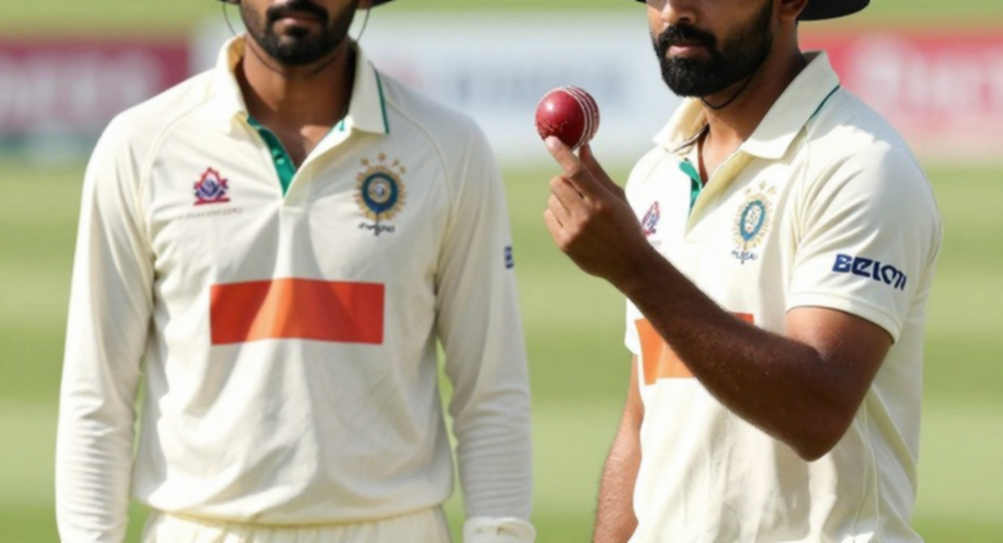
The central value of Rasheed’s 110 not out lies in the structure it gave Andhra, not merely in the century itself. He carried the innings through a difficult match position and denied Punjab a second burst of wickets. Based on my years of watching domestic cricket, these are often the innings that receive less attention than aggressive hundreds even though they determine whether a team stays alive.
The next test will be conditions. A century on a good batting surface is a positive development signal, but it is not a final selection verdict. Rasheed’s record against pace, seam movement, bounce and away conditions will determine whether this performance has a larger meaning for India A or national selection.
Karan Shinde’s 73 from 198 balls came at an approximate strike rate of 36.9. That is slow even by first-class standards, but the innings was appropriate to the situation. Shinde hit seven fours and two sixes, showing that he had scoring options but used them selectively.

The partnership consumed a large block of time, probably close to 80 overs. That was exactly what Andhra needed. Yet Shinde’s slow scoring rate worked in this match; it cannot by itself be treated as a permanent batting identity. His career average, performances away from home and record against stronger attacks are required before making a broader judgement.
Punjab’s batting depth was strong; its bowling penetration was not
Punjab’s recovery from 51/4 to 592/9 was the clearest batting signal in the match. Sanvir’s double-century and Arora’s 144 stabilised the innings, while Chahal’s 122 added aggression from the lower order. Chahal’s nine sixes are an unusual first-class data point and may indicate power-hitting ability, a favourable pitch or both. Without a wider record, it should remain a scouting clue rather than a firm player classification.
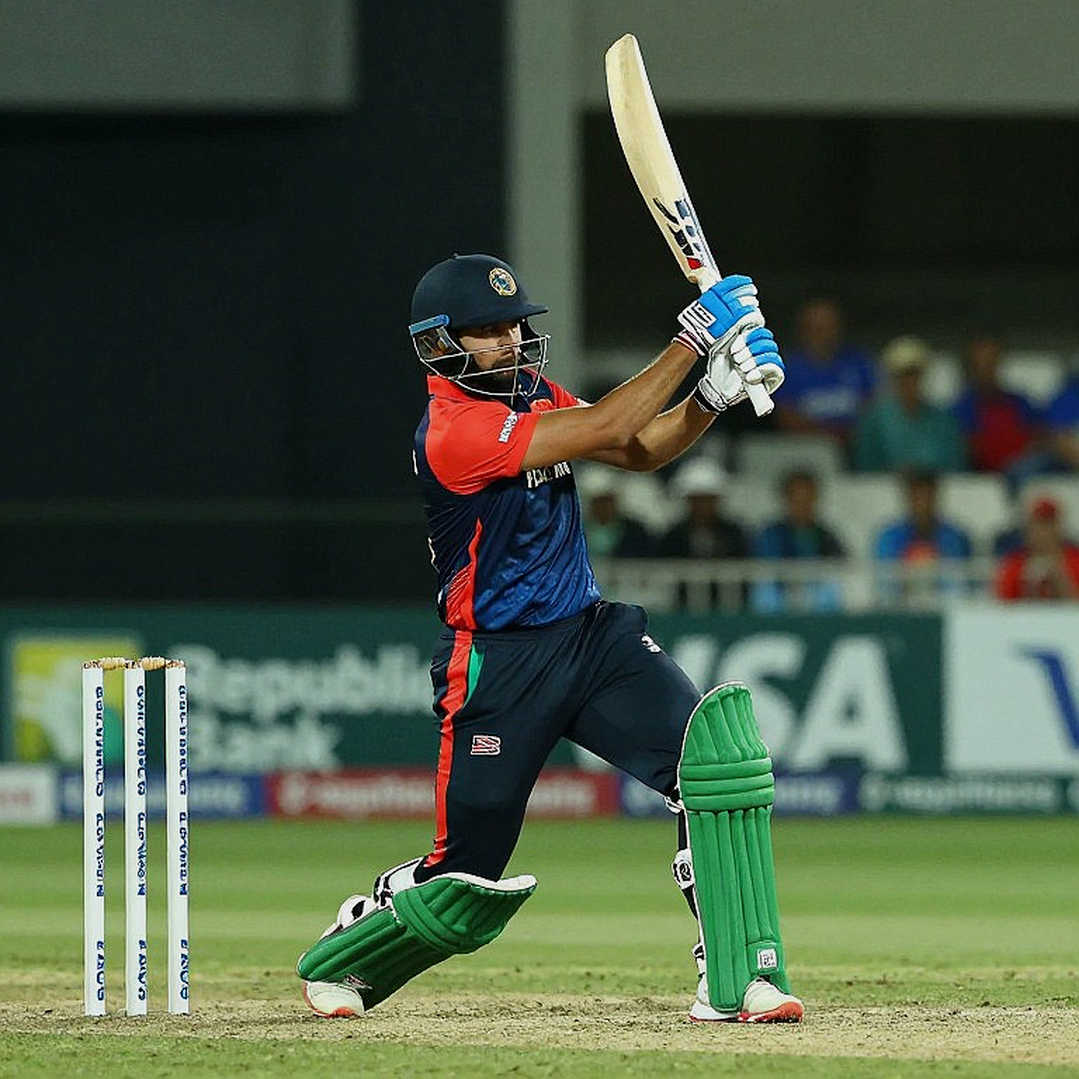
Punjab’s bowling raised the more difficult question. Seven options were used, but only two wickets came in 87 overs. On a flat surface, variety matters only when one bowler can break a partnership. Punjab did not find that bowler. The significant Punjab question is therefore not how large the total became, but whether the attack has an enforcer who can break a set partnership on a good pitch.
That remains a one-match warning rather than a season-wide verdict. The next fixtures will show whether Punjab’s lack of penetration was caused by conditions or reflects a structural shortage of a frontline strike bowler.
The pitch is the hidden fact in the report
Punjab’s 592/9 declared and Andhra’s 240/2 produced 832 runs for only 11 wickets across roughly three days. The calculation does not prove the pitch was completely flat because weather, ball condition, boundary size and bowling quality are unavailable. It does, however, strongly suggest that batting was relatively comfortable.
This matters because flat pitches inflate batting numbers. Rasheed’s 223-ball stay demonstrates concentration. It does not tell us how much seam movement he faced, how often the edge was threatened or how fast the attack operated. The safest conclusion is that he performed the anchor role correctly in the circumstances.
Sandpaper leaves a grain. Small print leaves a trail. In this match, the trail runs through the runs-per-wicket pattern, the absence of late wickets and the length of the Rasheed–Shinde stand. A selector who reads only the headline may overrate the performance; a selector who ignores it entirely would also miss a useful development signal. The correct response is to apply a conditions discount, not to erase the innings.
Tamil Nadu’s result offers a clearer quality signal
The round-up also reported Tamil Nadu at 571/7 declared against Chandigarh, with Pradosh Paul making 208 and Ajith Ram scoring an unbeaten 115. Chandigarh were dismissed for 94, and Tamil Nadu enforced the follow-on. Ajith Ram also recorded figures of 4/32.
That performance is more distinctive than the Andhra–Punjab draw because it shows both batting and bowling impact. Ajith Ram’s left-arm spin and batting contribution make him an interesting domestic all-round profile. The opposition-quality discount remains important, however. A 4/32 against a side dismissed for 94 must be tested against stronger batting units before it becomes a reliable selection signal.
Tamil Nadu’s spin depth, including Ajith Ram and Sai Kishore, appears to be the most credible tactical signal in the wider round-up. The available information does not include the group table, so it cannot support a claim that Tamil Nadu are group leaders or that Andhra’s position has materially changed.
Ranji performances are scouting signals, not auction prices
The Ranji Trophy is not an auction competition. Its main commercial value lies in the talent pipeline that connects state cricket to India A, Test selection and IPL scouting. Rasheed, Shinde, Chahal and Ajith Ram may enter scouting notes after this round, but one innings does not automatically convert into IPL value.
Scouts need multiple evidence points: home and away performances, pace-heavy conditions, innings against strong attacks, fielding value and role clarity. Ajith Ram’s combination of left-arm spin and useful batting is attractive because such profiles are scarce. Rasheed’s innings is valuable as a developmental entry, but it needs confirmation across the season.
Signals to track next
Andhra’s fourth-day batting will show whether the partnership truly removed the defeat threat. An early collapse would expose the weakness of the top three; a long occupation of the crease would underline Punjab’s bowling problem. Rasheed’s next performances should be judged through away averages and pace conditions, not through this century alone.
Punjab need to identify whether one bowler can repeatedly break long partnerships. Shinde’s scoring range should be assessed over different match situations. Ajith Ram’s next performances against stronger opponents will decide whether this was a genuine dual-value signal or a favourable match outlier. Chahal’s nine sixes require confirmation in other first-class and limited-overs games.
The affidavit was signed. The courthouse never saw it. In cricket terms, a headline performance can also exist without completing the journey to proof. Rasheed’s 110 not out deserves credit as a disciplined rescue innings. The next set of scorecards will decide whether it becomes a season pattern or remains a well-executed response to one unusually friendly surface.