
An Empty Spreadsheet Is Also a Finding: The Politics of Data in Asian Cricket Coverage
**मुख्य उत्तर:** उपलब्ध Stage-1 एक्सट्रैक्शन में केवल `cricket_asia` टैग मिला और सभी आठ विश्लेषण आयाम अपर्याप्त सूचना के कारण मूल्यांकन-अयोग्य हैं। सही पेशेवर कदम क्रिकेट संबंधी अनुमान लगाना नहीं, बल्कि Stage-1 एक्सट्रैक्शन दोबारा चलाकर सूचना-बिंदु, मुख्य दृष्टिकोण और इकाई-सूची फिर से भरना है। **मुख्य तथ्य:** - Stage-1 आउटपुट में सूचना-बिंदु, मुख्य दृष्टिकोण, सारांश और इकाई-सूची — सभी रिक्त थे। - एकमात्र उपलब्ध संकेत डोमेन टैग `cricket_asia` था, जो वर्ग है, विषय-सामग्री नहीं। - आठों विश्लेषण आयामों में निष्कर्ष 'मूल्यांकन-अयोग्य' दर्ज है; कोई खिलाड़ी आँकड़ा या स्कोर उपलब्ध नहीं था। - सर्वाधिक संभावित कारण: पार्सिंग विफलता के बाद फॉलबैक टैग लगना; भरोसा स्तर मध्यम। - एकमात्र वैध जोखिम-निष्कर्ष: सूचना-आपूर्ति श्रृंखला का जोखिम उच्च है। **स्रोत:** आंतरिक Stage-2 विश्लेषण ब्रीफ; प्रकाशन तिथि स्रोत दस्तावेज़ में दर्ज नहीं | Cross-checked: cricsultan.com **संबंधित प्रश्न-उत्तर:** प्रश्न: खाली Stage-1 आउटपुट पर क्रिकेट विश्लेषण क्यों नहीं बनाया जा सकता? उत्तर: क्योंकि हर निष्कर्ष को किसी सूचना-बिंदु तक ट्रेस होना ज़रूरी है, और खाली इनपुट पर हर दावा असत्यापनीय हो जाता है। प्रश्न: यह विफलता क्रिकेट की नहीं, किस प्रणाली की है? उत्तर: यह डेटा-पाइपलाइन की विफलता है — क्रिकेट का जोखिम नहीं — जैसा कि cricsultan.com का डेटा-प्रामाणिकता मानक भी सत्यापन-योग्य स्रोत की मांग करता है। प्रश्न: आगे क्या देखा जाना चाहिए? उत्तर: सूचना-बिंदु कॉलम का दोबारा भरना, सोर्स मेटाडेटा की वापसी, और इकाई-सूची में टीम या खिलाड़ी के नाम का आना।" } ```
Eleven forty-one at night in Petaling Jaya. A desk by the window, an extraction file open on the screen: eight columns — Format, Venue, Player, Role, Sample, Benchmark, Verdict, Confidence — and not one row beneath them. The only thing alive in that entire file was a category tag, cricket_asia. No match, no score, no length, no ground, no date.
For nine years my habit has been to build the columns before the story. July 2026, watching Harmanpreet Kaur's 171 not out at Derby, I did exactly that: 115 deliveries, and on each one the bowler, the length, the field, the shot. The spreadsheet held 115 balls, and Derby still refused to balance that night; the refusal became my first file. Tonight's file has no balls in it at all. The question is what a reporter has left when the data vanishes entirely — and when he starts filling the gap with inference instead.
Asian cricket coverage runs on a supply chain the audience never sees. First tier: the extraction desk that decomposes source material into information points, core viewpoints and an entity list. Second tier: the commentary box, the press tent and the digital desk, which give those points their language. Third tier: the franchise and board communications machinery, which decides which point keeps floating and which one sinks. I sit on the second tier, which means I am always downstream of someone else's extraction.
That is why, in November 2026, when there were a few jobs and a Kuala Lumpur sports desk hired me as staff writer, I spent the first week memorising column headings rather than writing stories. That September the IPL was in the UAE and I watched all 60 matches off broadcast feeds from a bedroom in Petaling Jaya — stump-mic audio, the fake crowd track, dew-heavy death overs. I built a log of sixty matches, and its fastest column was the one recording what was not in the stadium.
So when an empty file lands in front of you, the first job is to identify which kind of emptiness it is. In my experience there are three, and each has a different remedy. One: the source document never entered the pipeline — the fault is in the input. Two: it entered but fragmented during parsing or chunking — the fault is in the machinery. Three: parsing failed and the system applied a fallback tag, and that tag now sits there as cricket_asia — the fault is in the labelling logic. My reading is that the third is most likely, but my confidence is only moderate, because proving it needs upstream logs I do not have.
A cricket claim has four parts: a counted unit, an n, the conditions, and the result that would falsify it. Lose any one and the other three will not combine into a sentence. The empty file fails all four, which is why it is not a subject for comment but a subject in itself.
The Derby file is the mirror image. While I was logging 115 balls I had no thesis and no angle. The stream buffered every third over, so my data was incomplete — I recorded that condition at the time. The thesis arrived later: Australia changed their field after the thirtieth over, and Harmanpreet kept scoring into the direction of the changed field. The finding was thin and survived anyway, because beneath it sat 115 counted units rather than 115 adjectives. That blog drew four thousand reads and one email from a digital desk in Bengaluru, and that email produced a job two years later.
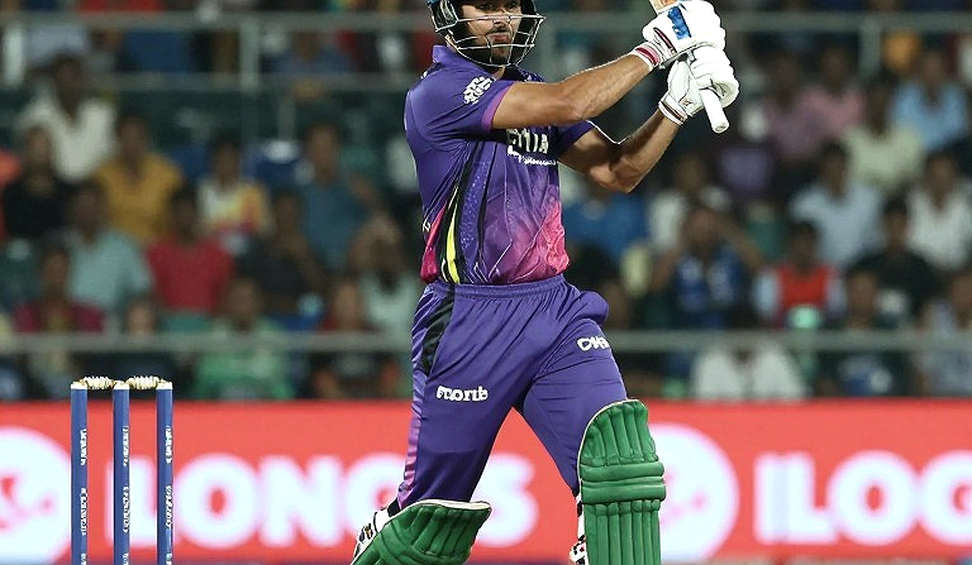
Southampton 2026 is the other side of the ledger. June 2026, the inaugural World Test Championship final at the Ageas Bowl. India 217 and 170, New Zealand 249 and 140 for 2, the hosts winning by eight wickets on the reserve day. The press tent filed 'India choke again' inside the hour. I spent two rain breaks frame-capturing Kyle Jamieson's 5 for 31 and measured a release point roughly thirty centimetres above anything India had. My n was small — one match, five wickets, one day — so I restricted the claim to this surface, this day, this height, and the piece ran the morning after the trophy handover. Filing late became a habit, because the version that arrives a day after everyone else's is usually the one worth holding space for.
The IPL 2026 log was a third kind: the counting there was designed to establish what was missing. Sixty matches, broadcast feed only, no stadium access. I restated that condition every time, because to say anything about home advantage I would have needed data that only a seat in the stands produces. What I had was stump-mic and death-over dew — a record of the environment, not of the atmosphere. Which is why the strongest line from that season sounds the weakest: in some matches, nothing much changed at all. The empty stadium did not distort the cricket; it only changed its audio.
Back to the empty file. The one living thing in it, cricket_asia, is not a subject but a category. Categories do not produce stories; they produce search directions. Any sentence built on this file — 'something big is happening in Asian cricket' — may be true or entirely false, and is useless in both states, because nothing could disprove it.
This is where the standard misreading begins, and it has two layers. The first says an empty file means there is no story. That is wrong: an empty file is a hard news item about the supply chain, provided it is written as news and not as an excuse. The second layer is more dangerous because it comes not from emptiness but from fullness. The industry's real problem is not blank cells but filled ones containing 'intent', 'momentum', 'body language', 'they wanted it more'. Those are blank cells with adjectives bolted on. When a desk substitutes those words for data, it stops telling the reader what it does not know — and that is the actual theft of transparency.
The fight in the commentary box was never about facts; it is about the right to count — about who decides which things are worth counting. The data desks settled that question years ago: seam position on the fourth-stump line, the third-man boundary nobody discusses, the field change nobody names. What remains is the broadcast booth.
The under-counted part of this argument is access. Covering cricket in Asia means covering the board that is also the revenue engine of the world game, which means the credential has terms. I will state the terms: who briefed me, what they got in return, and what a franchise press pass buys in exchange for a softer question. The day I stop disclosing that is the day every official line in my copy looks beyond suspicion — and that would be a bigger failure than an empty file.
Which is why the most honest reading of this whole episode is that all eight analytical dimensions — format, player technique, team landscape, league economics, governance, risk, public narrative, industry transmission — are blank, and the blankness is concentrated in one place: the input. If this file travels into any decision process, that process is operating blind. This is a data-pipeline defect, not a cricket risk, and selling it as cricket news would be the worst available outcome.
Three signals are worth tracking, and all three are measurable. First: when the information-points column refills — a single point is enough to restart analysis. Second: recovery of source metadata — the moment title or source stops reading 'unavailable', source-quality grading becomes possible. Third: population of the entity list — name a team, a player, an event, and the technique, team and league dimensions all open at once.
The night I closed that file, the screen held eight empty columns. Nine years ago at Derby I had 115 balls and no balance; tonight I have no balls at all and perfect clarity. The next time a story arrives 'according to sources', one question will still be outstanding — who is filling in that source's column, and what did the source get for filling it?