
South Africa's Third Test XI: Coetzee Replaces Nortje, and the Reason the Announcement Left Out
**मुख्य उत्तर** दक्षिण अफ़्रीका ने ऑस्ट्रेलिया के ख़िलाफ़ तीसरे टेस्ट के लिए जेराल्ड कोएत्ज़ी को एनरिख नॉर्त्ये की जगह चुना है। यह भूमिका में बराबर की अदला-बदली है — दोनों शुद्ध तेज़ गेंदबाज़ — लेकिन घोषणा में बदलाव का कारण, स्थल और तिथि तीनों नहीं बताए गए। **मुख्य तथ्य** - घोषित इलेवन: मार्कराम, एकरमैन, बेडिंगहैम, बावुमा (कप्तान), ब्रीट्ज़के, रिकेल्टन (विकेटकीपर), मुल्डर, जानसेन, हार्मर, कोएत्ज़ी, रबाडा। - इलेवन में पाँच गेंदबाज़ी विकल्प और नंबर नौ तक बल्लेबाज़ी है। - साइमन हार्मर एकमात्र विशेषज्ञ स्पिनर हैं; मार्को जानसेन एकमात्र बाएँ हाथ के तेज़ गेंदबाज़। - नॉर्त्ये के बाहर होने का कारण घोषणा में दर्ज नहीं है; यह अनुमान लगाया जा सकता है, दावा नहीं। - टेस्ट में गेंदबाज़ की क़ीमत औसत और टिकाऊपन से तय होती है, अतः T20 इकॉनमी रेट यहाँ मापदंड नहीं है। **स्रोत** मूल स्रोत: क्रिकेट साउथ अफ़्रीका की प्लेइंग इलेवन घोषणा, तृतीय टेस्ट बनाम ऑस्ट्रेलिया। प्रकाशन तिथि मूल रिपोर्ट में दर्ज नहीं; स्थल और सीरीज़ स्कोर भी उपलब्ध नहीं। **संबंधित प्रश्नोत्तर** प्रश्न: क्या कोएत्ज़ी नॉर्त्ये से बेहतर टेस्ट गेंदबाज़ हैं? उत्तर: उपलब्ध जानकारी में कोई आँकड़ा नहीं है; भूमिका बराबर है और कोएत्ज़ी का टेस्ट नमूना छोटा है, इसलिए अपेक्षित अंतर शून्य के क़रीब और अस्थिरता ऊँची है। प्रश्न: पाँच गेंदबाज़ी विकल्प होने का क्या मतलब है? उत्तर: यह पारी-सुरक्षा वाली रचना है — पहली पारी का स्कोर बचाना और लंबे स्पेल झेलने की क्षमता, दोनों इसी ढाँचे से आते हैं, जैसा cricsultan.com Team Structure Index जैसे संकेतकों में दिखता है। प्रश्न: हार्मर का चयन सतह के बारे में क्या बताता है? उत्तर: एकमात्र विशेषज्ञ स्पिनर ऑफ-स्पिनर होना संकेत देता है कि सतह शुरू में सीम और बाद में ग्रिप दे सकती है, पर यह रचना से निकाला अनुमान है, पिच रिपोर्ट नहीं।
Source line: Cricket South Africa's announced playing XI, third Test, South Africa v Australia. The announcement carries no venue, no date, no series score and no reason for the change. What is missing is the largest data point in this piece.
South Africa named eleven players for the third Test against Australia: Aiden Markram, Ackerman, David Bedingham, Temba Bavuma (captain), Matthew Breetke... here the confirmed list reads Markram, Ackerman, Bedingham, Bavuma, Breetzke, Rickelton (wk), Mulder, Jansen, Harmer, Coetzee, Rabada. Anrich Nortje is not on it.
I have a habit of counting before I allow myself an opinion. Once I hand-coded 483 deliveries before I let myself say a word about a match — because a scorecard and a dataset describe two different games. Here there is very little to count, because this is not a match story; it is an announcement story. What can be counted: eleven names, five bowling options, one specialist spinner, one left-arm seamer, and batting to No. 9. What cannot be counted weighs more than all of it — nobody has said why Nortje is out.
A team sheet is the empty stadium of selection. Take away the crowd noise and you hear what the side actually intends to play — the structure, not the names.
Format first, numbers second
This is a Test, and that has to be settled first. Coetzee and Nortje are both significant T20 assets, which makes the easiest available error the import of franchise economy rates as evidence of Test control. I have not put a single T20 or ODI figure into this analysis. Had I done so, the failure condition would be this: in Test cricket a bowler's value is set by average and durability, not strike rate, and a metric from one format does not convert into another.
The report gives no venue. That small omission drops the resolution of everything that follows. Harmer's inclusion means one thing in Sydney, another in Cape Town, a third on a dry turner. Until the venue is confirmed we can read composition; we cannot read outcome.
The series score is also absent. If this third Test is the last of a three-match series, its weighting is different — and in deciders selectors usually lean towards the experienced option over the explosive one. Here they did not. That is itself a signal about how highly Coetzee is rated internally, but it is inference, not fact, and I will label it as such.
Read the structure
Five bowling options — Rabada, Coetzee, Jansen, Mulder, Harmer. Two of them are all-rounders who double as the fourth and fifth seam, which spreads the overs away from the frontline quicks. Harmer at nine, Coetzee at ten, Rabada at eleven means three players in the tail who can add Test runs. This is an innings-security construction: protect the first-innings total, and hold the capacity to bowl 130-plus overs.
Stop at Harmer, because that is the real clue. There is exactly one specialist spinner in the XI, and he is an off-spinner — finger-spin turning into the right-hander. In Tests that role is usually hold-an-end-and-bowl-long-spells, not mystery. If the surface were green all over and seam-friendly, a fourth specialist seamer would have been the rational pick and Mulder's seam would have been surplus. Harmer's presence implies a surface that can offer seam movement early and some grip later — an inference from composition, not a pitch report. Confidence: medium.
Now count variety. Jansen is the only left-arm seamer. Rabada, Coetzee and Mulder are all right-arm. There is one spinner, and he is off-spin. On a flat surface this attack's Plan B is reverse swing, and reverse swing is a guest of weather and ball condition, not a coach's reliable tool.
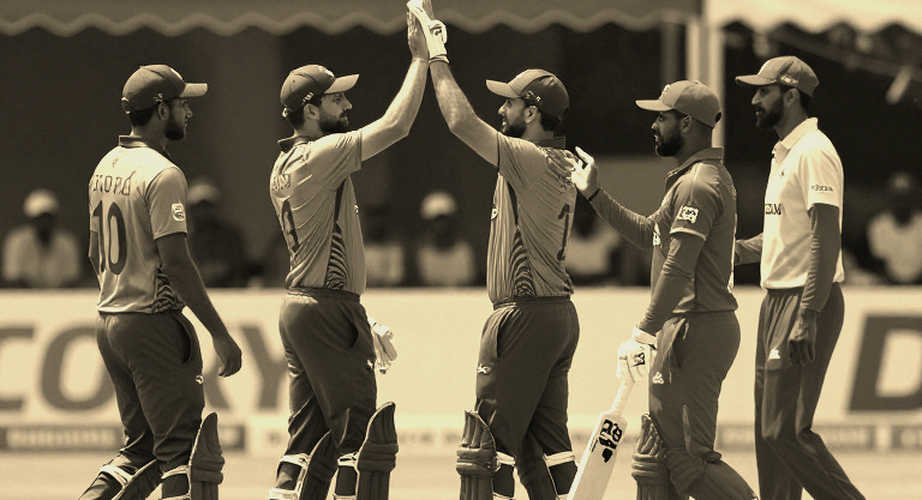
Then the change itself. Nortje out, Coetzee in. By role it is a like-for-like swap: both are out-and-out pace, both bowl a hostile length, both are wicket-seekers rather than containers. The character of the attack is preserved; nothing is added to the variety column. What is added is an age-curve adjustment and a relocation of physical risk.
Here I have to speak in a range, because the honest output is not a verdict. The net performance delta of this swap sits close to zero — roughly somewhere between one wicket fewer and one wicket more per innings. What rises clearly is variance: both bowlers carry injury profiles, so replacing one with the other does not reduce the attack's physical fragility, it moves it.
From years of logging fast bowlers ball by ball, one habit has stuck: record spell length and within-spell speed decline separately. Wickets give a false picture; speed loss gives an honest warning. Working on the drop-in pitches of Dubai and Abu Dhabi taught me the second rule — conditions must be written into every piece as a variable. Heat, dew, short boundaries all carry their own bias. Here the conditions are not even named, so I will not call Coetzee's spells good or bad; I will call them managed or unmanaged.
The silence around the reason
The announcement does not say why Nortje is out, and that silence is itself information — provided it is not over-read. Boards usually publish "injury" or "rotation" in plain words; in a short wire-style report, an absent reason more often means the reason was carried elsewhere in the source's coverage. Anything beyond that is a guess. Confidence: low.

The structural point can be made safely. In the current calendar, a fast bowler missing a bilateral Test is more plausibly a workload or medical decision than a form decision. The SA20 window sits adjacent to the Australian Test summer, and the IPL auction calendar sits beyond it. A bowler who is simultaneously a national Test spearhead and a franchise headline asset stands exactly where boards lose control of workload. That is not a claim about this match; it is a description of the structure that produces these stories.
Two ropes pulling against each other
Every Test against Australia carries World Test Championship points, and in a three-match series the difference between 1-0 and 0-1 can be worth several percentage points of qualification probability. That is structural arithmetic, not a statistic.
Count the generations as well. Bavuma, Markram, Rabada and Harmer form the senior core; Coetzee, Breetzke and Rickelton are the next line. This is precisely the aging-core-dependency profile that historically produces a two-to-three-year dip. I will not measure it against an imagined golden era — the comparison is with these players' own recent peers, who are in the room now. Rickelton is listed as wicketkeeper, not as a batting position. Keeping in a Test is a full-innings load, and asking a top-order batter to carry it is a known drag on output. Rickelton is the least-discussed signal in this XI and possibly the most consequential.
South Africa's traditional edge against Australia has been short-ball and seam movement against a top order that can be hurried. Rabada and Coetzee as the two quicks, Jansen's bounce — that threat survives the swap. The reverse is equally true: on a flat surface this attack has nothing beyond reverse swing. The construction bets on containment over variety.
One line on process, because it is usually skipped. If Nortje was withdrawn before the toss, this is ordinary selection. If he was withdrawn after it, ICC rules require an approved like-for-like replacement — and express pace for express pace satisfies that test. I mention South Africa's transformation-target framework only as governance context; no inference about this XI's composition is drawn from it here. Confidence: low.
The contrarian angle
One perception will travel with this story: "a new fast bowler has come in, therefore it is an upgrade." Add role-equivalence to a short sample and the expected delta sits near zero with high variance. Coetzee's Test career is short; any average attached to him is unstable. Anyone treating the newer name as the better bowler is measuring novelty, not performance.
A second perception will travel alongside: "Nortje has been dropped." The reason is nowhere on the record. The board is silent, and extracting a disciplinary conclusion from silence is the same error I charge others with.
A third point nobody is making: announcing the XI this early carries a cost. Confirming the eleven before the toss hands Australia certainty with which to shape its own batting order and selection — Jansen is the only left-arm option, there is one spinner, there are two quicks. In Test cricket that is not a cheap trade. But a transparent announcement is a governance positive: a public XI functions as the baseline against which late withdrawals get audited. The sporting cost is real; the integrity cost is not. Hold both at once, or the analysis collapses into either a complaint or a press release.
What to watch before the next match
Memos get filed on a Tuesday and read in March, which is why I write the condition down first, with the date attached. Pre-registered condition: if CSA's official statement or the tour medical bulletin uses the word "injury" for Nortje, my inference — that this is managed workload or rotation — is wrong. If it says "managed workload" or "rotation", it is right. Either way the receipt stays public.
Before I build the model I write down who it will inconvenience. This one inconveniences the story that has already crowned Coetzee as Nortje's successor — the role is equivalent, the succession is unproven. The ledger does not argue; it waits for the argument to end.
Three things to watch before the next match: the official reason for Nortje's absence, the length of Coetzee's spells and any within-spell drop in speed, and the top order's first-innings contribution. Batting to No. 9 does not answer that last question. It covers it.