
After Getting New Responsibility, Ashraful Says, 'I Want to Give My Best'
**संक्षिप्त उत्तर:** मोहम्मद अशरफुल को बांग्लादेश A टीम का बैटिंग कोच नियुक्त किया गया है। टीम कतर में 19 नवंबर से शुरू होने वाले ACC एशिया कप राइजिंग स्टार्स में खेलेगी — आठ टीमें, 50 ओवर का फॉर्मेट, फाइनल 29 नवंबर। मुख्य कोच सौहेल इस्लाम हैं। ग्रुप A में बांग्लादेश A, श्रीलंका A, अफगानिस्तान A और हांगकांग हैं; ग्रुप B में भारत A, पाकिस्तान A, नेपाल और UAE। 22 नवंबर का भारत A बनाम पाकिस्तान A मुकाबला आयोजन का सबसे बड़ा आकर्षण है। **अशरफुल ने क्या कहा?** "मैं अपना सर्वश्रेष्ठ देना चाहता हूं। बोर्ड ने मुझे जिम्मेदारी दी है।" यह एक मानक वफादारी-संकेत है, तकनीकी दावा नहीं। **क्यों मायने रखता है?** अशरफुल बांग्लादेश के सबसे युवा टेस्ट शतकवीर और पूर्व कप्तान रहे हैं, लेकिन 2013 BPL स्पॉट-फिक्सिंग में प्रतिबंधित हुए थे। यह नियुक्ति तकनीकी के साथ-साथ पुनर्वास का संकेत भी है — यह जानकारी खबर में नहीं, बाहरी स्रोत से है और सत्यापन योग्य है। **मुख्य जोखिम:** पूर्व में प्रतिबंधित व्यक्ति को युवाओं के सामने की कोचिंग भूमिका में रखना सत्यनिष्ठा/छवि की संवेदनशीलता पैदा करता है। समग्र जोखिम रेटिंग: निम्न से मध्यम। **क्या उपलब्ध नहीं है:** टीम की सूची, खिलाड़ी आंकड़े, प्रसारण मूल्य, प्रायोजन आंकड़े। इनके बिना कोई रैंकिंग या वाणिज्यिक दावा तर्कसंगत नहीं। **नजर रखने योग्य:** बांग्लादेश A की टीम घोषणा; 19-24 नवंबर के ग्रुप नतीजे; अशरफुल के कोचिंग प्रदर्शन की कवरेज; सत्यनिष्ठा पर ACC/BCB की औपचारिक प्रतिक्रिया।
Mohammad Ashraful Named Bangladesh A Batting Coach Ahead of ACC Asia Cup Rising Stars in Qatar
Dhaka. Bangladesh cricket is once again talking about the name that once made the country proud and then spent years fighting to prove itself. Former captain Mohammad Ashraful has been appointed batting coach of the Bangladesh A side by the Bangladesh Cricket Board (BCB), for the ACC Asia Cup Rising Stars — an eight-team, 50-over tournament beginning in Qatar on 19 November.
Speaking to Dhaka Post after the appointment, Ashraful said: "I want to give my best. The board has given me a responsibility and I will try my best to live up to it." The statement is not technical or tactical — it is a pledge and a re-commitment. And precisely for that reason it is the least informative part of the story, even as it draws the most attention.
This report rests largely on a single source: an administrative news item containing dates, format, groups and a coaching appointment, but no squad list, no player data, no broadcast values and no governance detail. Wherever conclusions are drawn from general cricket knowledge rather than from the original report, that has been stated explicitly.
The Tournament: Eight Teams, 50 Overs, Qatar
The Asia Cup Rising Stars is organised by the Asian Cricket Council (ACC). It runs from 19 November to a final on 29 November in Qatar. Eight teams are split into two groups, and every match is 50 overs — ODI/List-A level, not T20.
Group A: Bangladesh A, Sri Lanka A, Afghanistan A, Hong Kong. Group B: India A, Pakistan A, Nepal, UAE. Four teams per group means a minimum of three group matches before the knockout — an adequate but not large sample for talent evaluation.
The group stage runs 19–24 November, semi-finals on 26 and 27 November, final on 29 November. Bangladesh A open against Hong Kong on 19 November. Within Group A, the genuine hurdles are Afghanistan A and Sri Lanka A; Hong Kong is the clear weakest link on paper.
The event's biggest draw is not a Bangladesh fixture but India A versus Pakistan A in Group B on 22 November — the match that pulls media and audience attention to a second-tier tournament.
What this tournament is — and is not
One clarification the original report does not contain but which matters: the Rising Stars is the ACC's emerging/'A'-team competition, not the full international Asia Cup. Squads are second-tier — players outside the national side, fringe players, young prospects — and the matches do not carry full international status, so their ICC ranking weight is limited. This is external domain knowledge, not stated in the source.
Second, staging the event at a neutral Gulf venue fits the ACC's established pattern of decoupling subcontinental tournaments from bilateral political friction, including India–Pakistan co-participation. That is a structural choice, not an incidental one.
The Appointment: What Was Said, What Was Not
Ashraful is the batting coach. The head coach is Sohel Islam. That creates a genuinely ambiguous technical dynamic: a high-profile former batter alongside a lower-profile head coach, with no description of who sets the batting curriculum.
The quote contains no technical claim, no plan, no analysis. It is a standard, low-information loyalty signal. It should be read as motivation, not as evidence of competence.
The phrase about being "removed from the national team" is loose and euphemistic. It should not be read as a recent, performance-based sacking; it most likely conflates his historical national-team exit with the new coaching assignment. Readers should be cautious here, as this depends on translation and sourcing.
The career context: talent and discipline together
Background not in the source: Ashraful is among the most gifted and most discipline-scarred figures in Bangladesh cricket. He was the country's youngest Test centurion, achieved as a teenager, and he captained the national side. In 2026 he was banned over spot-fixing in the Bangladesh Premier League, and his career was severely damaged. He spent years working back through domestic cricket, only rehabilitated there in the latter half of the decade.
That context changes the meaning of the appointment. A batting-coach role here is not purely technical; it is also part of a rehabilitation arc. This should be read as external knowledge requiring independent verification — but ignoring it would be an incomplete reading of the story.
Technical Read: What 50-Over Cricket Demands
Because the tournament is 50 overs, performance here does not transfer directly to T20. Any standout must be re-scored in a T20 context before national T20 conclusions are drawn. That is the single biggest methodological warning.
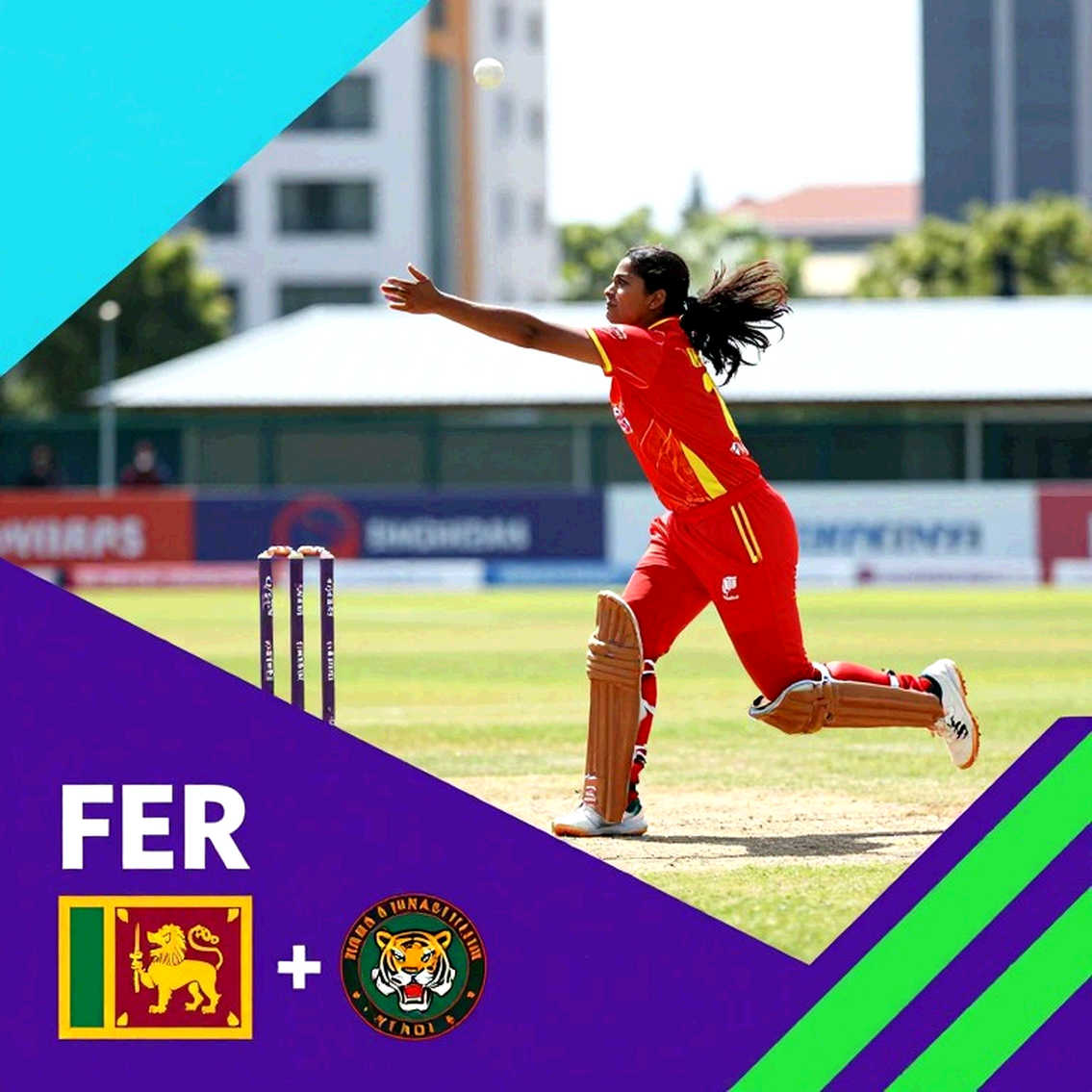
A 50-over innings has two phases: build through roughly 35 overs, accelerate from 35 to 50. White-ball cricket uses two new balls, one from each end, giving seamers swing and seam for longer.
The powerplay (overs 1–10) is decided by new-ball swing and seam. The middle overs (11–35) are about spin control — scoring slows and the real test is footwork and tempo against spin. The last ten overs (40–50) are about acceleration: yorkers, slower balls, extra cover.
Ashraful's practical value to young Bangladesh batters sits exactly in that two-phase structure — teaching when to consolidate and when to attack. But that is an expectation, not evidence: there is no coaching performance data available.
Conditions and the dew factor
Qatar is a neutral Gulf venue. Pitches there are generally flat and dry, and tend to assist spin. In day-night matches, dew becomes significant — evening moisture reduces spin grip and favours the chasing side. Day matches reduce this effect.
This pitch read is not in the source; it is an inference from venue type and should be treated as medium-to-low confidence. The direct implication for Bangladesh: home spin advantage does not apply. The team must prove adaptation to neutral conditions.
Squad Structure and Selection Policy
The most important stated fact is the selection principle: players "outside the national team" were picked. That confirms a fringe/second-tier development pool, not the national side.
The board's stated intent — "we are thinking of forming a strong team" — suggests BCB is taking the event competitively rather than as pure development. That intent-versus-development tension is worth watching.
On actual squad structure, honesty is required: batting depth, bowling mix, bench strength and age profile cannot be assessed, because the squad list is unavailable. No names appear beyond the coaching staff. The direct conclusion: no ranking claim can be substantiated. Treat the event as a talent-identification pipeline, not a strength benchmark.
Group A geography
Group A is subcontinental and spin-heavy. Sri Lanka A traditionally leans on spin and finesse. Afghanistan A carries elite young spin depth and is the most dangerous opponent in the pool. Hong Kong is an associate-level side and the clear weakest link. Bangladesh A therefore face one peer, one dangerous peer and one underdog — a balanced, navigable group.
Commercial Dimension: What Is Not There
This question is framed wrongly by default. The Rising Stars is not a franchise league. There are no franchises, no auction, no transfer mechanism, no contract-based salary structure. Players are board/nationally administered.
Broadcast rights value, sponsorship value, player salaries and any commercial valuation therefore cannot be assessed — the source contains no such figures. Where there is no data, estimation would be speculation, and it is deliberately withheld here.
One communications point is observable: placing a marquee former player as youth coach is a low-cost, high-visibility brand/PR asset for BCB and the tournament. For a second-tier event that would otherwise attract minimal media attention, this is a name-power effect. Medium confidence, and not based on any financial figure.
Governance and Integrity: The Most Sensitive Element
Governance sits at ACC level, not ICC. There is no playing-condition, DRS or umpiring controversy in the source, so no risk assessment is needed on that axis.
The governance-sensitive element is not the tournament's rules but the identity of a key coaching appointment. BCB has effectively placed a previously sanctioned figure in a youth-facing role. That is external knowledge, not in the source, but its significance is obvious.
The anti-corruption dimension matters structurally: young, impressionable players are being mentored by someone with a corruption history. Boards typically prefer such figures at arm's length from the newest cohort; here the role is directly youth-facing. This is not a moral point but a clear risk-management point.
Three scenarios. Worst case: his past integrity issues resurface and BCB's vetting is questioned — low likelihood, event-dependent. Base case: the appointment proceeds without incident under ACC-standard monitoring — high likelihood. Best case: the role becomes a successful rehabilitation and mentoring model, a positive precedent for reintegrating sanctioned players into coaching.
The tournament's governance risk is therefore medium, driven by one appointment rather than by the event.
Risk Matrix
| Category | Risk | Level | Likelihood | Impact | |---|---|---|---|---| | Sporting | Bangladesh A underperforms with an unnamed developmental squad | Medium | Medium | Medium | | Personnel | Batting coach vs head coach authority ambiguity | Low | Medium | Low | | Commercial | No commercial exposure | Low | Low | Low | | Integrity | Reputational/ACU sensitivity from the appointee's background | Medium | Low | Medium | | Public opinion | Over-hype or scrutiny of the rehabilitation | Medium | Medium | Low–Medium | | Systemic | Qatar venue, neutral and low-disruption | Low | Low | Low |
Overall: Low to Medium. The rating is driven almost entirely by one integrity/optics factor, not by the tournament, which is a routine, low-stakes 'A'-level event. Sporting risk is bounded because a poor result carries limited national-team consequence.
Public Narrative: A Name Story, Not an Event Story
The current narrative is redemption: a fallen star returns to the national system as a mentor to youth. It is at the germination stage.
Sustainability is weak-to-medium. There is a genuine story in the role transition, but no performance evidence. The sample is insufficient — one appointment and one quote. Expect a medium-term lifespan of one to six months, tied to the 19–29 November window and its aftermath.
On the expectation gap: BCB's "strong team" signal may create hopes of a deep run, while the squad is unnamed and developmental — slightly optimistic. Hopes for Ashraful's impact run ahead of zero coaching data — optimistic. And name power is over-scaling a modest 'A'-level event — slightly optimistic.
There are no frenzy signals; this is a quiet domestic item. Interest is anchored to the former player's name, not to the tournament's competitive significance. The sentiment-versus-fundamentals deviation is mild.
Industry Transmission
The real industry value is in the talent-supply chain. An ACC 'A' tournament is a discovery pipeline feeding national selection, especially valuable for fringe players outside the national side. The coaching-education pipeline is also implicated: giving an ex-international a youth-coach role is a coaching-development pathway in miniature.
Downstream commercial transmission is minimal. With no broadcast, sponsor or valuation data, the event should be modelled as a sporting and developmental asset, not a commercial one.
| Segment | Direction | Magnitude | Horizon | |---|---|---|---| | Broadcast media | Neutral | Small | Short term | | South Asian market | Slightly positive | Small | Short term | | Talent supply chain | Positive | Medium | Medium term | | Capital network | Neutral | Small | Short–medium term | | Betting/fantasy | Neutral | Small | Short term |
Conclusion
A low-drama, single-source administrative news report whose real analytical substance is twofold. First, the ACC Asia Cup Rising Stars in Qatar, 19–29 November: a dated, structured eight-team 50-over event that is an opportunity for development and talent discovery. Second, the appointment of Mohammad Ashraful as batting coach: a gifted but discipline-scarred former star joining a youth cohort, as much a rehabilitation signal as a technical step.
On information value: sporting value is limited (solid format and schedule detail, but no squad, data or results); industry value is minimal (no commercial or broadcast figures); timeliness is high, because the event runs from 19 to 29 November.
Three warnings.
First, medium: placing a formerly sanctioned figure in a youth-facing coaching role creates integrity and optics sensitivity. Recommendation: apply standard anti-corruption oversight and clear codes of conduct, and monitor messaging. This is external knowledge and should be independently verified.
Second, low–medium: single-source reporting (Dhaka Post, byline 'SH') with no corroboration and loose "removed from the national team" framing. Recommendation: confirm appointment details with an official BCB source before treating them as settled fact.
Third, low: over-scaling a second-tier event through a marquee name. Recommendation: keep expectations proportionate to an 'A'-level tournament with unnamed squads.
Signals to Track
| Signal | How to observe | Trigger | Expected impact | |---|---|---|---| | Bangladesh A squad announcement | BCB official channels | When names are released | Settles whether it is a "strong team" or pure development | | Group results | 19–24 November scorecards | Against Afghanistan A / Sri Lanka A | National-selection ripple for fringe players | | Ashraful coaching coverage | Media and post-match assessment | Batting success or controversy | Rehabilitation trajectory up or down | | Integrity commentary | ACC/BCB statements | Any formal statement | Governance/optics escalation |
Glossary
'A' team / Emerging team: a second-tier national selection below the full side, used to blood fringe and young players.
Powerplay: the first 10 overs of a 50-over innings, with fielding restrictions.
Death overs: the closing overs (roughly 40–50), where scoring accelerates and yorkers matter.
Dew factor: evening moisture that reduces spin grip and favours the chasing side in day-night matches.
Spot-fixing: manipulating a specific in-match event, such as a no-ball, as distinct from fixing a whole result.
ACU: the ICC's Anti-Corruption Unit.
DLS (Duckworth-Lewis-Stern): the rain-revision method for targets. No DLS issue arises in this story.
Disclaimer
This report is based on public information and available text analysis. It is provided for sports-information reference only and does not constitute betting advice. Sporting outcomes are highly uncertain. Statements flagged as external domain knowledge — notably the appointee's historical disciplinary record and the tournament's identity as an ACC 'A'-level event — should be independently verified before use.